How likely is Beijing to walk the talk on boosting consumption?
Chinese officials tend to report only good news and bury bad news for propaganda purposes and career advancement. That is why it came as a genuine surprise when, on July 22, Zhang Enhui, the party chief of Changchun, an industrial powerhouse known for its automobile sector and technological research, publicly broke with that tradition. He warned of “unprecedented difficulties and challenges”…
Chinese officials have a tendency to present only positive news, concealing any negative information for propaganda purposes and career advancement. This explains why the candid remarks made by Zhang Enhui, the party chief of Changchun, a significant industrial and technological hub, were surprising. In a July 22 statement, Zhang warned of "unprecedented difficulties and challenges" facing the city's economy.
However, this brief moment of transparency was quickly removed from the city government's website. The warning from Zhang Enhui has gained attention amid debates over China's GDP slowdown and calls to stimulate domestic consumption and revive the real estate sector.
The slowdown in China's economy is primarily driven by a decrease in private sector and fixed‑asset investment, which are traditionally key growth drivers. Fixed‑asset investment fell by 5.7% year on year, while property investment dropped by 18% in the first half of the year. Meanwhile, retail sales only grew by 0.2% in the second quarter, compared to 2.4% in the first.
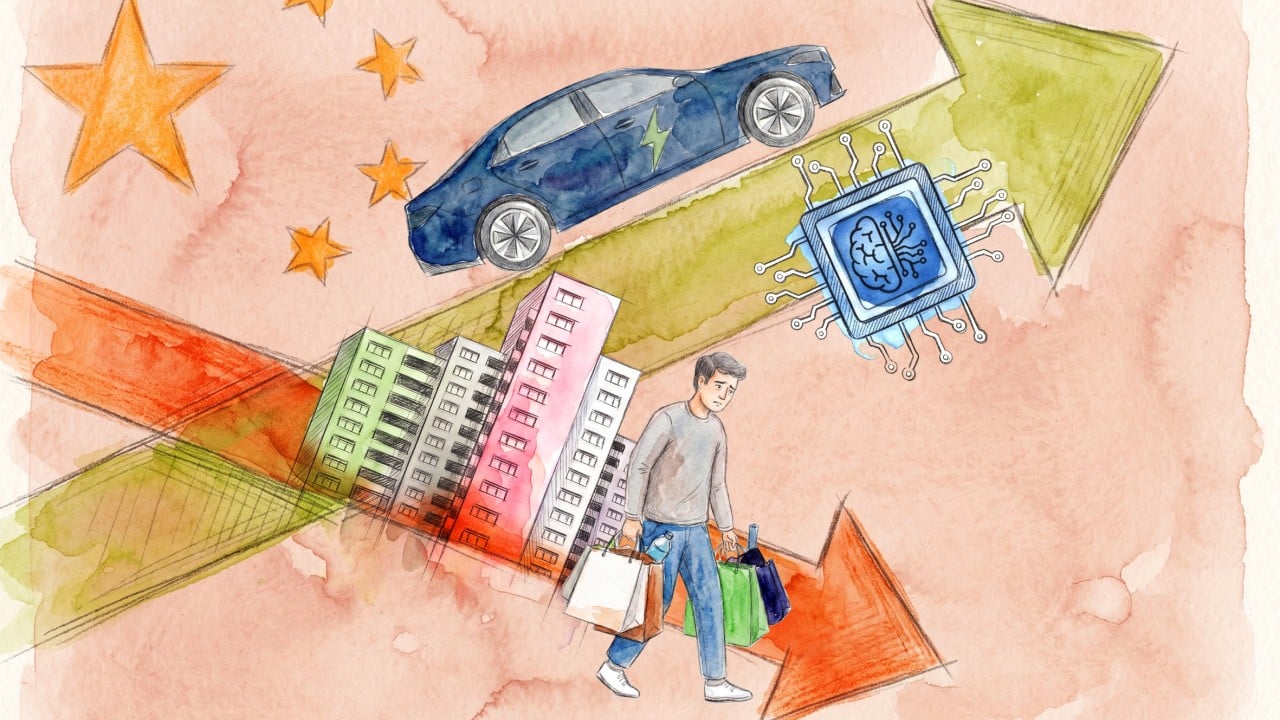
Changchun's situation is both unique and illustrative, representing a broader K‑shaped economic divergence in China. On one side of the K‑shape, hi‑tech manufacturing and exports are thriving, while on the other side, consumption, real estate, and traditional industries are lagging.
China's top decision-making body has recently pledged to "accelerate fiscal spending" and expand domestic consumption, though no specific measures were disclosed. This promise follows the release of a five‑year consumption plan, which aims for annual retail sales of approximately 60 trillion yuan (US$8.85 trillion) by 2030. The plan emphasizes raising household incomes and significantly increasing the share of household consumption in GDP, currently around 40%.
However, past attempts by Beijing to boost consumption have often yielded limited results, described as "lots of thunder but little rain." Policymakers may feel little urgency to act aggressively, given that first-half GDP growth is still within the official target range of 4.5-5%. Despite this, the strong performance of high‑end manufacturing and exports linked to AI may provide a false sense of security, as external demand remains a key factor for policymakers.
Rebalancing the economy towards domestic consumption has been a long-standing call from economists, both within and outside China. Although Beijing has implemented stop‑gap measures in the past, consumer sentiment remains fragile, as household wealth is largely tied to property, where prices have been declining. Despite calls to stabilize property prices, which would boost consumer sentiment, Chinese policymakers have not taken decisive action.
As China's leaders convene in Beidaihe for their traditional two-week working holiday, discussions will focus on longer-term economic and international issues. Specific policy announcements are unlikely, with the emphasis placed on framing long-term strategies. With President Xi Jinping expected to seek a fourth term at the upcoming 21st Party Congress, political and economic stability will be of utmost importance.
Written by urgent.news from Reuters Business via SCMP's reporting — not their text. Machine-written — may contain errors; check the original before relying on it.