Oil slumps on hopes of Iran deal, yen spikes suddenly after intervention
The US-Japan intervention to support the yen is unlikely to reverse the broader dollar-yen trend, as structural factors remain negative for the Japanese currency.
Oil prices plummeted and global stocks fluctuated on Monday, driven by optimism surrounding potential Middle East peace and the U.S.-Japan joint intervention to bolster the yen. Brent crude futures LCOc1 dropped over 6% to $82.41 after U.S. President Donald Trump announced talks with Iran on Monday, after canceling a planned strike to reopen the Strait of Hormuz and address Iran's nuclear program.
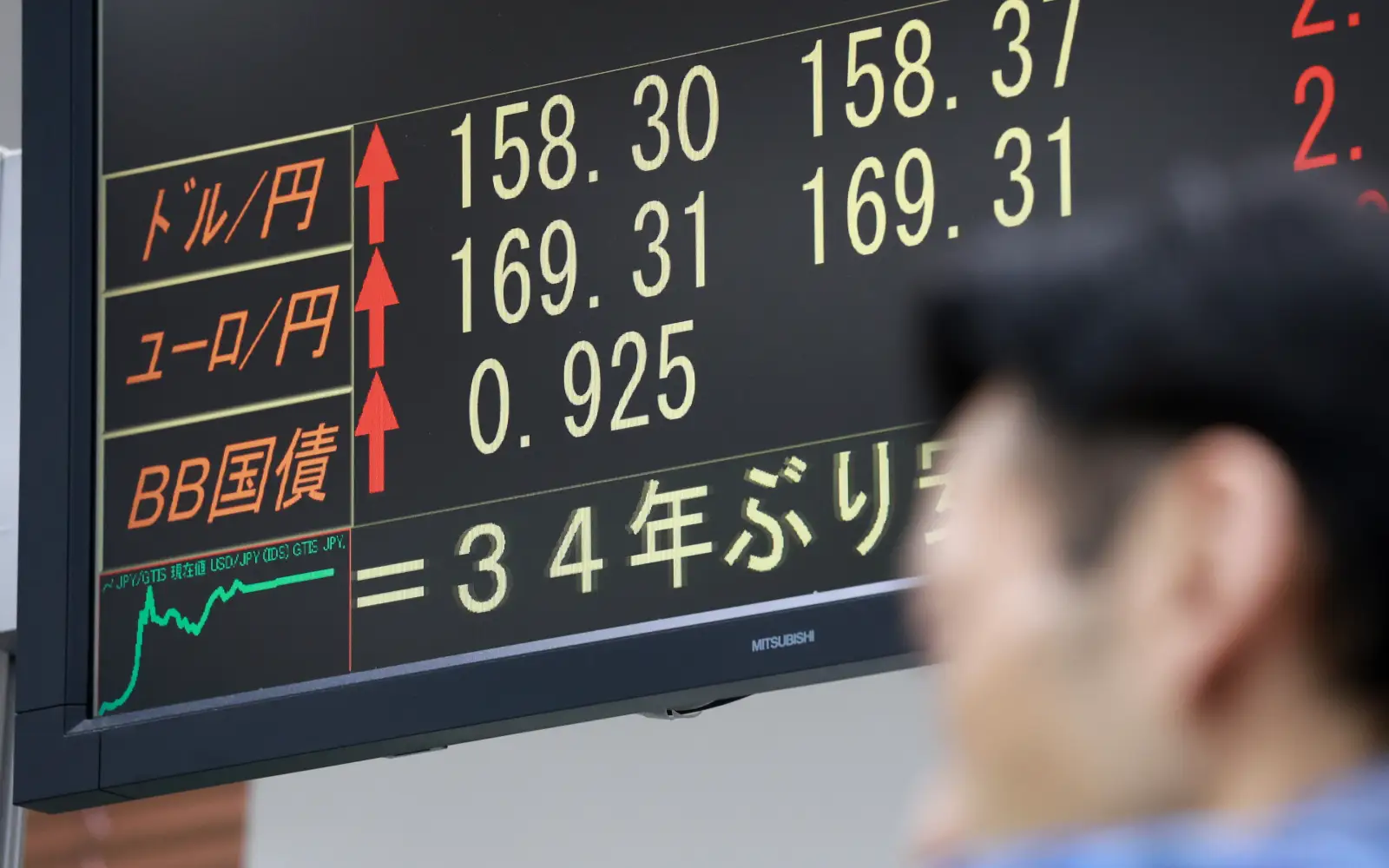
While S&P 500 futures EScv1 increased by 0.4% and Nasdaq futures NQc1 rose 0.6%, Japan's Nikkei fell by 1% and South Korea's KOSPI declined 3.6%. The Nikkei had experienced a tumultuous July, losing 22% during the month. The MSCI's Asia-Pacific index, excluding Japan, also experienced a 1% decline in early trading. The Japanese yen surged more than 1%, reaching 155.39 per U.S. dollar, sparking speculation of additional official intervention.
Japan and the U.S. conducted coordinated action to buy yen and pledged further measures if necessary, according to Japan's finance ministry. Mizuho Bank strategist Masayuki Nakajima noted that the yen's depreciation trend might not be reversed immediately due to structural factors, such as enduring U.S.-Japan interest rate gaps.
However, the recent communication between the U.S. and Japan conveyed a stern warning to speculative traders, potentially shifting the near-term momentum in favor of yen appreciation. President Trump had earlier stated that the U.S. was providing assistance to Japan as a gesture of friendship and to support the global economy. Trump further explained that the U.S. was "always there for Japan" during a press conference following the announcement.
Market strategist Nick Twidale from ATFX Global suggested that Trump's comments, portraying the intervention as a 'friendship trade', diminished the credibility of the U.S.'s involvement. He anticipated that the market would likely correct the move once the intervention concluded, unless underlying factors changed.
Written by urgent.news from Free Malaysia Today's reporting — not their text. Machine-written — may contain errors; check the original before relying on it.