Will Philippine Sea be the main battlefield for PLA carriers in a Taiwan war?
For decades, the Philippine Sea has been seen as the gateway through which US and allied forces would sail to Taiwan’s defence in a war with the Chinese mainland. But with the People’s Liberation Army (PLA) increasingly pushing into the western Pacific, experts say Beijing would seek to place aircraft carriers in the waters east of Taiwan to complicate any intervention. Rather than a gateway, the…
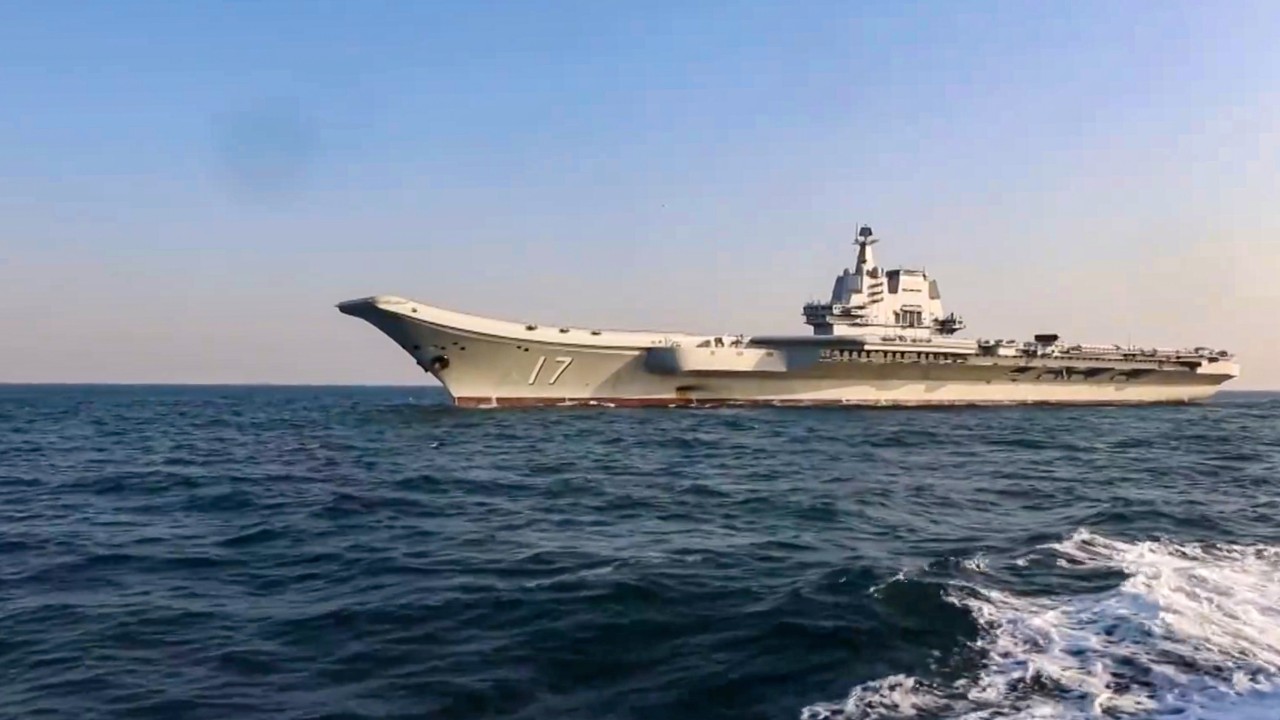
The Philippine Sea may become a crucial battlefield if war erupts between China and Taiwan, as Chinese aircraft carriers could play a significant role in shaping the maritime battlespace. Michael Bosack, from the Parley Policy Initiative, believes that the Philippine Sea's role would be decisive, as carrier operations there could be maximized to influence broader maritime conflicts.
Chinese carriers could not only intercept enemy ships but also deter potential adversaries from initiating the long voyage to Taiwan, according to Bosack.
However, China's experts caution that the PLA Navy would carefully consider the risks of deploying such high-value assets in heavily contested waters. Brendan Mulvaney, from the US Air Force's China Aerospace Studies Institute, emphasizes that carriers are not the primary weapons against Taiwan, but rather part of a broader maritime joint-fire system. He argues that carriers would primarily serve to cue and coordinate the wider force, rather than directly delivering the main strikes.
James Holmes, from the US Naval War College, highlights that breaking through the first island chain and gaining reliable access to the wider Pacific is Beijing's primary naval challenge. The carrier fleet is part of an effort to guarantee access beyond the China Seas, contributing to a "fortress fleet" approach that extends China's reach while staying integrated with mainland-based aircraft and missile forces.
The recent commissioning of the Fujian Type 003 aircraft carrier, equipped with electromagnetic catapults, allows for more regular deployments and the launch of heavier aircraft, such as the KJ-600 airborne early-warning aircraft. This will extend China's surveillance and command reach into the Philippine Sea, making the carrier a more formidable asset.
To protect the combat effectiveness of its carriers, China is expected to create a layered defensive system, shielding the carriers from enemy attacks. Chinese military publications describe this strategy as a means of preserving the combat effectiveness of carriers, rather than exposing them unnecessarily in heavily contested areas of the battlespace.
While Chinese carriers may primarily operate in information warfare rather than firepower, they would likely function as part of a larger system, including submarines, bombers, long-range missiles, and land-based aircraft. This approach would push the contest for air superiority into the Philippine Sea, but operating farther into the sea brings its own risks.
Japanese naval forces, expanding missile capabilities, allied submarines, and long-range air power could all pose threats to a carrier strike group operating east of Taiwan.
Written by urgent.news from Reuters Business via SCMP's reporting — not their text. Machine-written — may contain errors; check the original before relying on it.
This story
This is one outlet's version. Read the fullest account.