Look Closer: David Hockney’s Rules of Beauty
What the artist found in a corner of the Louvre
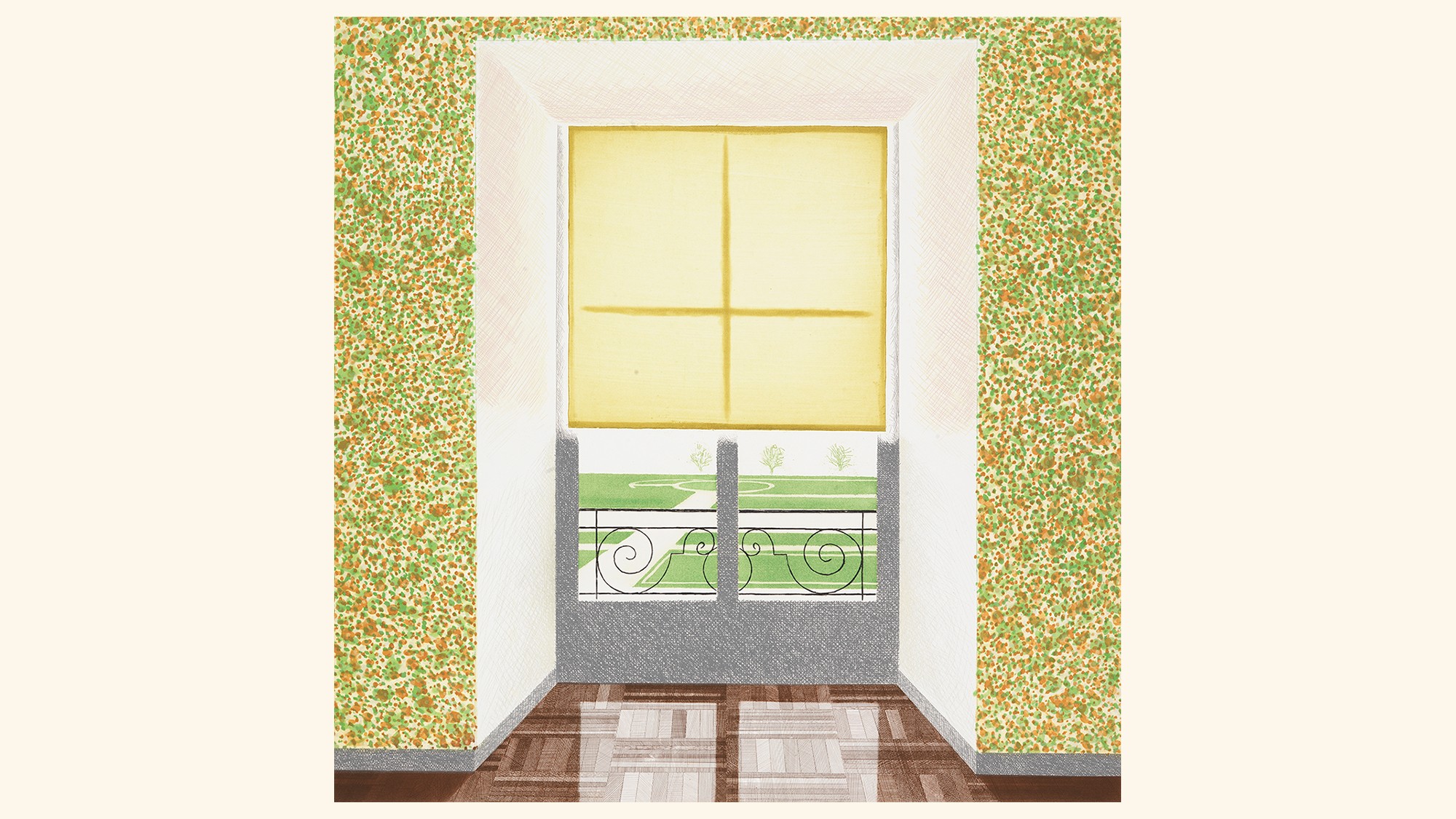
David Hockney, the renowned artist who passed away at 88 in June, was celebrated for his ability to capture 20th-century life with the formality and stasis reminiscent of early Renaissance painting. His works often depicted orderly spaces, such as those in a Fra Angelico annunciation. One such piece is "Contrejour in the French Style," where Hockney was inspired by a window at the Louvre, which he saw as a "picture in itself."
In creating this piece, Hockney meticulously reconstructed the scene, adjusting elements for aesthetic effect. The pathways and parterres echo the nearby Tuileries, while the balustrade mirrors the elegance of the original. The painting showcases Hockney's skillful use of various etching techniques, creating a harmonious blend of colors and lines.
The formal garden, parquet flooring, deep window setback, and dappled wall all contribute to the "French Style," a style known for its adherence to rules developed to achieve beauty.
Post the creation of "Contrejour," Hockney's style evolved to embrace fragmented space, expressive brushwork, and episodic motion. However, "Contrejour in the French Style" continues to evoke a sense of quiet emotional weather, inviting viewers to appreciate the painterly techniques that Hockney later sought to dismantle.
Written by urgent.news from The Atlantic's reporting — not their text. Machine-written — may contain errors; check the original before relying on it.