Google Earth’s AI misadventure lasted only a day. It was a tale of dangerous ignorance.
Google Earth thought users will play it cool with using AI images on a realistic map. Well, it was a short-lived disaster of epic proportions.
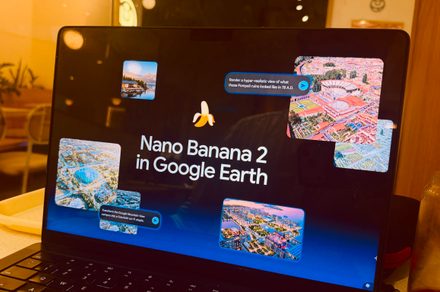
Google Earth's AI experiment had a short lifespan, lasting only a day before it was discontinued. The concept involved using Google Earth's satellite, aerial, and 3D imagery alongside Nano Banana, an AI image generator, to create custom images that could be placed on the map view. However, the experiment quickly spiraled out of control, raising serious concerns about the potential misuse of AI-generated content.
Henk van Ess, an online research expert, demonstrated the problems with the feature by generating images of refugees near the Mexican border, a nuclear plant in Iran, and a fatal crash on a street in Amsterdam. He noted that Google's AI image generator didn't refuse any of these problematic requests, allowing them to pass through without any counter or softening.
The AI-generated imagery was not checked for validity, and even third-party AI checker tools failed to detect the issues. This led to the creation of controversial images, such as Russian tanks moving on Ukrainian land, the Eiffel Tower collapsed on the ground, and the great pyramids of Egypt swallowed by a sinkhole.
The widespread availability of realistic AI-generated content makes it difficult for people to verify its authenticity, further exacerbating the issue. Fact-checkers, despite their efforts, struggle due to a lack of digital literacy and incentive to fact-check synthetic images. The rollout of this AI feature in Google Earth was a case of significant ignorance, but thankfully, the company quickly rolled it back.
Google stated that while geospatial professionals have found useful purposes for the feature, it has also been used to share screenshots of generated imagery that violate their policies. The company's swift action to end the experiment suggests the potential severity of the risks involved. AI image models are susceptible to being tricked into producing copyrighted material, sexualized images, and other problematic content.
The rapid response from Google demonstrates the urgent need for stronger guardrails to prevent such issues from escalating into international controversies.
Written by urgent.news from Digital Trends's reporting — not their text. Machine-written — may contain errors; check the original before relying on it.
Also reported by 8 other outlets
- Nuclear plants, Gaza craters: Google pulls AI tool from Google Earth in 24 hours timesofindia.indiatimes.com
- Alphabet rolls back AI image generation in Google Earth over policy violations economictimes.indiatimes.com
- Google nixes its Earth AI feature one day after launch, amid criticism it would spread misinformation techcrunch.com
- Google rolls back the needless AI generation tools it added to Google Earth engadget.com
- Google Earth risked ruin with retracted AI tool for making fake satellite pics arstechnica.com
- Google rolls back AI Google Earth feature a day after launch mashable.com
- Google Earth's AI makeover survives one trip around the Sun theregister.com
- Google Earth slams the brakes on Gemini image generation for depressingly predictable reasons androidauthority.com