From Mao to now: why China’s Communist Party is intent on control over the military
Having marked its 99th anniversary on August 1, the People’s Liberation Army is now just one year away from its centenary goals, with its evolution highlighting the past, present and future of China’s military strategy. In the third part of a series, Yuanyue Dang and William Zheng examine how Beijing leans on Mao-era doctrines and anti-corruption drives to guarantee absolute party control over…
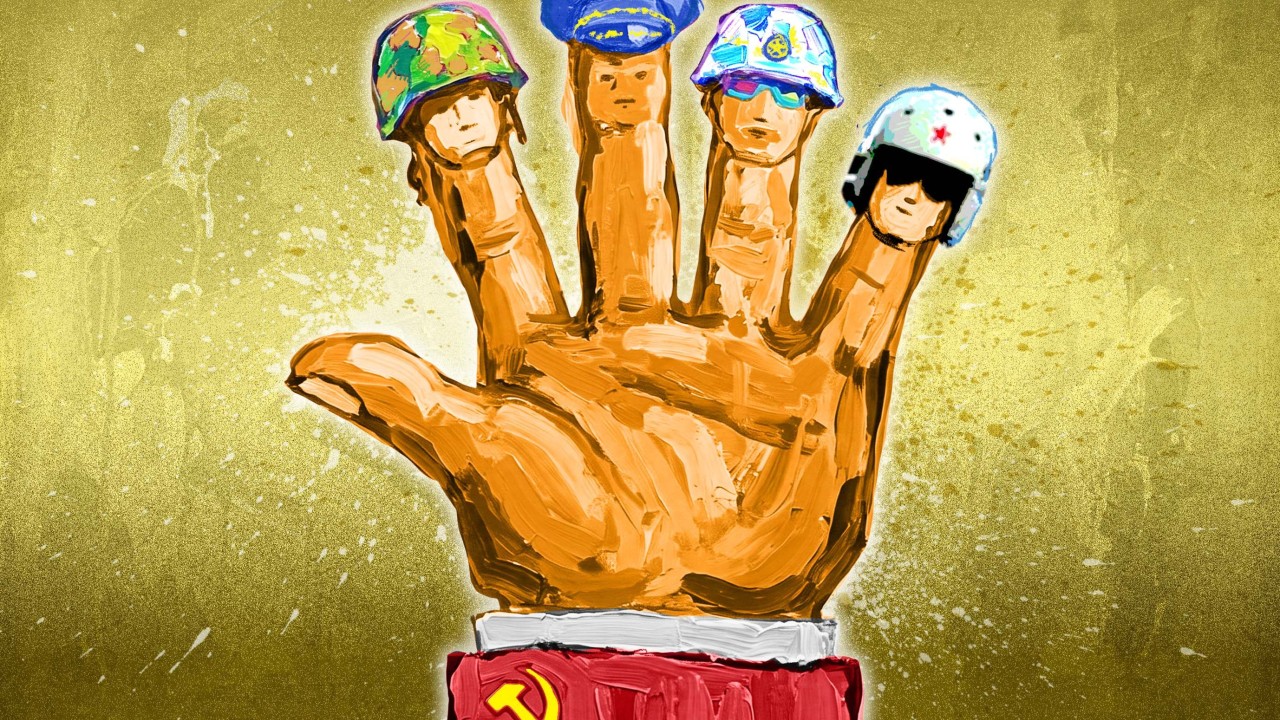
In 1929, Mao Zedong convened the Gutian conference, marking a pivotal moment in the history of China's Communist Party and military. The event established the People's Liberation Army (PLA) as the armed wing of the party, tasked with carrying out the political objectives of the revolution. This decision laid the foundation for the PLA's political control, a principle that remains central to the party's governance of the military to this day.
In 1938, as the Chinese Communist Party faced a critical juncture following the departure of co-founder and rival Zhang Guotao, Mao reiterated the importance of party control over the military. He famously declared that "the party commands the gun, and the gun must never be allowed to command the party." These words, penned almost a century ago, continue to guide Beijing's military strategy.
In 2014, President Xi Jinping paid homage to Mao's doctrines by convening a military political work conference in Gutian. He emphasized the necessity of upholding the party's absolute leadership over the military, stating that "upholding the party's absolute leadership over the military is the soul of building a strong army." This ideological stance underpinned a series of military reforms launched in 2015, which targeted corruption and strengthened discipline across all levels of the PLA.
The reforms culminated in an unprecedented purge of the Central Military Commission (CMC), the top command body of the PLA. Out of the seven-member commission, five members, including former vice-chairmen Zhang Youxia and He Weidong, were removed from office. Zhang Youxia, the CMC's first-ranked vice-chairman, was accused of undermining the CMC's authority and fueling political and corruption issues within the military. His removal marked a significant blow to Beijing's control over the military apparatus.
Analysts argue that Beijing's relentless focus on "the party's absolute leadership over the military" extends beyond combating corruption, as it is deeply rooted in historical lessons learned from the collapse of the KMT and the Soviet Union. The Chinese Communist Party views discipline and organizational capacity as crucial to its victory in the civil war, recognizing that lacking a robust military structure can lead to political instability.
The Chinese Communist Party's control over the military is integral to maintaining its power, as it ensures the PLA remains loyal to the party during times of political and military crisis. This mindset is a direct legacy of Mao's doctrines and the lessons drawn from past military failures, ensuring Beijing's resolve to maintain absolute party control over the armed forces.
Written by urgent.news from Reuters Business via SCMP's reporting — not their text. Machine-written — may contain errors; check the original before relying on it.
This story
This is one outlet's version. Read the fullest account.