From Mao to now: why China’s Communist Party is intent on control over the military
Having marked its 99th anniversary on August 1, the People’s Liberation Army is now just one year away from its centenary goals, with its evolution highlighting the past, present and future of China’s military strategy. In the third part of a series, Yuanyue Dang and William Zheng examine how Beijing leans on Mao-era doctrines and anti-corruption drives to guarantee absolute party control over…
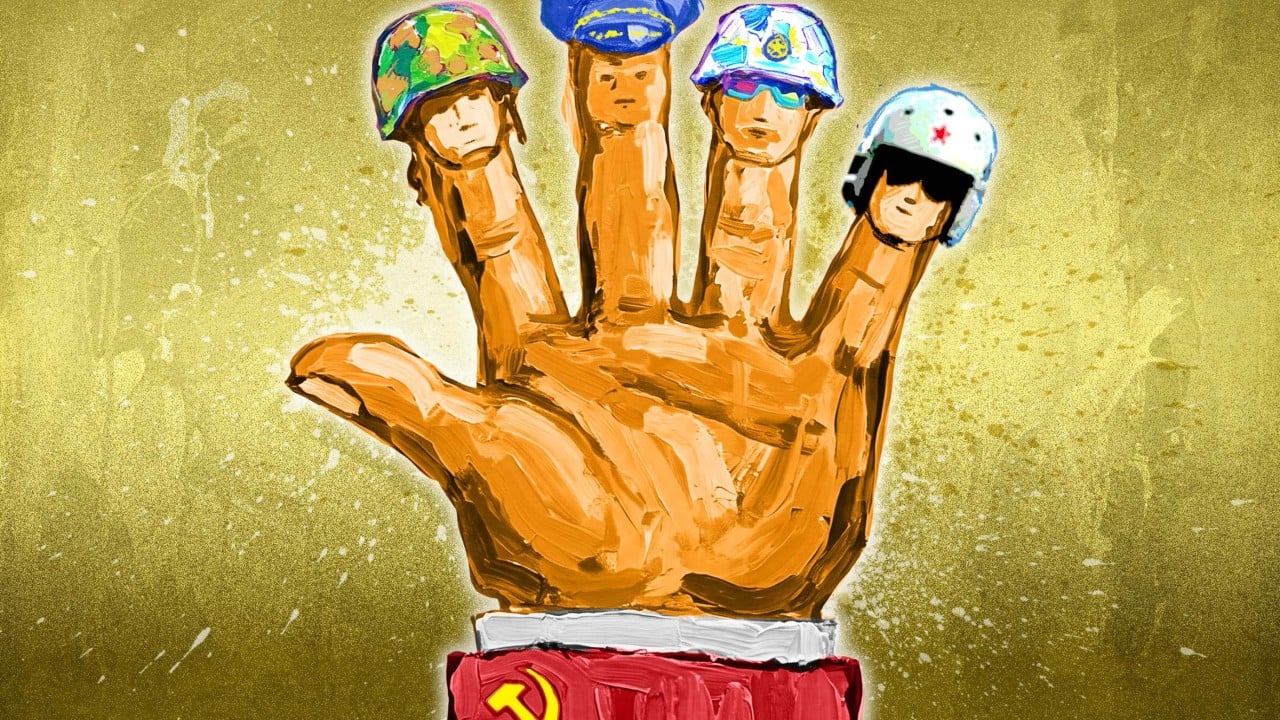
In August 1929, Mao Zedong convened the Gutian conference, marking a pivotal moment for the Chinese Communist Party's armed wing, the Red Army. The meeting established the Red Army as an instrument for political revolution and set up party organizations within the military. This decision laid the foundation for the People's Liberation Army (PLA) and its ultimate victory over the Nationalists in 1949.
Mao's principle that "the party commands the gun, and the gun must never command the party" remains central to Beijing's control over the military. In December 2014, President Xi Jinping revisited this principle by convening a military political work conference in Gutian, emphasizing the PLA's need to uphold its revolutionary tradition and the party's absolute leadership.
The PLA underwent a major overhaul in 2015, coupled with the most aggressive anti-corruption campaign in decades. These reforms targeted service branches, theatre commands, equipment procurement, and top-level appointments, leading to the removal of several high-ranking officials, including former CMC vice-chairmen Zhang Youxia and He Weidong.
Analysts argue that Beijing's focus on the party's control over the military is rooted in historical lessons from the collapse of the KMT and the Soviet Union. This mindset explains Beijing's rejection of the "nationalisation of the military" and its rejection of corrupt military leaders, as seen in the recent suspensions and expulsions of key officials.
Written by urgent.news from South China Morning Post's reporting — not their text. Machine-written — may contain errors; check the original before relying on it.