Mercury's Weak Magnetic Field Periodically Traps Solar Wind
The planet Mercury is the first planet from the Sun but also one shrouded in mystery. This is primarily due to the limited number of spacecrafts that have visited it, but this limited data has provided scientists with new and exciting characteristics previously thought impossible. One fascinating aspect is its magnetic field, which was first discovered in March 1974, which both surprised and…
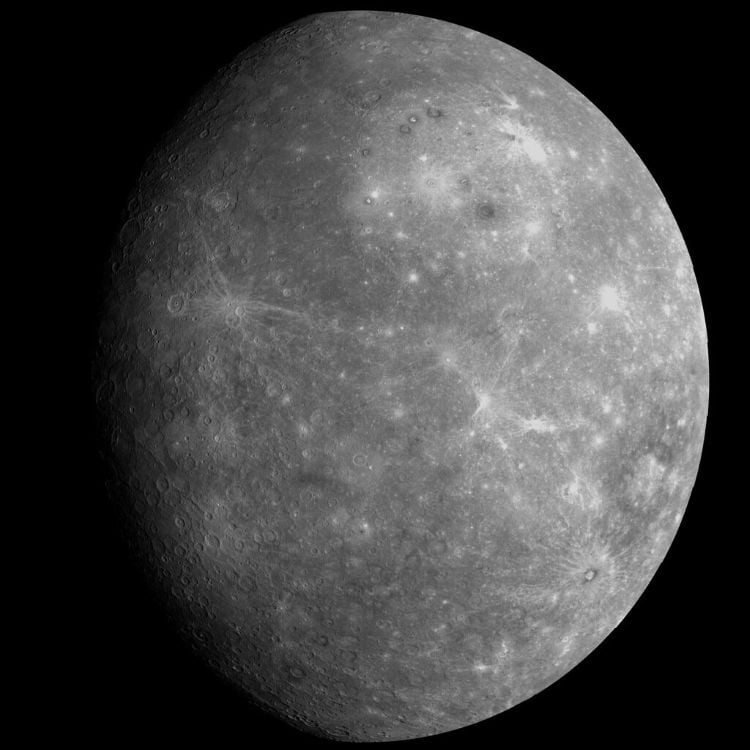
Mercury, the smallest planet in our solar system, has a magnetic field that is roughly only 1 percent as powerful as Earth's. This weak magnetic field has puzzled scientists for decades, as they initially discovered it in 1974 but found contradictory data from other spacecrafts. Recently, a team of researchers from the United States and France explored the possibility of Mercury's magnetic field trapping solar wind and creating radiation belts, similar to Earth's Van Allen Belts.
Using data from NASA's MESSENGER mission, advanced data analysis, and computer simulations, the researchers concluded that Mercury's magnetic field does, indeed, capture solar wind and generate radiation belts during specific parts of its elliptical orbit around the Sun. These radiation belts appear approximately half the time when Mercury is farthest from the Sun and about 20 percent of the time when Mercury is closest to the Sun, lasting for 8-12 hours each.
The study helps scientists understand the potential radiation hazards of other planets in our solar system and exoplanets, as well as the impact of Mercury's unique elliptical orbit on its magnetic field and radiation belts.
Written by urgent.news from Universe Today's reporting — not their text. Machine-written — may contain errors; check the original before relying on it.