Witness safety fears deepen as Madlanga Commission nears final report
The murder of Madlanga Commission witness Marius van der Merwe and threats against other protected witnesses have intensified concerns about their safety as the inquiry prepares to submit its final report in January 2027.
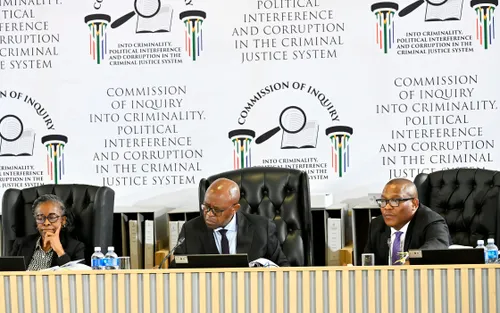
As the Madlanga Commission of Inquiry approaches its final report in January 2027, concerns loom large over the safety of witnesses and whistleblowers. Experts warn that the threat they face is at its highest point as the inquiry nears completion. This danger became evident after the murder of Tamryn Raju, a 32-year-old woman shot in her home in Shastri Park, Phoenix - KwaZulu-Natal, just a day after her relative, Clive Naicker, testified before the commission.
Naicker had named Naicker and implicated him in his testimony. Another victim, Marius 'Vlam' van der Merwe, a former Ekurhuleni Metropolitan Police Department officer and private security company director, was also murdered in Brakpan in December 2025, following his testimony about alleged criminal networks, corruption within the City of Ekurhuleni, and EMPD, and an alleged cover-up involving a death in custody linked to Emmanuel Mbense.
Van der Merwe's killer, Matipandile Sotheni, a former SAPS special task force member, was arrested and charged with murder.
Security strategist Andy Mashaile, who has observed similar trends globally, emphasizes the growing risks faced by witnesses and whistleblowers. He attributes the brazen nature of recent attacks in South Africa to the vulnerabilities in witness protection. Mashaile notes that when high-profile individuals are implicated in serious crimes, they often hire hitmen to silence potential witnesses.
Sothei's arrest and subsequent conviction for van der Merwe's murder followed a wave of arrests targeting top brass within the South African Police Service, municipal law enforcement, and alleged underworld syndicates. These arrests also led to a significant legal case against the implicated individuals.
However, political analyst Andre Duvenhage expresses concerns that political accountability for the implicated individuals may prove challenging. He suggests that politicians, like those in the Phala Phala case, often use protracted legal challenges and political justifications to evade pressure for action. This, in turn, has historically stalled accountability processes, particularly when those implicated are connected to higher political figures.
Duvenhage believes that the implicated parties are not acting alone but are instead backed by political networks, making the task of achieving accountability even more complex.
Rewritten by urgent.news; may contain errors — check the original.
Source: iol.co.za