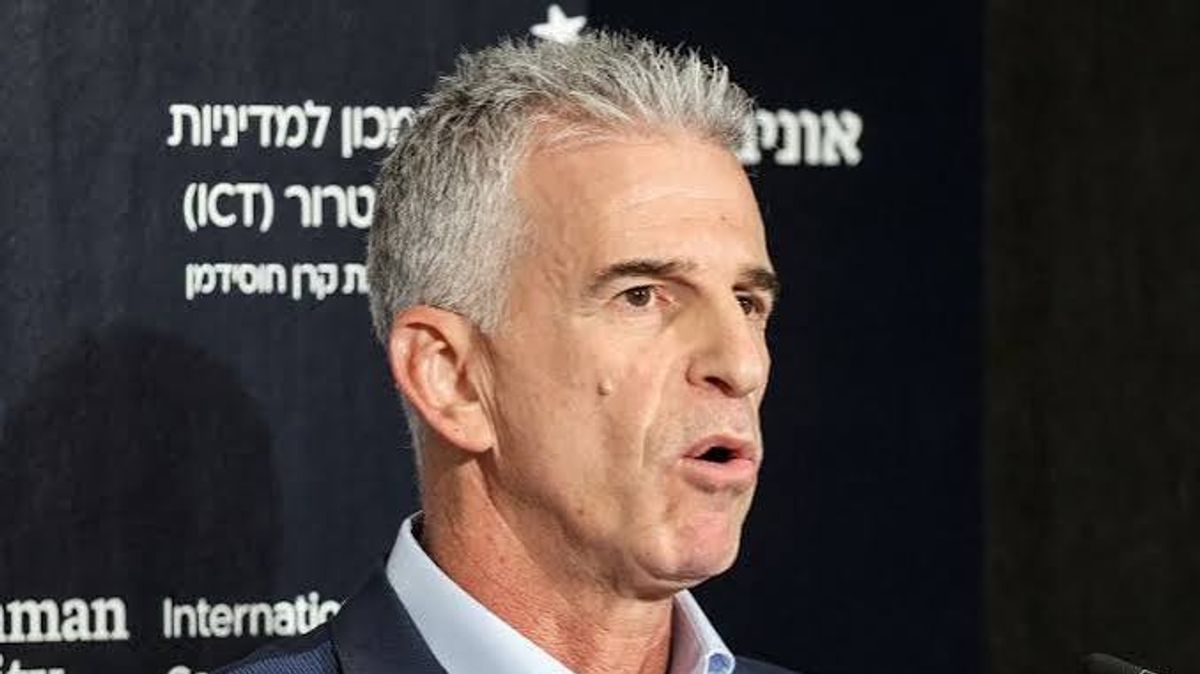
Without a broad coalition, Eisenkot risks plunging Israel back into 'War of the Jews' - analysis
Whichever way Yashar head Gadi Eisenkot turns, there will be those ready to question his government’s legitimacy and exploit any weakness to bring it down.
With Prime Minister Benjamin Netanyahu now endorsing Gadi Eisenkot to lead a "national unity" government rotation, the dynamics surrounding Iran's threat have significantly shifted. Previously, the decision-making process regarding a potential strike against Iran was primarily influenced by Netanyahu and US President Donald Trump, with key advisors including IDF Chief of Staff Lt.-Gen.
Eyal Zamir, Mossad Director Roman Gofman, Joint Chiefs Chairman Gen. Dan Caine, US Secretary of State Marco Rubio, and US Secretary of War Pete Hegseth.
Eisenkot's possible ascension to a dominant role in Israel's foreign policy decisions could lead to a significant change in the country's approach towards Iran. If Eisenkot were to assume the top decision-making position, either replacing Netanyahu or as a joint decision-maker, the trajectory for Iran policy would undergo a substantial transformation. This shift could extend the scope of Israel's policy into the future, potentially impacting the timing and manner of any military strikes against Iran.
Netanyahu's persistent advocacy for a joint attack on Iran with the United States has been a prominent theme throughout the past months, even after the recent Israeli elections. His arguments have been driven by concerns over Iran's evolving nuclear and chemical weapons capabilities. However, recent statements from both Zamir and Eisenkot indicate a more measured and cautious approach, suggesting that Tehran does not currently pose an imminent threat.
Under Eisenkot's leadership, Israel is unlikely to initiate a solo strike against Iran, regardless of whether the government consists of Eisenkot, Netanyahu, or both. This development may limit Trump's options in the region, forcing him to either proceed unilaterally or collaborate with Eisenkot within the next month before the Democrats assume control of the US Congress. Alternatively, the US President might be left without the means to carry out any military action against Iran.
While Eisenkot is not inclined to be lenient towards Iran, he is more likely to view the threat as a matter of months or even years away. This perspective is consistent with Zamir's stance, which emphasizes that Iran remains a looming threat for the near future. Eisenkot is also less likely to publicly challenge the US over an unfavorable nuclear deal, unlike Netanyahu, and prefers to negotiate behind the scenes.
Eisenkot's approach towards Iran policy appears to align closely with Zamir's, signaling a potential collaboration on this issue. With Zamir and Eisenkot advocating for a more measured response to Iran, the US may find itself with greater flexibility in formulating Iran's policy, potentially leading to a more collaborative and less confrontational approach with Israel and other traditional allies.
Rewritten by urgent.news; may contain errors — check the original.
Source: jpost.com