Virus del ébola deja más de 6 mil muertos en el Congo; OMS mantiene alerta internacional
El virus del ébola se transmite por contacto directo con fluidos corporales de personas o animales infectados
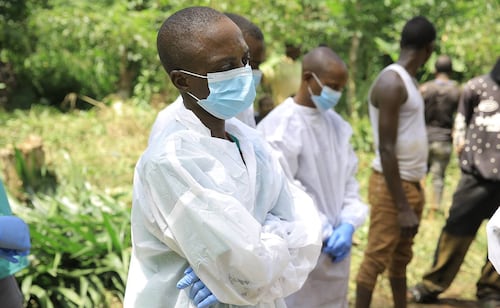
Over six thousand people have died from the Ebola outbreak declared on May 15 in the eastern Democratic Republic of Congo (DRC), and it has spread to other provinces, according to Congolese authorities. The most recent report from the National Public Health Institute (INSP) of the DRC, with data collected until November 27, shows a total of twelve thousand two hundred fifty-four confirmed infections, including six thousand twenty-five fatalities.
The epidemic, the seventeenth in the DRC and the second most deadly in history globally, has a mortality rate of 49.2% and a contact tracing rate of 77.6%. So far, three thousand three hundred eighty-seven patients have recovered from the disease, and another one thousand one hundred sixty remain hospitalized or in isolation. "The eastern Ituri province remains the epicenter of the epidemic, accounting for 67.1% of all confirmed cases and 41% of new reported cases," the INSP reported.
Following Ituri, North Kivu province accounts for 55.1% of new cases. In total, the epidemic affects 69 health zones in eight of the 26 provinces of the DRC: in addition to Ituri and North Kivu, the outbreak has hit Tshopo (central-north), Bas-Uélé (north), Haut-Uélé (northeast), South Kivu (east), South Ubangui (northwest) and North Ubangui (north).
The World Health Organization (WHO) Director-General, Tedros Adhanom Ghebreyesus, confirmed on November 18 that the epidemic continues to constitute an international public health emergency, following the quarterly meeting of the emergency committee on this crisis, which reviews the outbreak. Similarly, the African Union's (AU) Africa Centers for Disease Control and Prevention (CDC) warned on November 15 that the humanitarian crisis, insecurity and displacement of the population in eastern DRC could lead to "a major continental outbreak".
The epidemic has surpassed the one that occurred in the same Congolese region between 2018 and 2020, although it is still far from the most severe ever, which caused 11,000 deaths and 28,000 infections in West Africa between 2014 and 2016. The outbreak spread to neighboring Uganda, where the WHO declared the end of the same on August 26 after counting 20 confirmed infections, including 15 imported from the DRC, including two deaths.
Cases linked to the outbreak have also been detected in two other African countries: Kenya (nine, including two deaths) and Nigeria (one). Additionally, one case has been detected in France. This case is joined by three individuals evacuated from the DRC after contracting the virus, to the Netherlands (one) and Germany (two). The Bundibugyo strain, responsible for the current epidemic, has no specific treatments, but the WHO is working on two vaccines that have begun phase 1 human trials and have so far shown to be safe, although their development could take several months.
Uganda initiated the first phase I clinical trial of an experimental messenger RNA (mRNA) vaccine against that strain on Friday. Ebola virus spreads through direct contact with bodily fluids of infected people or animals and causes severe hemorrhagic fever, vomiting, diarrhea and internal bleeding.
Rewritten by urgent.news; may contain errors — check the original.
Source: eluniversal.com.mx