Understanding the impact of AI on the job market — Ahmad Ibrahim
NOVEMBER 29 — Artificial intelligence has attracted much debate.
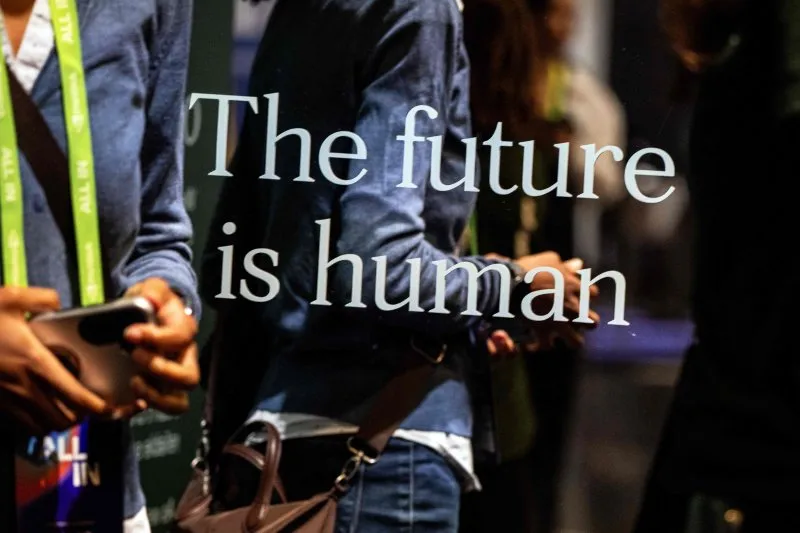
November 29 — The impact of artificial intelligence on employment has sparked intense discussion, yet the consensus is that concern over its effects is mounting. A recent paper by Ali and Mujahid, published in May 2025, offers a nuanced perspective: while AI will undoubtedly transform the job market, the outcome is shaped by policy decisions, investments in education, and ethical frameworks governing its use.
The authors dissect the United States, China, and India, highlighting three divergent trajectories toward an AI-driven economy. Crucially, they underscore that AI's impact is far from uniform; it is contingent upon a nation's stage of technological adoption and its workforce's adaptability. To quantify the repercussions, the researchers employ a weighted scoring system that assesses factors such as job displacement, creation of new roles, skill adaptation, and government strategies.
The United States emerges as the most AI-integrated economy, underpinned by robust adoption and workforce readiness; however, this progress is tempered by significant risks to jobs traditionally held by workers in predictable, cognitive, and administrative positions—areas where AI thrives. The paper cautions that while the technological momentum fuels innovation, the absence of a corresponding transition infrastructure—comprising social safety nets and reskilling programs—leaves workers vulnerable during periods of creative destruction.
In contrast, China's government-led initiatives have propelled the nation forward in AI infrastructure and deployment; yet, the rapid pace poses a challenge, as the workforce struggles to keep pace, leading to quality concerns over job quality. This scenario illustrates the dangers of technological advancement without corresponding adaptability, suggesting that unchecked speed can engender instability rather than prosperity.
India, on the other hand, demonstrates a more measured approach to AI integration but capitalizes on its burgeoning tech sector to spawn new opportunities in data science and software development. The authors note that India's advantage lies in job creation within high-tech fields; however, this advantage is tempered by the looming risk to its sizable low-skilled workforce, which faces significant disruption as automation seeps into sectors where many workers are currently employed.
The authors argue that India's trajectory hinges on its ability to translate its demographic advantage into a skills-driven advantage before automation undermines existing employment. Beyond its comparative analysis, the paper staunchly rejects the notion that job displacement is an inevitable consequence of technological progress.
Instead, the authors argue that the future of work hinges on deliberate actions by governments, corporations, and educational institutions. They underscore an alarming statistic: nearly half of the global workforce may require reskilling by 2025 to remain relevant in an AI-driven landscape—a deadline rather than a prediction. The authors also address the ethical implications head-on, spotlighting algorithmic bias and fairness in hiring practices as issues that demand immediate attention.
Ultimately, the authors argue that the question of AI's job displacement is misguided; the more pertinent inquiry is who bears the costs of transition and who benefits from the resulting gains. Their analysis reveals that the answer is contingent upon political and institutional choices rather than technological determinism. While the United States may benefit from stronger worker protections, China necessitates genuine adaptability, and India demands a reskilling revolution.
These are challenges that AI cannot solve on its own; rather, they require concerted political and institutional efforts. The insights extend beyond the prescribed national case studies to offer broader lessons, particularly for emerging economies like Malaysia.
Rewritten by urgent.news; may contain errors — check the original.
Source: malaymail.com