Self-playing pianos and sentient robots: inside a new kind of exhibition
Influential French artist Philippe Parreno uses data-driven elements to create spectacular and dynamic exhibitions.
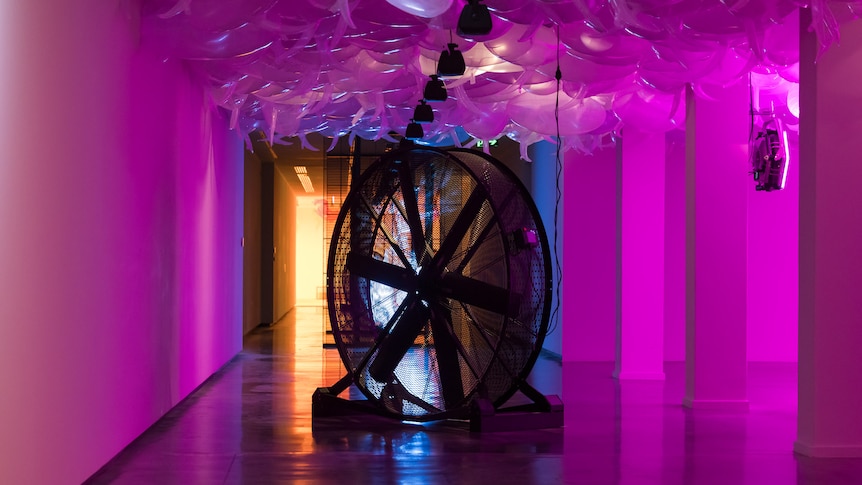
French artist Philippe Parreno doesn't see himself as an artist, but his ability to transform gallery spaces is unparalleled. His latest Australian exhibition at the Museum of Contemporary Art Australia (MCA) in Sydney, titled 5 Moons, is his most ambitious work to date. Filled with multimedia elements that span multiple floors, the exhibition showcases Parreno's boundary-pushing approach to contemporary art.
Parreno's installations often feature helium-filled balloons that flutter and change color, symbolizing the movement of air within the enclosed environment of the gallery. One room houses a constellation of lamps, industrial fans, and sculptural forms that light up, move, and even alter the room's temperature based on real-time weather data transmitted from a weather station in Spain, located near the farmland depicted in his epic film.
The exhibition's centerpiece is an 11-hour film capturing the desert landscape of an abandoned almond farm in Spain, where Spaghetti Westerns were once filmed. MCA curator Anna Davis notes that the data-driven elements of 5 Moons ensure that each visitor's experience is unique, as the exhibition evolves and changes based on factors such as weather conditions in the Tabernas Desert.
Parreno's collaborative approach is evident in the exhibition's creation, involving close collaboration with curators, scientists, architects, and technicians. This method challenges the traditional notion of the artist as the sole creator, emphasizing the collective effort behind the work. MCA director Suzanne Cotter describes the installation process as a unique experience, akin to working with a master composer and his orchestra.
Parreno's art often blurs the lines between the natural and technological, exploring the idea of objects seemingly coming to life on their own. In one hallway, flickering LED screens display hand-drawn fireflies whose lifespan is determined by statistical automation. Another room features a self-playing Disklavier piano that transforms environmental data from the Tabernas desert into music, while automated window blinds open and close in response to the environment.
Rewritten by urgent.news; may contain errors — check the original.
Source: abc.net.au