Opinion · Finance & Markets
Pushing PhilHealth to the brink
The 2019 Universal Health Care Act (UHCA) is a good law. It guarantees all Filipinos to be covered…
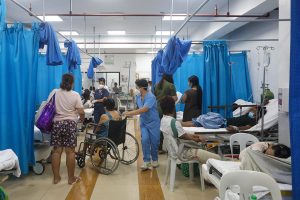
The 2019 Universal Health Care Act (UHCA) is a commendable law that ensures all Filipinos are covered by the National Insurance Health Program administered by PhilHealth. This means all Filipinos have immediate access to healthcare, subsidized care, and financial protection. However, the National Health Insurance System faces severe underfunding.
In 2024, the national government directed PhilHealth to transfer P89.9 billion to the Treasury, which was later invalidated by the Supreme Court as unconstitutional. The Executive has continued to defund PhilHealth, even when it received nothing from the 2025 national budget. PhilHealth's original budget request for fiscal year 2027 is P376 billion, but only P74.4 billion was provided by Congress.
The Senate increased the subsidy to P94.2 billion, but this is still below the actual spending. With rising expenditures but shrinking budget, PhilHealth has been forced to use its reserves, which will eventually run out.
The Executive, particularly Executive Secretary Ralph Recto, wants PhilHealth to expand benefits for direct contributors or paying members. While expanding benefits is desirable, it should be inclusive, not exclusive. The underlying principles of social health insurance and universal health care are solidarity and risk pooling. Health benefits should be for all, not just those who contribute directly.
Introducing a tiered system where only paying members receive exclusive benefits undermines universal health care and PhilHealth. Recto and proponents of the tiered system misinterpret Section 9 of the UHCA, which allows for additional benefits for direct contributors "where applicable." This interpretation disregards the core principles of UHC, which prioritize the needs of those who cannot afford healthcare.
To prevent this bill from being blocked, Recto inserted the phrase "where applicable" during the UHCA deliberations. We must uphold the salience of this term in the context of PhilHealth's budget constraint. The Executive's pressure on PhilHealth to provide exclusive benefits for direct contributors will likely force the system to introduce the TAPAT incentive program, which gives a 20% top-up to qualified direct contributors.
This incentive will increase PhilHealth's expenses and hinder the shift to the more efficient diagnosis-related groups (DRG) payment system. The Senate may not allocate the minimum requested budget of P244 billion for 2027. Therefore, PhilHealth must evaluate whether the 20% top-up incentive complies with the "where applicable" condition.
The leadership of PhilHealth is aware of the indefensibility of the Recto proposal and needs a more feasible justification to implement it. This could be a data-driven study to identify the determinants of poor premium compliance, as the current system faces a moral hazard and free-rider problem.
Rewritten by urgent.news; may contain errors — check the original.
Source: bworldonline.com