Parkinson’s Handbrake: How AIIMS surgeons used AI to map the Brain’s faulty signals
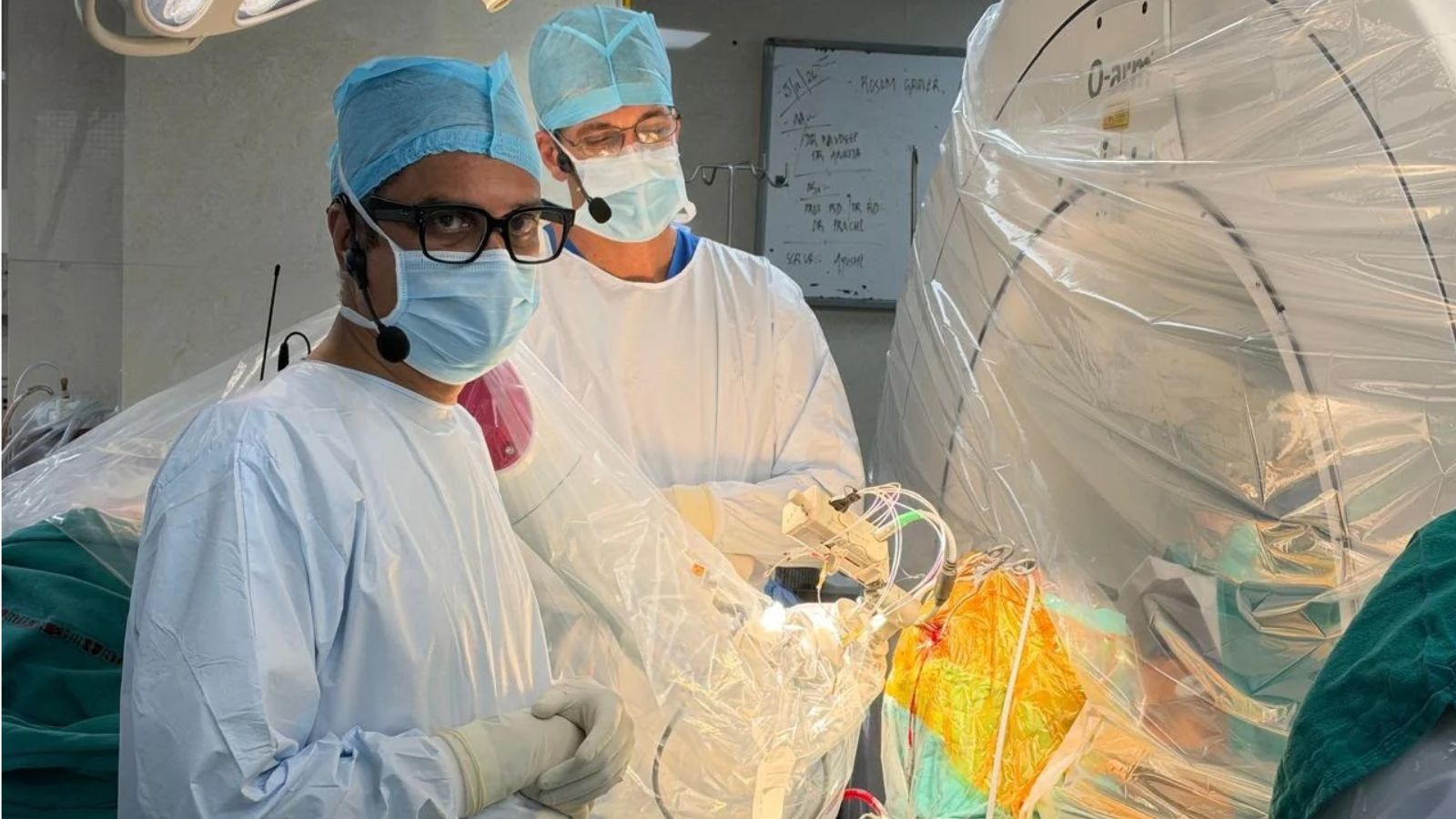
Neurosurgeons at the All India Institute of Medical Sciences (AIIMS) carried out India's first robot-assisted deep brain stimulation (DBS) surgery for Parkinson's patients on November 25. The groundbreaking procedure was led by Dr P Sarat Chandra, head of neurosurgery at AIIMS, alongside Dr Ido Strauss from Tel Aviv University in Israel. The AIIMS team was joined by Prof Ramesh Dadamani, Prof Satish Verma, and Prof Dattaraj in the operation.
Deep brain stimulation involves implanting thin electrodes deep within the brain, which deliver small, steady electrical pulses to calm the abnormal activity causing tremors, stiffness, and slow movement. These electrodes are connected to a device under the skin, functioning similarly to a pacemaker for the brain.
The robotic approach to DBS is significant, as it allows for more accurate and cosmetically pleasing results. This accuracy stems from the placement of electrodes guided by specific brain signals called beta oscillations. In a healthy brain, these oscillations appear at rest and diminish during movement; however, in Parkinson's patients, they continue even during movement. Dr Chandra described beta oscillations as a "handbrake" on a moving car, contributing to symptoms like bradycardia and rigidity.
During the robotic procedure, an AI algorithm analyzes the brain's signals and creates a heat map, pinpointing the areas of strongest beta activity. Surgeons then utilize this map to determine the final electrode position. Compared to conventional methods, the robotic technique is less invasive, requiring only a coin-sized scalp shaving and a 2.5-millimeter hole for electrode insertion, as opposed to larger incisions in traditional surgery. The absence of fixation caps also contributes to the improved cosmetic outcome.
However, Dr Elavarasi, a neurology professor at AIIMS, emphasized that there is no definitive evidence that robotic surgery is superior to conventional methods. The long-term benefits for patients remain uncertain and would require comparative studies.
The robot operates in conjunction with microelectrode recording, a technique where doctors monitor the electrical activity of individual neurons during surgery. This helps surgeons identify the target region by recognizing its unique signature. During the accompanying workshop, Dr Genela Morris of Tel Aviv University showcased an AI-based method for interpreting signals in real-time as the surgery progresses.
AI aids in identifying optimal entry and exit zones for the electrodes, reducing errors, shortening the time to reach the target, and ensuring consistency. However, AI does not replace human judgment in the procedure.
Not all Parkinson's patients are eligible for DBS. At AIIMS, a multidisciplinary team evaluates patients with significant motor fluctuations, a positive response to levodopa, and no clinical red flags before considering surgery. The cost of the DBS implant starts at approximately Rs 10 lakh at AIIMS, while the surgery itself is technically free. Private hospital costs can exceed Rs 35 lakh.
Rewritten by urgent.news; may contain errors — check the original.
Source: indianexpress.com