Memory, Loss And The Places We Carry: Exploring Kashmir Through Photographs And Forgotten Family Histories
Agar firdaus bar ru-ye zamin ast, Hamin ast-o hamin ast-o hamin ast. If there is Paradise on Earth, it is this, it is this, it is this. — Attributed to Amir Khusrau Some losses cannot be undone. Growing older means discovering how much we took for granted. What once seemed ordinary becomes precious; what seemed permanent vanishes. Sometimes all that remains of a lifetime is a photograph, an…
Paradise is said to be found on Earth in Kashmir, a place that embodies the sentiment "Hamin ast-o hamin ast-o hamin ast." As one ages, cherished memories become more significant, and life's permanence can be fleeting. When the only remnants of a life are photographs, objects, or story fragments, the relationship between memory and loss becomes evident.
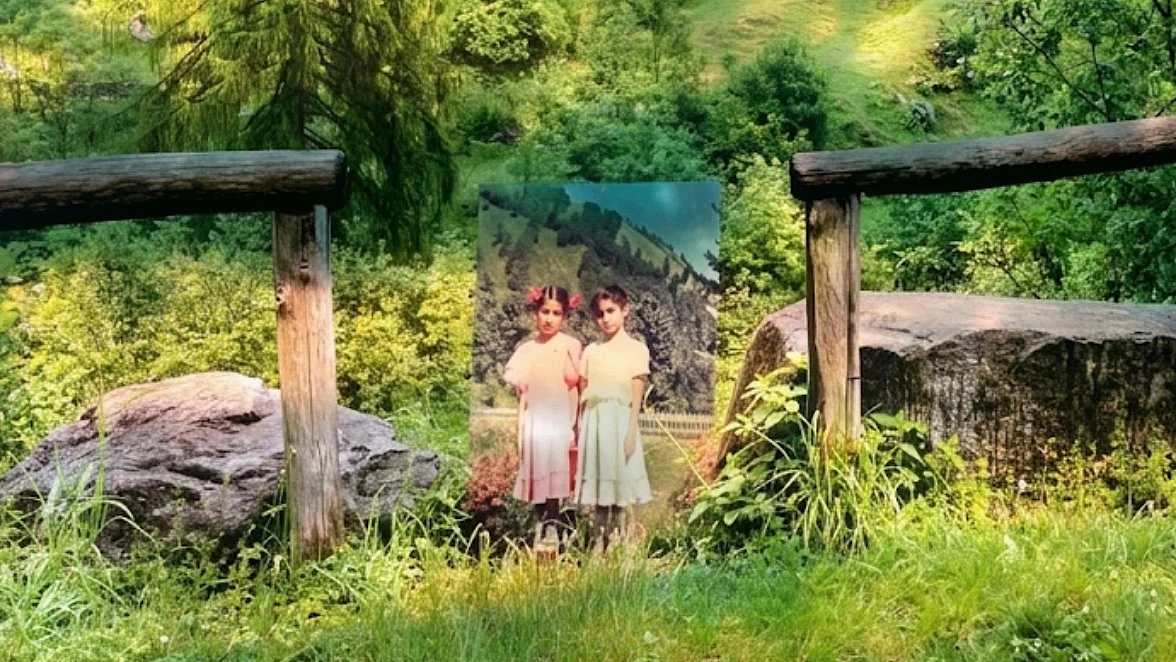
Will the Bulbul Sing to the Flowers Again? is a photographic exhibition at the Dilip Piramal Art Gallery in Mumbai, until December 20. Created by Anita Khemka and Imran Kokiloo, the exhibition explores the essence of home and the inextricable connection to the violence that has shadowed the valley. The poem attributed to Amir Khusrau, "If there is Paradise on Earth, it is this, it is this, it is this," is a testament to Kashmir's allure, but the exhibition reveals a different side of the narrative.
The artists investigate the impact of strife, exile, and loss on the landscape, represented through intimate snapshots rather than grandiose displays. They juxtapose archival family photographs with staged portraits, made during a residency in Switzerland, which mirrors Kashmir's beauty. These thoughtful installations prompt viewers to imagine the passage of time and the unchanged allure of familiar spaces.
While other artists have chosen to rebuild demolished homes or reconstruct personal histories through embroidery, Khemka and Kokiloo prefer to borrow a substitute landscape, acknowledging that home cannot be fully recovered. By focusing on the beauty, rather than the violence, the exhibition raises questions about whether the splendor of Kashmir can be separated from its turbulent history.
However, the artwork fails to fully capture the essence of the region's suffering, as the images lack the weight of the pain. The exhibition is just the beginning of a larger series, delving into folklore and abstract performance, all aimed at preserving the fractured memories of Kashmir, ensuring they are never truly lost.
Rewritten by urgent.news; may contain errors — check the original.
Source: freepressjournal.in