Iran’s quiet power shift: Is the security establishment tightening its grip as US pressure mounts?
As US pressure mounts, who is really in charge of Iran
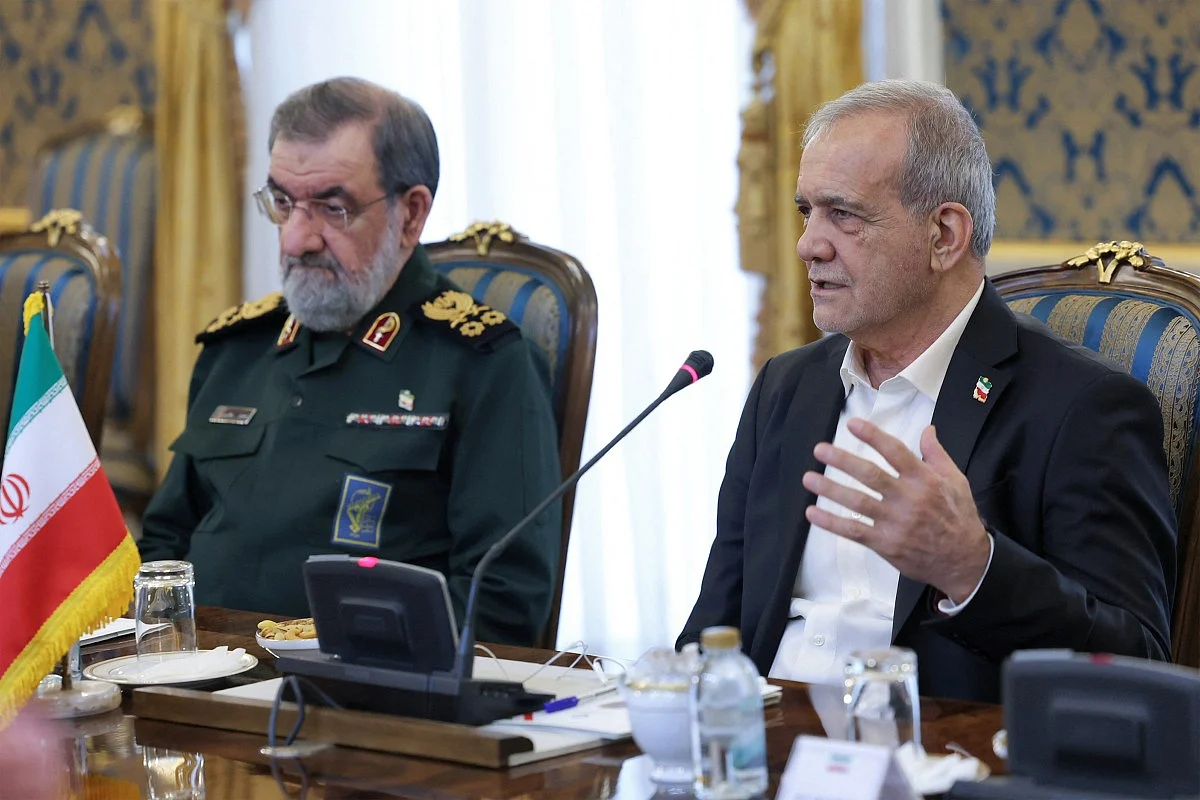
As Iran grapples with the consequences of a US naval blockade, stringent sanctions, and the looming possibility of renewed military conflict, a series of appointments has ignited discussions surrounding the distribution of power within its leadership. A comprehensive reorganization of Iran's Supreme National Security Council (SNSC) secretariat has resulted in the appointment of numerous conservative politicians and former government officials to prominent roles, underscoring the surging influence of the security apparatus in domains traditionally overseen by the civilian administration.
These selections, made by Mohsen Rezaei, a former commander of the Islamic Revolutionary Guard Corps (IRGC) and council secretary, extend beyond conventional defense and security concerns, encompassing areas such as economic resilience, energy, infrastructure, food security, and social affairs, which are critical to Iran's capacity to endure the intensifying American pressure.
Tehran's leadership faces a challenging situation, as it contemplates whether this shift is merely an administrative reorganization to address wartime circumstances or if the balance of power within the Islamic Republic is indeed beginning to alter. Iran's leadership is grappling with economic challenges exacerbated by the pressure exerted by the US, and the reshuffled appointments reflect a strategic emphasis on bolstering the government's ability to withstand such strain.
Rezaei's expanding role in the political landscape since the commencement of the war in February has been a notable development. A seasoned veteran of the Iran-Iraq conflict, Rezaei commanded the Revolutionary Guards from 1981 to 1997 and subsequently held several high-ranking political positions, including serving as economic vice-president under President Ebrahim Raisi.
On August 9, Supreme Leader Khamenei appointed Rezaei as his representative on the SNSC, while Pezeshkian subsequently designated him as the council's secretary. The dual appointment positions Rezaei at the crossroads of Iran's military, political, and economic decision-making processes. Rezaei's appointment decree, as reported by Tasnim news agency, emphasized coordination between state institutions and the resolution of emerging national security concerns.
Despite Pezeshkian retaining his constitutional authority as the president of Iran, he does not have the final say in council decisions, and the appointments of experienced economic and administrative officials to Rezaei's team has sparked questions about the shifting locus of authority. Unlike cabinet ministers, who require parliamentary approval, appointees to the SNSC secretariat bypass this confirmation procedure, even when their portfolios overlap with ministerial responsibilities.
The prominence of Rezaei and the security establishment has also garnered international attention, including an analysis published by Israel's Institute for National Security Studies (INSS). Political tensions have emerged, with critics arguing that Pezeshkian's energy-saving initiative appears weak to conservative observers, while government spokespersons defend the president's actions as a demonstration of national resilience during a time of crisis.
Rewritten by urgent.news; may contain errors — check the original.
Source: gulfnews.com