Urgent.News

What's breaking now, across hundreds of outlets.

AI

I stopped sitting at my laptop to use Claude Code, and started controlling it from my phone

I've taken my terminal mobile
I stopped sitting at my laptop to use Claude Code, and started controlling it from my phone

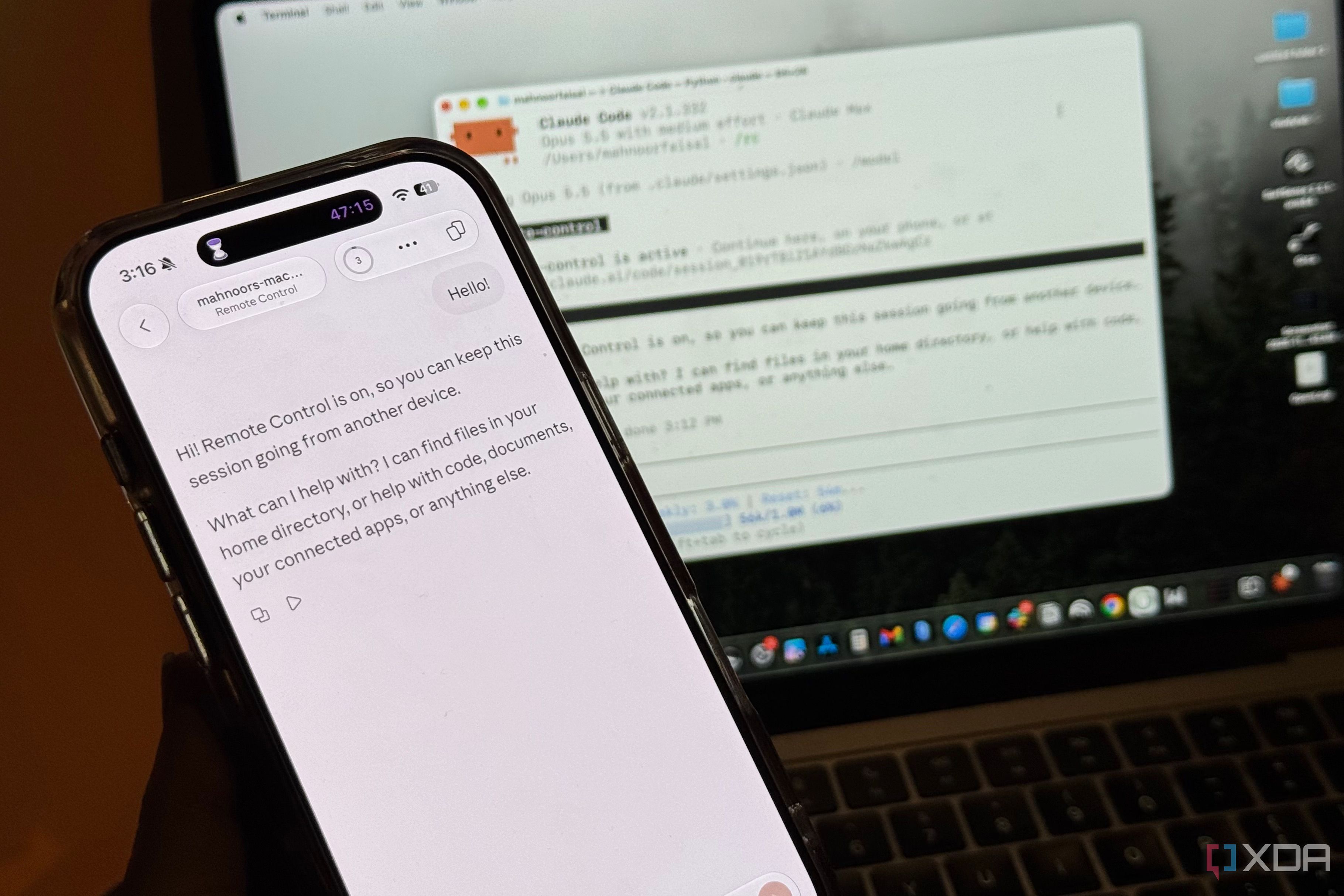
For years, I had a routine of using Claude Code on my MacBook laptop. However, I began to question if there was a better way to interact with the AI tool. Despite exploring new features and optimizing my workflow, I never considered using Claude Code on my phone. My comfort with the laptop setup made me stick to it even during simple tasks.

But then, I discovered Claude Code's Remote Control feature. This enabled me to control the Claude Code session running on my MacBook from my phone. All I had to do was type a specific command during an existing session, and suddenly, I could interact with Claude Code from anywhere. I was amazed at how seamlessly I could give Claude instructions, respond to clarifying questions, approve permissions, and review its work from my phone.

The phone and laptop sessions even synchronized, allowing me to transfer files and monitor progress without switching devices. I found the phone interaction surprisingly intuitive. I could use file paths stored locally on my MacBook, attach images directly from my phone, and even monitor subagents working on complex tasks. Remote Control allowed me to leverage all the tools and workflows I'd developed for my MacBook without needing to set them up separately on my phone.

The main requirement was keeping my MacBook awake and connected to the internet. But overall, using Remote Control to control Claude Code from my phone transformed the way I worked with the AI. It gave me flexibility to interact with Claude Code anytime, anywhere, without compromising the power of my existing workflow.

Rewritten by urgent.news; may contain errors — check the original.

Source: xda-developers.com

Read the original at xda-developers.com →

Report a problem with this story

More in AI

In first, IDF and US military hold joint cyber defense drill integrating artificial intelligence

According to an IDF statement, more than 100 cyber experts from units in both militaries took part in the exercise, which was held at a dedicated cyber facility in the US.

  • IDF and US military conduct first joint cyber defense drill using AI.
  • Over 100 cyber experts from both branches participate in 11 "CyberDome" exercises.
  • AI integration aims to enhance defense strategies against evolving cyber threats.

Using OpenCode With Any OpenAI-Compatible API (2026 Setup Guide)

OpenCode is an open-source terminal coding agent: it reads a repository, plans edits, calls tools and streams changes back to the terminal.

  • Create an API key and store it securely
  • Configure OpenCode with provider block details
  • Authenticate using custom/other provider option

How to brief an AI video model: the six lines that decide the render

Short answer: a good AI video brief has six lines — subject, timed action, camera, light, sound, and what must not appear.

  • Subject, timed action, camera, light, sound, and restrictions are six lines of AI video brief.
  • Each line addresses a specific aspect of the scene separately to avoid invented details.
  • Reviewing the brief ensures clear, singular directives before rendering to save time and money.

Rocket, an Indian rival to Lovable and Replit, is shutting down

Backed by Accel and Salesforce Ventures, Rocket says it was left with just months of runway after investors canceled a planned funding round.

  • Indian AI startup Rocket to shut down by end of December
  • Funding round canceled due to CEO's medical condition and financial discrepancies
  • Rocket had 400,000 users and $4.5M ARR when decision made

More from Sunday, 29 November 2026 →