Have our exercise books changed, or have our priorities changed?
I've been thinking lately about the exercise books we used growing up. I wonder how many people have noticed the change too. If you went to school in Ghana some years ago, you probably remember those exercise books with multiplication tables, country facts, and conversion charts at the back. You would also find the days of the week and the months of the year printed there. They were simple books,…
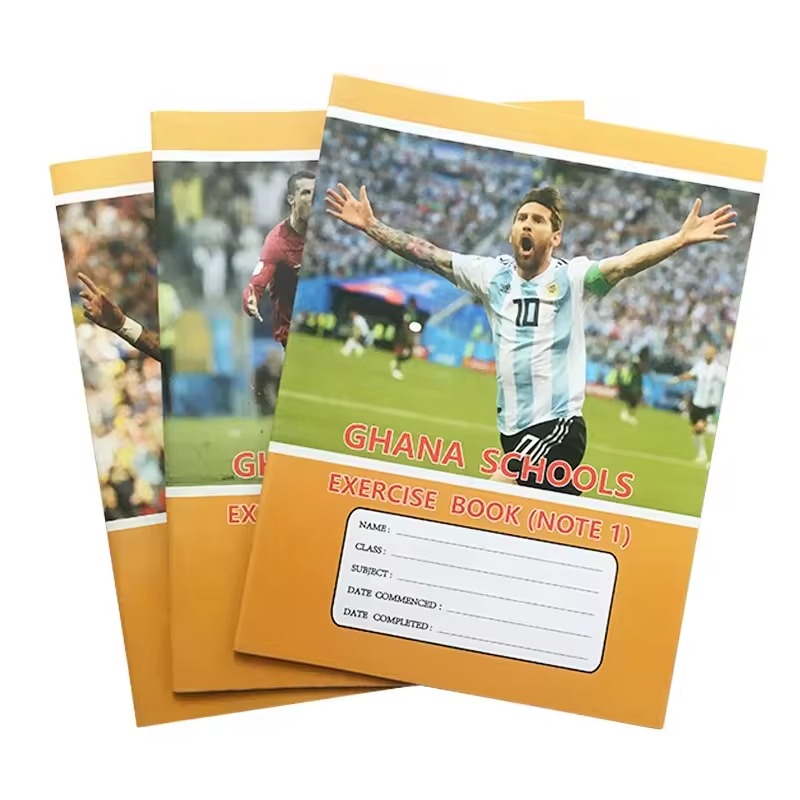
Many people have noticed the change in the appearance of exercise books used in Ghanaian schools. In the past, these books typically featured multiplication tables, country facts, and conversion charts at the back, along with days and months of the week. These small learning reminders proved useful in class and beyond, as they provided repetitive exposure to essential information.
Today, however, exercise books often showcase the faces of popular celebrities, such as footballers, musicians, and actors, on their covers. While it's not inherently problematic for children to enjoy colourful designs and admire the people they see, it does raise questions about the balance between making exercise books attractive and ensuring they remain useful.
Jean Piaget's cognitive developmental theory suggests that children learn by repeatedly encountering information, which can aid their memory. Similarly, Lev Vygotsky's sociocultural theory posits that children learn through interactions with others and their environment. Therefore, an exercise book that includes simple facts, local languages, and cultural information could serve as a valuable tool for learning and social interaction.
Moreover, the people featured on exercise book covers can influence children's interests and aspirations. Albert Bandura's social learning theory indicates that children can learn from observing others, and a celebrity on the cover may inspire and motivate them. However, it's worth considering why Ghanaian celebrities, scientists, writers, and historical figures are not as commonly represented.
Introducing Ghanaian role models on exercise book covers has the potential to spark curiosity and discussions about these individuals and their contributions to society. This approach aligns with Urie Bronfenbrenner's ecological systems theory, which emphasizes the impact of a child's environment on development. By incorporating diverse representations, exercise books can play a role in socialization and help children appreciate their own country's achievements and stories.
Rewritten by urgent.news; may contain errors — check the original.
Source: myjoyonline.com