„Grand Theft Auto“: Wie wir aus und mit Videospielen wie GTA 6 lernen
Nicht nur die Games-Szene diskutiert, was GTA 6 zeigt. Eine Seite beschwert sich über das Männlichkeitsbild, andere beklagen Gewalt. Was lernen wir aus Videospielen und wie beeinflussen sie Gamer?
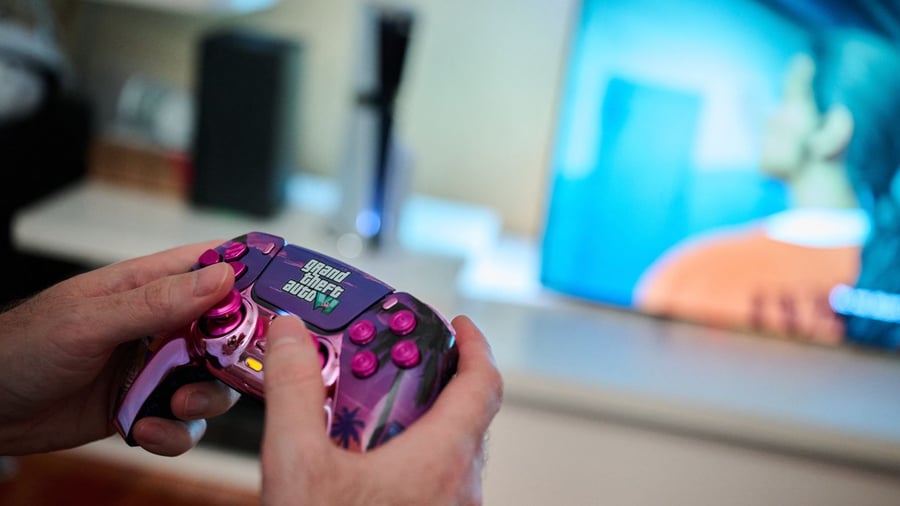
"Grand Theft Auto 6" is a video game where players can steal cars, smuggle drugs, book private dances at a strip club, and shoot people. At the same time, it's a game where players can bring flowers to their partner, fix their house's roof, or stroll hand in hand through a shopping center. The game is surrounded by controversy, with critics debating its supposed false image of masculinity and the violent representation.
The game challenges the worldview of those who consume it, leading to questions about whether men might learn how to treat their partners better or violent individuals might learn to apply violence. Can people learn from video games? According to Alexander Preisinger, a history didactician from the University of Vienna, we learn continuously from everything.
However, it's difficult to measure the impact. The effectiveness depends on whether the learning is sustainable or if it provides many new pieces of information. Jessica Kathmann-Rosenthal, a psychologist at the Leibniz-Institute for Wissensmedien, researches learning with games. She explains that learning with games isn't like a machine where the game goes in and a behavior change comes out.
Instead, our perceptions, values, and prior knowledge intervene, creating new connections and decisions. The game confronts players with things that don't align with their worldview, causing cognitive conflicts that need to be resolved. The process could involve ignoring conflicting information or replacing parts of their worldview.
Does the game teach anything differently than other media like books or films? Video games differ from other media because they react to the actions of the players. This reaction could be simple, such as the game telling the player they did something wrong, or it could involve giving feedback like "try something different." Preisinger emphasizes that good game design should use learning loops, allowing players to form hypotheses, test them, and receive feedback.
This is known as "discovering learning," which is the highest category of learning because it is autonomous and involves a subjective game experience. Players can also discuss their experiences with others who have played the game to process their learning further. This process of "trying out" actions in a protected space, as observed in children playing in a store, can occur in adults as well.
However, adults often lack the space for such trial and error outside of games. What does this mean for real life? The actions in the game cannot be translated one-to-one into real life. Preisinger clarifies that firing a weapon in GTA doesn't mean the player will do the same in real life. "People are very good at distinguishing between the real world and the trial-and-error process."
For example, just because someone can drive a car in GTA using the controller, it doesn't mean they can drive a real car on the street. Playing GTA doesn't automatically make someone violent or teach them to bring flowers to their partner. However, the game creates a normalcy that persists over long-term consumption. A meta-study from 2023 shows that attitudes towards topics shown in video games change the longer the games are consumed.
GTA 6 differs from its predecessors by introducing more consequences, such as how brutally the characters act or whether they shoot opponents in the head or the kneecap. The game registers and feeds this information into a profile, as well as the relationship between the main characters. Depending on how brutal the characters are and how well they maintain their relationship, the game rewards or punishes the player.
Preisinger recommends discussing GTA 6 in schools, using teaching impulses to help teenagers process what they see in the game and think more critically about it.
Rewritten by urgent.news; may contain errors — check the original.
Source: handelsblatt.com