Opinion · World
Gender equality in leadership must go beyond ticking boxes
The death of Dr Phumzile Mlambo-Ngcuka highlights the unfinished struggle for gender equality in leadership. Despite progress, women remain underrepresented in South Africa’s senior public service, business and political structures. Their inclusion must go beyond numerical targets to ensure they have a meaningful voice in shaping decisions.
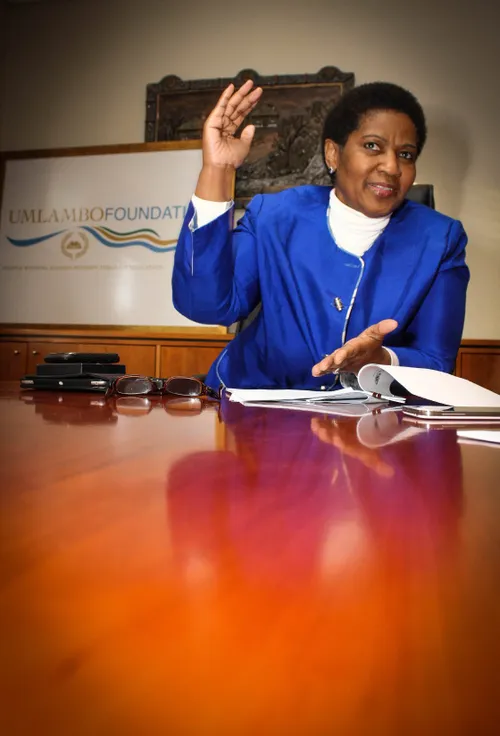
The columnist argues that gender equality in leadership must extend beyond mere tokenism. As US Supreme Court Justice Ruth Bader Ginsburg once stated, "Women belong in all places where decisions are being made. It shouldn’t be that women are the exception." Dr Phumzile Mlambo-Ngcuka embodied this philosophy, becoming South Africa's first female Deputy President in 2005 and leading UN Women from 2013 to 2021.
Mlambo-Ngcuka tirelessly advocated for women's representation in decision-making tables across governments and companies worldwide.
While significant progress has been made, women remain underrepresented in leadership roles within the public service and private sector. Despite constitutional advancements and decades of activism, women continue to be marginalized from the decision-making process where budgets are set and priorities are chosen. The columnist contends that organizations with half the talent pool in their leadership ranks and limited perspectives will make inferior decisions.
Diverse leadership teams, comprising individuals with varied backgrounds and experiences, are better equipped to tackle complex problems and adapt to rapid changes. In policy-making, where the consequences affect millions, women's input is crucial for crafting effective and equitable policies.
The columnist emphasizes that South Africa has made progress, but falls short of the 50% target set in 2006. While women's representation in the public service has improved, it remains below the desired level. Globally, only 28 countries have female heads of state or government, and women hold a mere 22.4% of cabinet positions. In the private sector, women represent 29.3% of top management roles, a figure that has not shown significant improvement.
Local government fares no better, with women occupying only a third of mayoral positions and between 30% to 39% of senior management roles. The columnist argues that merely increasing the numbers of women does not guarantee inclusion or improved decision-making. True inclusion requires active listening to diverse viewpoints, deliberate pathways for women's advancement, and a culture that supports junior colleagues challenging senior leaders.
Organizations must adopt a holistic approach to inclusion by integrating it into their policies, leadership practices, and organizational culture. Policy frameworks should set the expectations, leaders must model these behaviors, and a supportive culture should foster genuine participation. When women are fully integrated into leadership, the benefits extend beyond the organization, enhancing governance, public policy, and societal trust.
Ultimately, seeing women in leadership roles inspires young women to aspire to similar positions, fostering ambition and representation.
Rewritten by urgent.news; may contain errors — check the original.
Source: iol.co.za