Flyselskapene som forsvant: – Ekstrem optimisme
Norse Atlantic er sist ut av flere norske flysatsinger som har snublet de siste tiårene.
Norse Atlantics' bankruptcy warning on Friday echoes Fly, FlyNonstop, Color Air, and most notably, Norwegian, which had to seek bankruptcy protection due to the coronavirus crisis. The incident might also remind one of a famous quote from Virgin Atlantic founder Richard Branson: "If you want to be a millionaire, start with a billion dollars and start a new airline."
On Friday, Norse management stated that the Norwegian company is being wound up, but efforts are being made to find solutions for the listed company Norse Atlantic ASA and its British subsidiary, with no guarantees being provided. The same day, leasing companies that own the airline's 12 Dreamliners announced they were terminating the contracts, but Norse disputed the validity.
NHH professor Frode Steen believes the situation is a classic one. "It's an extremely challenging industry, but with investors who have an extreme optimism," Steen told E24. He points out that Norwegian founder Bjørn Kjos had an ambition to revolutionize the intercontinental airline market with the company's Dreamliners. Norwegian also had a strong brand, especially in the US, and a useful connection system in Europe, according to him.
"They didn't manage it, so how on earth would Norse manage it?" asks the professor. The extensive international expansion put Norwegian under significant financial risk, and long-haul scheduling was postponed during the pandemic. Many of the Dreamliners ended up with Norse, which had very favorable leasing terms at the time. This has often been used as an argument for why Norse could succeed.
Those contracts were apparently so attractive that Norse founder Bjørn Tore Larsen considered selling them further before the start. "We hadn't started without them," Larsen told E24 in December five years ago. "Cheaper leasing, yes. But a lot of the reason why traditional network carriers get long-haul is because those sitting in front pay for almost the entire plane," says the NHH professor.
He adds that premium seats are fine, but many in the target group have the option to pay 2-3 times more to lie flat in traditional network carriers. At the same time, the offer is not attractive enough for business travelers, who have good alternatives and attractive offers among network carriers, he says. He adds that flying long-haul is both complex and expensive, with many of the advantages for low-cost carriers in short-haul missing, such as faster turnaround and more flight hours on the aircraft.
In addition, the use of fuel, which started to rise in 2022 after the war in Ukraine, has given aviation a powerful cost increase. Norse has at times chartered parts of the fleet to other operators, and the company has flown to popular destinations between US, European, and Asian cities, as well as to exotic winter destinations such as Barbados.
"They have tried, and they haven't been lucky," Steen says. The difficult market is probably one of the reasons why they managed to return some Dreamliners and have had planes standing on the runway, he says. In a way, Norse has come to a strange end due to factors outside the company's control, like many other airlines before it, according to him.
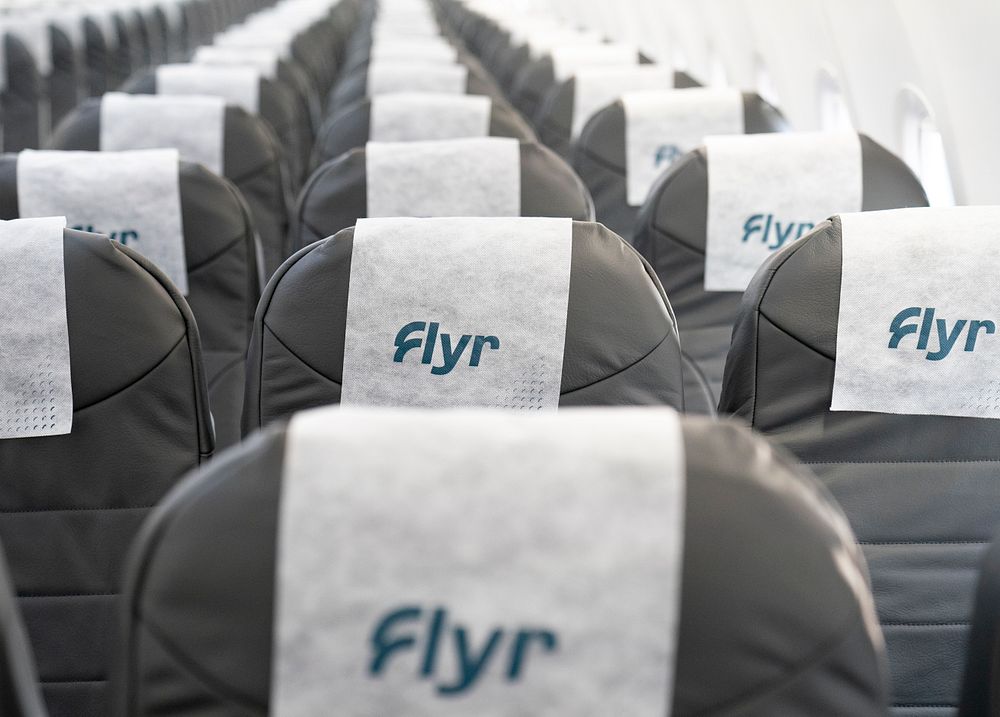
"International traffic has not recovered from the coronavirus pandemic, and the growth we saw before COVID has not returned," Steen says. "You are completely dependent on that growth to succeed as an add-on player," he says. Among the most prominent airline bankruptcies of the past decade, there is Erik Braathen's low-price Flyr in the wake of the pandemic (2020-2023).
That venture, which included several Norwegian employees, was seen by some as a bet on a Norwegian bankruptcy. "Many thought Norwegian would not return to normal operations after reconstruction, and Flyr positioned itself to take over after them," Steen told E24 back in 2023. As is known, Norway's rescue attempt succeeded, and Flyr never managed to establish profitable operations.
It therefore went bankrupt on February 1, 2023, after 19 months of operation. "We gave everything we had in terms of energy, knowledge, and experience, but it was not enough," Braathen said at the time. The same fate befell Espen Hennig-Olsen's direct flight from Kristiansand to European destinations in 2013. His FlyNonstop had to cut routes just a month after launch.
And after half a year of flight operations, bankruptcy was a reality. "The limit had been reached. We cannot fly at the creditors' expense," the founder said at the time. Ferregader Nils Olav Sunde, who recently sold Color Line to Stena, tried to establish Norway's first low-cost airline, Color Air (1998-1999), which was ultimately sold to Narvesen.
SAS and Braathen responded with a strong capacity increase and price competition. After flying with near-empty planes and ticket prices down to 300 kroner for 13 months, Color Air packed up in September 1999.
Rewritten by urgent.news; may contain errors — check the original.
Source: e24.no