Opinion · Business
¿El final del cabildeo?
Lo que se pone en riesgo es que la legítima causa del cabildeo se trunque con la medida con la que se quiere despedir la Dra. Claudia Sheinbaum para destruir en el 2030 a los legisladores plurinominales.
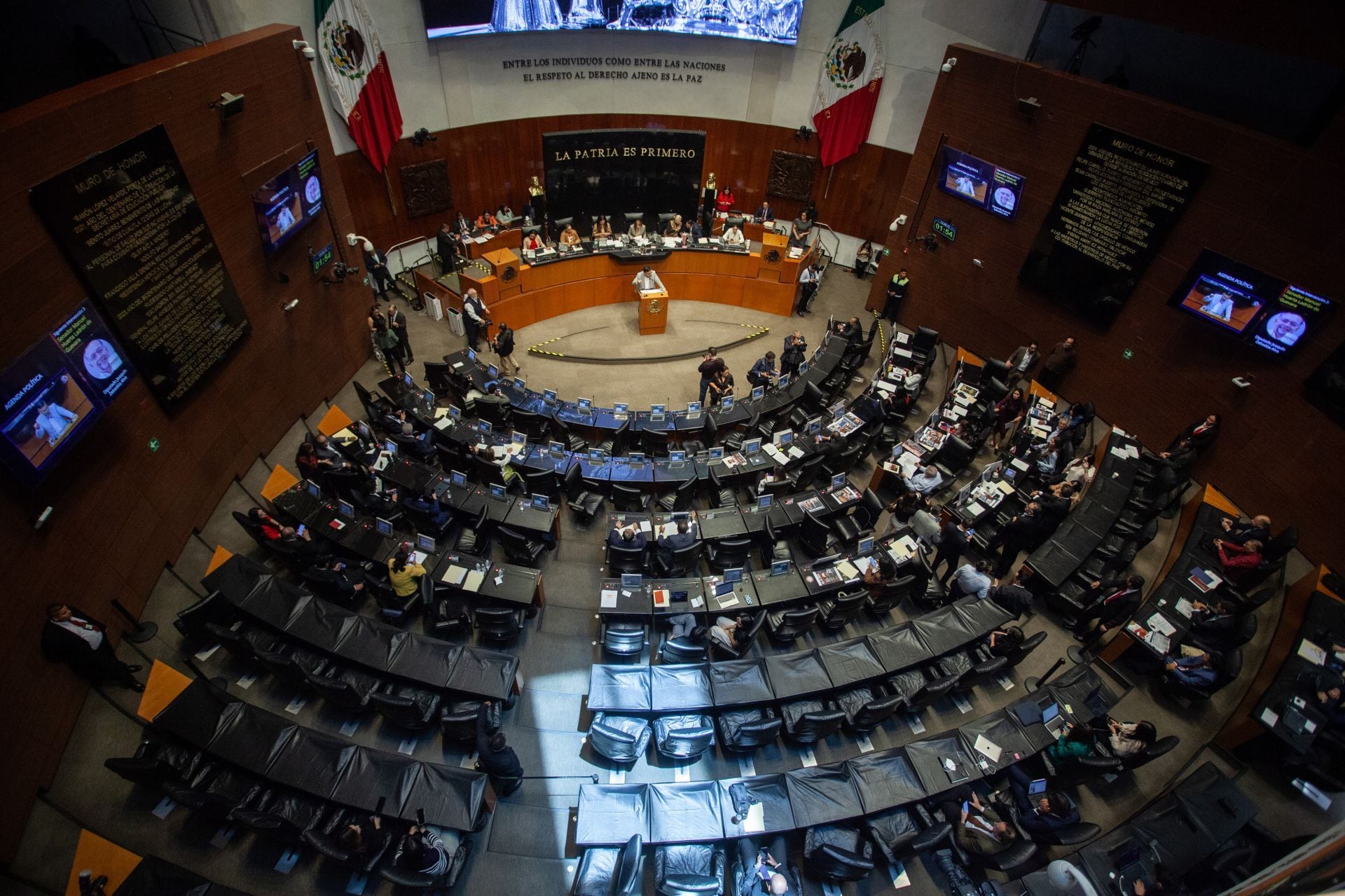
The author argues that the redefinition of the legitimate interests of social bodies, trade unions, public causes, national or foreign companies, before instances of power, particularly the Legislative Power, is undergoing a transformation. The introduction of an initiative by the leader of the official majority, Ricardo Monreal, has sparked a debate that, if it aims to go beyond the content of the parliamentary instrument, must be able to clarify the landscape of challenges in the democratic governance of Mexico.
Since 2018, the arithmetic of parliamentary power has transformed the divided government from 1997 to 2018 into an official hegemonic majority. While many key players acknowledge this privately, the "technical coup" against the Judicial Power also allowed for the consolidation of a parliamentary majority based on clear overrepresentation.
Clarifying that no one can oppose clear rules for lobbying as all social and private sector activities interact with governmental, the columnist questions why a special law is needed to regulate lobbying at a critical juncture between private and public sector relations in the self-proclaimed "four Ts." There is no secret that both governments originating from Morena have created "intermediaries of convenience," unaware of other relevant business and social actors in Mexico.
In some cases, ostracism and condemnation from the pinnacle of power have been the worst examples of a false openness. Those groups catering to certain interests before the President of Mexico are subject to lobbying regulation? The Mexican electorate decided that from 1997 to 2018, divided governments were a reality. Political pluralism, the wide diversity of a country such as Mexico, and new political forces allowed the Mexican Legislative to become aware of its power, both as a creator of legislation and as a check on the Executive.
The deliberation of major national issues along with essential normative instruments, such as the economic package, was the cause. Even the "public administration head" is currently observed as a player only provided with resources to compensate for the vigor of a Legislature that is just discovering its capacity to be heard, if not to oblige, as Pablo Gómez explicitly stated, recalling Luisa Béjar Algazi in her book "Los partidos políticos en el Congreso de la Unión."
The main alarm is that a new legal instrument appears to justify the regulation of lobbying when, ironically, the majority legislative has renounced its own struggle for genuine checks against the old presidentialismo posrevolucionario. The meta-presidentialist elements today are greater than the left sought to combat in the past.
Another realistic point destroying from within the republican bulwark is the weak political density of legislators in the supermajority legislative. One thing is to accompany the President out of political loyalty, and another is to undermine the Executive by renouncing the very capacities that Pablo Gómez exemplifies. Many like him have been legislators for decades with instruments that enabled them to expand democratic participation.
What is at risk is that the legitimate cause of lobbying will be sidelined with the measure to dismiss Dr. Claudia Sheinbaum to destroy plurinominal legislators by 2030. What would another legal command serve to angels if the demons of an autocracy decide everything without debate? Why a lobbying regulation if the ultimate goal is to avoid and face genuine social participation, which is so relevant for leaving it to political parties?
The political responsibility rests on the constitutional validity of a law for lobbyists. Many experts have warned that a new legal order against the Organic Law of the General Congress of the United Mexican States (published in the Official Gazette of the Federation on September 3, 1999) is counterproductive. Juan Carlos Delgadillo Salas, former Secretary of Parliamentary Services of the House of Deputies, questioned that having an additional law to regulate internal aspects of the legislature may collide with the Organic Law of the legislature itself.
This strengthens the risk of setting a precedent for regulating other internal matters or processes of legislative life. In short, there are "laws for Congress, not just one law." One of the virtues of the law regulating Congress is its immunity from veto, a privilege due to its organic nature, and not requiring Federal Executive promulgation.
The columnist cites a 19th-century liberal newspaper that said, "Mexico, after the colony, entered a labyrinth from which we do not know how to exit." Today, the labyrinth does not offer a hopeful light on democratic destruction.
Rewritten by urgent.news; may contain errors — check the original.
Source: elfinanciero.com.mx