China says 'reunification' cannot be stopped, after Taiwan election
China warned on Sunday that "reunification" cannot be stopped, responding to Taiwan's local elections where the ruling Democratic Progressive Party (DPP) doubled the number of cities and counties it controls, though it lost the Taipei mayoral vote.
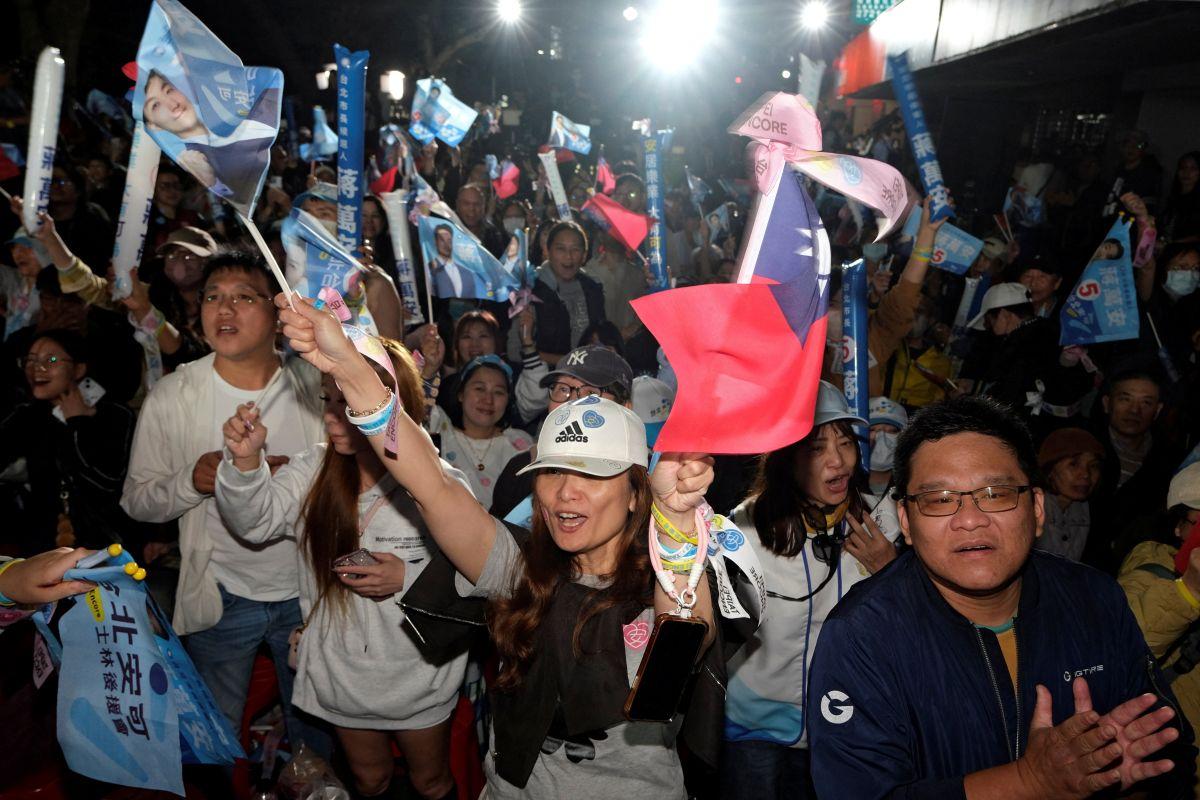
On Sunday, China firmly stated that "reunification" with Taiwan cannot be prevented, following the island's recent local elections. In the elections, the ruling Democratic Progressive Party (DPP) significantly expanded its control over cities and counties on the island, although it fell short of winning the Taipei mayoral race. China considers Taiwan as its own territory and has never ruled out using force to reclaim the island.
Taiwan's government, however, rejects Beijing's sovereignty claims. Taiwan's Taiwan Affairs Office observed the election results, stating that a majority of the public in Taiwan favored peace, development, and cooperation. Regardless of how Taiwan's political landscape evolves, China maintains that the reunification of the "motherland" is inevitable and unalterable.
The Chinese government will persist in cracking down on Taiwan independence separatists and opposing external interference, advancing the cause of national reunification.
Taiwan's government urged China to respect its democratic system and the choices of its people, calling for a pragmatic approach to the election results. They emphasized that Beijing should engage with Taiwan's democratically elected government under the principles of "no preconditions and equal dignity." China, however, refuses to negotiate with Taiwan President Lai Ching-te, labeling him a separatist. Lai, the DPP chairman, argues that only the people of Taiwan can determine their future.
The Taiwan issue did not dominate the election campaign, with a focus on domestic matters such as water safety and school meals. Nonetheless, China had relentlessly targeted the DPP's Taipei candidate, Puma Shen, who has been sanctioned by Beijing for his alleged separatist views. China intensified its military presence around Taiwan, dispatching dozens of warplanes and warships in the skies and waters surrounding the island on Friday.
The focus now shifts to Taiwan's next presidential election, scheduled for early 2028. While Lai Ching-te is expected to seek his second and final term, the candidate from the main opposition party, the Kuomintang (KMT), whose party traditionally supports close ties with China, remains uncertain. KMT Chairwoman Cheng Li-wun met with Chinese President Xi Jinping in Beijing in April and announced that there was much work ahead, including preparations for the 2028 presidential election.
She did not reveal any details about the KMT's presidential candidate. Chiang Wan-an, KMT's re-elected Taipei mayor, is widely expected to be a potential future presidential contender. He dismissed the possibility of standing for president, focusing instead on serving as mayor for the next four years. The KMT also experienced a significant loss in gaining control of the central city of Taichung, a major blow for the party.
Although Puma Shen, the DPP candidate who lost in Taipei, raised his profile and attracted attention across Taiwan, he stated that the next election is still a long way away and that he would be returning to teaching and his legislative duties.
Rewritten by urgent.news; may contain errors — check the original.
Sources: nst.com.my · koreatimes.co.kr · gmanetwork.com · jpost.com · thevibes.com
This story
This is one outlet's version. Read the fullest account.
- China says 'reunification' cannot be stopped, after Taiwan election nst.com.my
- China says 'reunification' cannot be stopped, after Taiwan election koreatimes.co.kr
- China warns 'reunification' cannot be stopped following Taiwan's local elections jpost.com
- China says Taiwan reunification inevitable despite DPP gains in local elections thevibes.com