Basura espacial, la nueva amenaza
Los avances tecnológicos y la competencia entre países han impulsado los lanzamientos, generando toneladas de desechos que ponen en riesgo las misiones y a la humanidad
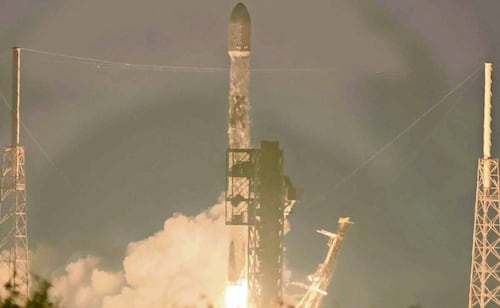
Bruselas - A half-century after the approval of the Outer Space Treaty, the exploration and use of humanity's celestial heritage by states has often fallen short of the commitments of equity and sustainability. What began as an exploration campaign into the unknown has evolved into a space race among a few nations, with states failing to take responsibility for the pollution caused by abandoned mission debris in space.
The 1996 United Nations General Assembly Declaration of Legal Principles, ratified by the depositary governments of Russia, the United Kingdom, and the United States in 1997, stipulated that space exploration and use should be a common heritage of all humanity, used exclusively for peaceful purposes, and without causing contamination.
As of October 2025, 118 countries have ratified the treaty governing the principles for state activities in exploring and using outer space, including the Moon and other celestial bodies. Letonia and Malaysia are the latest to join. According to a report jointly published by the European Commission's Research Services and the European Parliament, the field of outer space has witnessed an unprecedented surge in activity in recent years, driven by state competition due to economic opportunities, improved Earth communications and observation capabilities, and technological advancement and security projection desires.
The report also highlights the growing presence of international organizations and private companies such as SpaceX, OneWeb, and Blue Origin.
The expansion has been facilitated by technological advancements, reduced launch costs, and an insatiable search for connectivity and exploration. This has led to a dramatic increase in the number of orbital launches. In 2025, 325 launches were conducted, double the number in 2021, 145, and nearly five times more than in 2010, 74.
According to the European Space Agency (ESA), the total number of successful rocket launches since the Sputnik launch that marked the beginning of the space age in 1957 amounts to 7,320, placing approximately 27,490 satellites in orbit, 18,840 of which remain in space and 15,900 are operational. About 46,950 space objects are under surveillance.
However, the rapid growth of activities has underscored significant sustainability challenges in space, according to the community institutions' report. "The absence of comprehensive regulatory frameworks governing space activities has led to a situation where risks associated with space debris are worsening. Abandoned satellites, spent rocket stages, and collision fragments contribute to a growing cloud of debris, posing a threat to both current and future missions," the report states.
"The likelihood of collisions increases as more objects are launched, endangering critical infrastructures and even human lives in crewed missions."
Rewritten by urgent.news; may contain errors — check the original.
Source: eluniversal.com.mx