B.C. cranberry farmers say climate change threatening crops
Climate change means cranberry farmers in B.C. are left trying to adjust their growing and harvesting seasons due to changing weather.
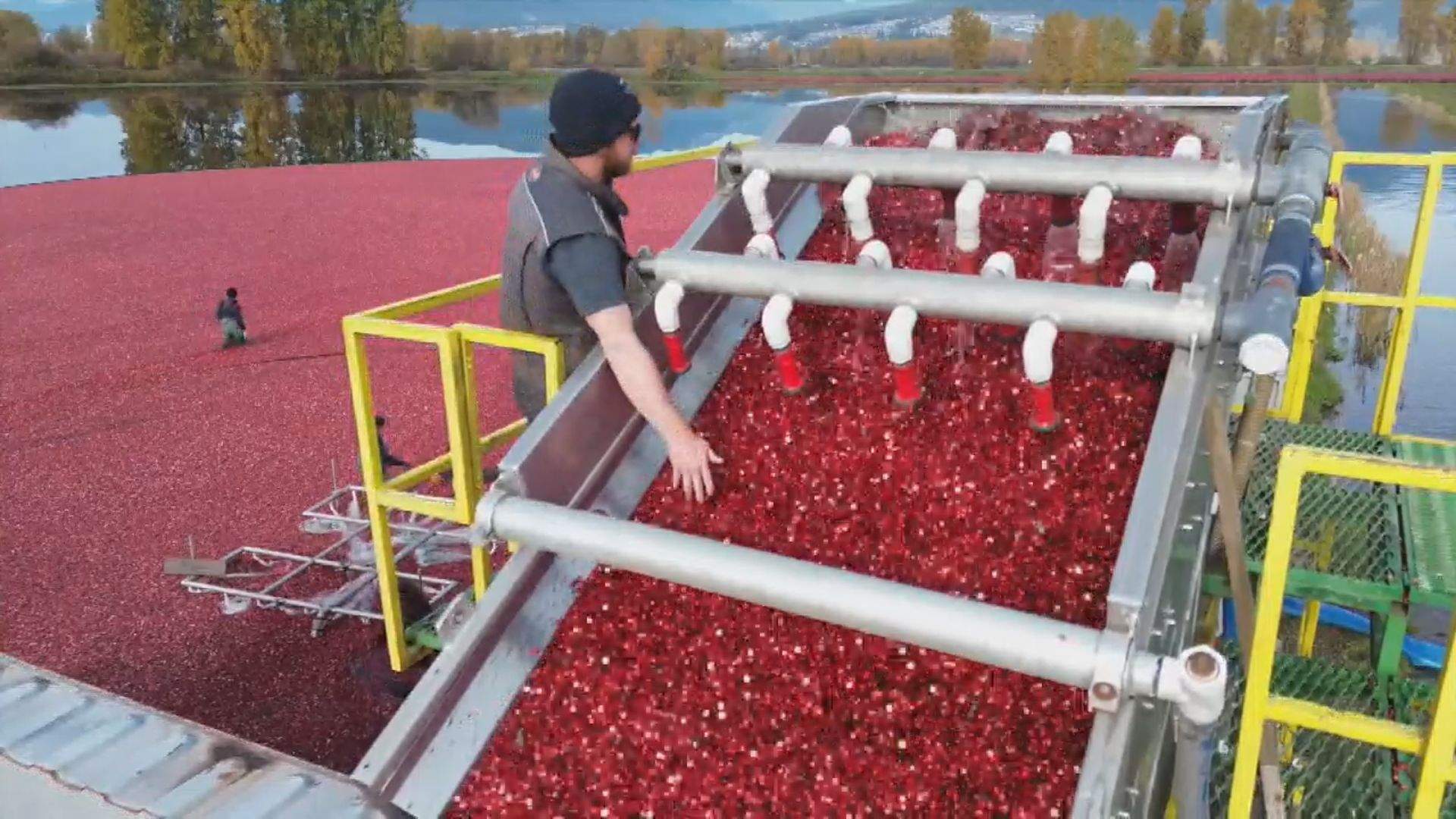
Cranberry farmers in British Columbia are grappling with the challenges posed by climate change, which is forcing them to adapt their farming practices. Traditionally, farmers relied on September rains to provide the necessary water for flooding their fields during harvest season. However, Travis Hopcott, whose family has been in the business since the late 1990s, notes that the rain now arrives much later, increasing the risk of frost on the berries.
Hopcott recalls how, in May 2021, an entire crop was lost within 45 minutes due to an extreme temperature spike.
The onset of warmer winters and earlier springs also poses a threat to cranberry crops. A study by Charles Armstrong, a professor at the University of Maine’s Cooperative Extension, suggests that warmer and earlier springs may cause cranberry buds to swell prematurely, before the risk of frost has passed. Ted Scott, a PhD student in geology at the University of British Columbia, echoes this concern, warning that farmers might be caught off guard by warm weather, only to face another frost later in the season, causing significant damage to their crops.
In response to these challenges, cranberry farmers are exploring various adaptation strategies. Hopcott and his family have begun flooding their fields earlier in the year, waiting for a layer of ice to form and then draining the water to create an insulating layer over the vines. Additionally, they have started using water as part of a springtime strategy, as it takes significantly longer to change temperature than air. This water coating can help increase the temperature of the bog and protect the berries.
Despite these efforts, climate change is creating a sense of uncertainty for cranberry farmers. Hopcott acknowledges that they may need to make more drastic changes, such as reducing the size of their bogs to make flooding easier, potentially leading to the abandonment of land used for food production. This prospect is deeply unsettling for the farmers, who never imagined they would face such decisions in their careers.
Rewritten by urgent.news; may contain errors — check the original.
Source: globalnews.ca