Altersversorgung: SPD sieht Kompromiss für Rente - Union: „Nicht akzeptabel“
Beim Reizthema Rente steckt die Koalition seit Monaten fest. Nun preschte der SPD-Minister mit einem Entwurf vor, der aber bei der Union auf Vorbehalte stößt. Kommt trotzdem etwas in Bewegung?
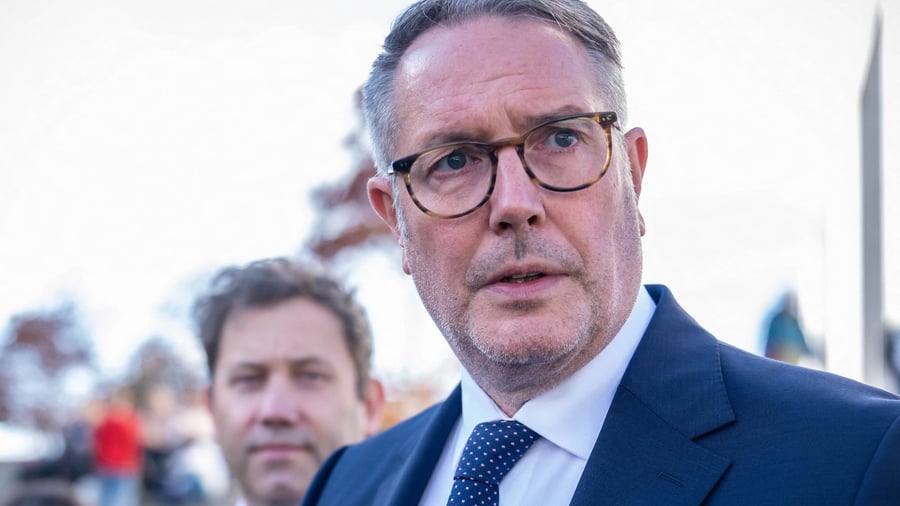
The ongoing debate over the pension reform continues after proposals by Federal Labor Minister Alexander Schweitzer (SPD). Union faction chief Thorsten Frei (CDU) criticized the Minister for pushing funding points for the reform to the sidelines or removing them from the draft entirely. The SPD maintains that the proposal is a smart compromise.
"The proposal is an astute compromise," stated SPD Chairman and Vice Chancellor Lars Klingbeil to the "Rheinischen Post." Schweitzer, who took office in mid-October, had submitted a bill to the government for a vote on Friday. The largest point of contention between coalition partners revolves around the former pension, which allows particularly long-term insured workers after 45 contribution years without deductions.
According to the proposal, its core should remain intact. However, the eligible group would become smaller, with times spent on unemployment benefits or minimum jobs no longer counting. What remains of the "grand design"? Klingbeil stated: "We seek a pension reform that works for all generations." Schweitzer now presented a "comprehensive and equitable" concept for this purpose.
"The younger generation can count on the pension level remaining stable through the new capital pension," elaborated the SPD leader and stressed that those who started early and contributed for a long time had earned their pension after 45 years. The Union would like to abolish the one-time "pension at 63" as the Commission of experts and policy experts had recommended.
Even Schweitzer's predecessor Bärbel Bas (SPD) praised the recommendations as a "grand design." However, the plans were increasingly met with resistance within the SPD, and the coalition became locked. That the new Minister suddenly came out with a bill deviating from the Commission's concept caught the Union somewhat cold. CSU takes Schweitzer at his word, Chancellor spokeswoman Nina Warken (CDU) made clear that the draft had been coordinated in the early stages.
"No reconciliation is possible." Union faction leader of the Union, Pascal Reddig (CDU) accused Schweitzer of reneging on the commission's achieved compromise. "The only partial implementation of the agreement is detrimental to the younger generation," he told the "Frankfurter Allgemeine Zeitung." The CSU held Schweitzer accountable for a real convergence.
"The Labor Minister has created movement with his uncoordinated bill, but his work is not done," said Landesgroup head Alexander Hoffmann to the newspapers of the Bayern media group. "He must ensure that it becomes a federal government bill." Hoffmann also emphasized that if the Minister wanted to largely retain the pension after 45 contribution years, it would mean further burdening the younger generation.
"I expect a serious proposal on how Mr. Schweitzer can relieve the system somewhere else financially." In the coalition, it was also agreed beforehand: "Hard cases yes, regular cases no." The reform could not succeed "by removing a major building block at the expense of the young without adding another relief." Higher deductions and capital pension The draft also already foresees higher savings effects elsewhere.
So it should also be possible to retire after 35 contribution years in the future. However, the resulting deductions are to be increased - from 0.3 percent to 0.4 percent per month for early retirement. This higher deduction had not been recommended by the Commission. It should also no longer be possible to retire early before 63, but only from 64.
A key point of the reform should be a new capital pension: starting in 2028, only 0.5 percent and later two percent of gross income should be paid and invested additionally - financed by employers and employees with the hope of earning returns on the capital market. Minimum wage earners should no longer be exempt from the duty of pension insurance from 2028, except for students and employees in private households.
Those starting a self-employment should have to be insured in the social security system. "Sullied Attempt" Business association BUND expressed sharp criticism of the proposals. Chief executive Steffen Kampeter spoke of a "sullied attempt to distract from the own reform unwillingness." Particularly incomprehensible was an imbalance between additional burdens and reliefs.
The capital pension is only justifiable if further reliefs come along. This includes the as soon as possible and complete abolition of the deduction-free early pension. "It is an expensive and unfair privilege that additionally burdens the working majority." Chancellor Friedrich Merz (CDU) had already expressed the goal before the news of the draft to push the reform forward in essential parts before Christmas.
Schweitzer said in the ARD that he had now created the preconditions for this. "How far we now come with this proposal, we will discuss it together in the coming days."
Rewritten by urgent.news; may contain errors — check the original.
Source: handelsblatt.com