AI can ease burden of care, but humans must keep the final say, Qatar Foundation’s WISH8 Told
Doha, Qatar: Artificial Intelligence can already track an older person's sleep, flag a change in how they walk and spare clinicians hours of paperwork. What it should not do is make the decisions that define ‘care’, experts have said at Qatar Foundation’s WISH8 summit. A panel discussion titled ‘Can AI Help Care Stay Human in An Aging World, held during the eighth edition of the global gathering…
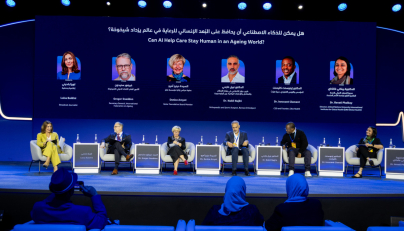
Doha, Qatar – Artificial Intelligence can already monitor an elderly person's sleep and walk patterns, potentially saving healthcare professionals time on paperwork. However, AI should not be responsible for making the final decisions about a person's care, according to experts gathered at Qatar Foundation's WISH8 summit.
During a panel discussion titled "Can AI Help Care Stay Human in An Aging World," moderator Luisa Baldini presented a scenario involving an 80-year-old woman living alone. Her sleep was monitored by sensors and her gait tracked by an algorithm, resulting in a risk score.
The panelists acknowledged the potential benefits of AI in healthcare, particularly in surgery where orthopedic surgeon Dr. Nabil Najihi noted that precision is not the same as success. He emphasized that perfect surgery and X-rays do not always equate to a happy patient. Instead, AI's role should be to prompt clinicians to consider what matters most to each individual.
Gregor Sneddon, Secretary General of the International Federation on Ageing, warned that a focus on efficiency can inadvertently undermine care. He cited a US program that used healthcare spending to identify those in need but overlooked African American patients, who often received less care despite having greater needs. Sneddon also noted that robotic cleaners in a Toronto-area setting replaced home visits, which could have allowed staff to detect early signs of distress.
Denise Amyot, a QF board member and expert on longevity, pointed to a 2022 University of Toronto study that found ageism in AI tools. She argued that research on individuals over 60 has often focused on decline rather than strengths. Amyot emphasized that AI algorithms depend on what they are designed to look for, and when researchers began investigating positive aspects of aging, they discovered that critical thinking, judgment, and resilience often improve with age.
Revati Phalkey, Director of the United Nations University International Institute for Global Health, suggested that success should be measured by whether older people can maintain their desired level of functioning and retain the right to withdraw from AI-assisted decisions. She urged developers to track outcomes across diverse groups and involve older individuals, people with disabilities, and low-income communities in the design process from the outset.
When asked where AI should draw the line, Phalkey and Sneddon emphasized the importance of human oversight in clinical decision-making. Najihi reiterated that AI should never make decisions for patients, especially regarding consent, and Amyot firmly stated that AI should never determine when or how someone dies. WISH8, which is taking place on November 29 and 30 at the Qatar National Convention Centre in Doha, represents a forum for dialogue, collaboration, and innovation focused on the concept of the "New Health Span."
Rewritten by urgent.news; may contain errors — check the original.
Source: thepeninsulaqatar.com