3D-printed molar clip turns silent mouth movements into AI prompts
The InvisiSpeech is a silent speech recognition device that allows you to execute voice commands without anyone hearing them.
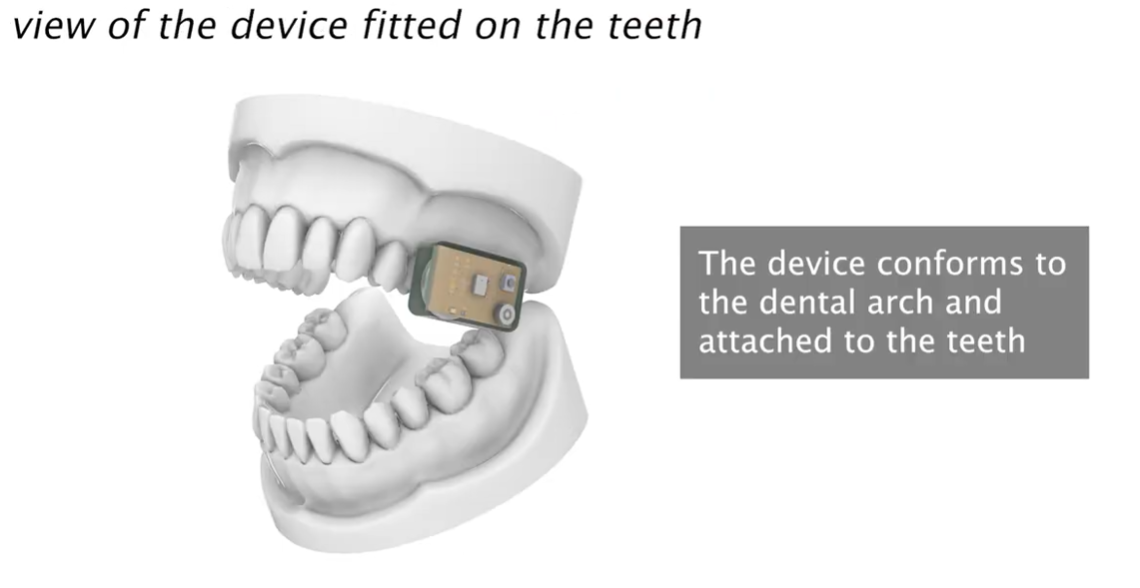
InvisiSpeech is a new tooth-mounted device that allows for speech recognition through mouth movements, enabling private and discreet human-AI interaction. This innovative technology, developed by the Sensing, Interaction & Perception Lab (SIPLAB), is housed inside the mouth and attached to the rear molars. Utilizing a few electronic components housed within a flexible, biocompatible resin shell, InvisiSpeech captures speech without the need for audible words.
The device primarily relies on subtle lip movements, tongue position, and airflow within the mouth to function, with very little actual movement required to produce usable signals.
InvisiSpeech leverages OpenAI's Whisper automatic speech recognition model to convert mouth movements into text. This speech recognition system is designed to translate audio into text and facilitate language translation. The device's performance was tested on 15 participants, who were able to execute 50 commands from Apple's official Siri guide, ranging from two to seven words in length.
The Whisper model demonstrated 91.54% accuracy in recognizing commands under ideal conditions with the participant stationary and silent. However, the accuracy decreased in noisy environments and while walking, falling to 86.27% and 47.63%, respectively.
The device's unique design aims to make it virtually undetectable, allowing for silent speech interactions in various settings. For example, an employee could discreetly ask an AI about the latest quarterly revenue of a company, and the answer would appear on a smartwatch. InvisiSpeech could also be used to interact with smart home devices without disturbing others, eliminating the need for loud commands like "Alexa!"
The InvisiSpeech research paper highlights the device's potential in noisy environments, privacy protection, and communication assistance for individuals with disabilities. As technology continues to advance, more research into SSIs is being conducted to enhance ubiquitous computing and AI communication applications.
Rewritten by urgent.news; may contain errors — check the original.
Source: tomshardware.com