Urgent.News

What's breaking now, across hundreds of outlets.

Tech

The Reason NVIDIA's First GPU Was So Iconic

NVIDIA's first GPU was the start of a major graphics card revolution.
The Reason NVIDIA's First GPU Was So Iconic

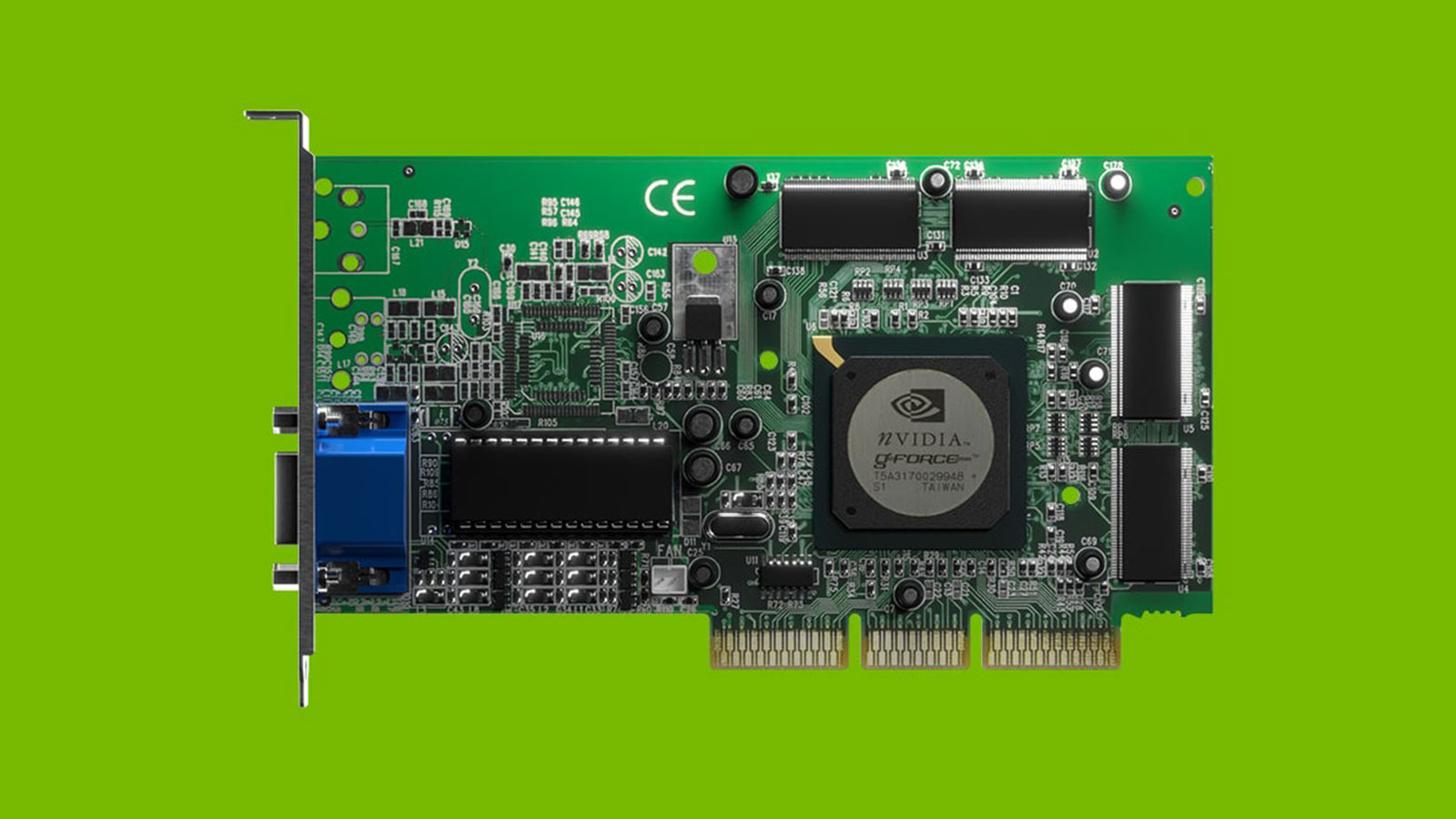
In 1999, NVIDIA released its first GeForce product, the GeForce 256, which was marketed as the world's first graphics processing unit (GPU). This decision would change the industry forever and solidify NVIDIA's dominance in the gaming GPU market. Although the GeForce 256 may seem modest by today's standards, with only 17 million transistors and up to 64MB of memory, it was the first video card to fully support Microsoft's DirectX 7.0 API and hardware transform and lighting (T&L) capabilities.

Before the GeForce 256, graphics cards were considered "accelerators" that worked alongside a computer's processor to render 3D games. The GeForce 256 revolutionized this by handling the entire process from start to finish, enabling far more realistic and detailed graphics. When compared to other cards of the time, such as the Creative Labs TNT2 Ultra, the GeForce 256 outperformed them significantly.

Games like Quake 3 Arena and Unreal Tournament, released soon after the GeForce 256, showcased the card's performance and superiority. The GeForce 256's release marked a turning point in the PC gaming landscape, with NVIDIA's marketing strategy emphasizing the card's importance for gaming alongside CPUs.

Rewritten by urgent.news; may contain errors — check the original.

Source: engadget.com

Read the original at engadget.com →

Report a problem with this story

More in Tech

We Taught the Ledger to Answer "What Process Was This?" - and It Would Rather Say "Partial" Than Guess

Short answer: our economic event ledger is append-only and honest about what happened, but each row is just a kind, some actors, and a payload.

  • Ledger answers "What Process Was This?" with SUPPORTED, PARTIAL, UNSUPPORTED, or AMBIGUOUS
  • EPIC-236 update adds read-side interpretation layer for precise answers
  • System provides complete transparency by resolving actors through four identity rails

Self-Host AdGuard Home with Docker to Block Ads Network-Wide

Ads and trackers follow you across every device: phones, laptops, smart TVs. Browser extensions only cover one browser at a time, and public DNS blockers hand your query history to a third party.

  • Self-host AdGuard Home server on VPS using Docker
  • DNS server accessible only to own IP address
  • Blocklist OISD Small prevents ads and trackers

Auditing root-run CGI handlers after CVE-2026-135790

Auditing root-run CGI handlers after CVE-2026-135790 CVE-2026-135790 should prompt application-security teams to inspect every privileged CGI handler in their appliance firmware.

  • Authenticated attacker can execute arbitrary OS commands via vulnerability.
  • Mitigation involves removing shell interpretation from CGI handlers.

More from Saturday, 28 November 2026 →