The Forecast for Christmas Is Muddy
El Niño is lowering the chance of snow across much of the country. But the polar vortex could still intervene.
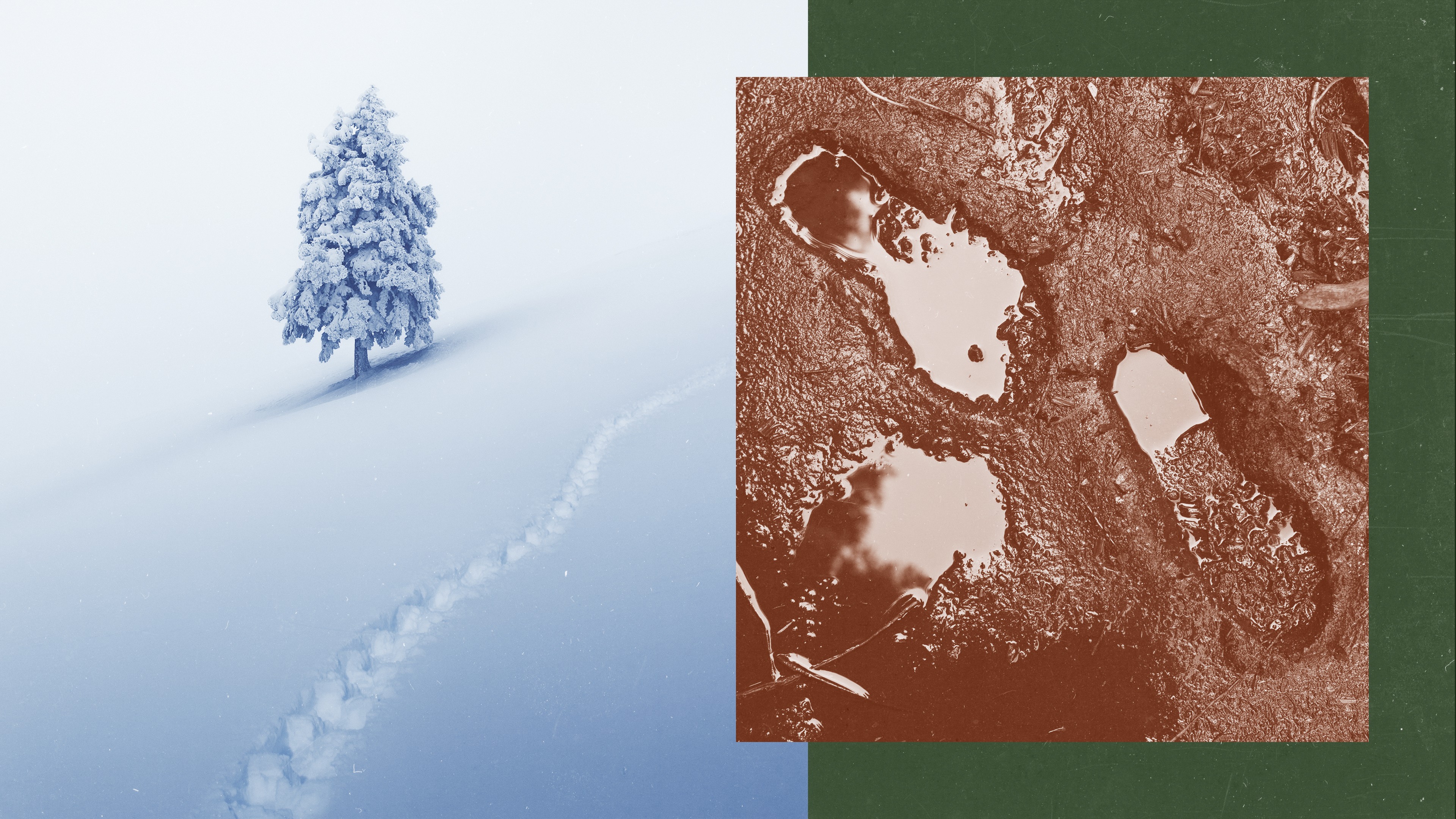
Snowville, New Hampshire, has been blanketed in snow for nine out of the past ten Christmases, with a 65 percent chance of a white Christmas this year based on an online weather tool. However, this is down from the usual likelihood, thanks to a super El Niño weather event. This climatological cycle, which has been around for at least 250 million years, weakens Pacific winds, causing warm water to accumulate around South America.
This heat redistribution alters weather patterns in the U.S., typically leading to warmer conditions in the North and a wetter, cooler climate in the South. Meteorologists predict this year's El Niño could be the most intense since 1950, resulting in less snow and a higher chance of mud across the country. The National Oceanic and Atmospheric Administration's latest Winter Outlook suggests an 80 percent probability that the powerful El Niño conditions will endure through the new year, bringing more rain to the southern U.S., particularly the Southeast.
Places like Florida, California, and the Four Corners region have already experienced significant flooding this season. While a muddy Christmas is not certain, historical data since 2003 reveals a wide range of snowfall during El Niño events. This year's El Niño is also coinciding with record-high ocean temperatures, making it the most powerful since 1950, which complicates predictions about snowfall.
Additionally, the polar vortex, responsible for bringing cold air to the U.S., has started to weaken early this year. Scientists are still uncertain about the cause, but climate change might be contributing to the rapid warming of the Arctic. Regardless, the interaction between the abnormally strong El Niño and the weakened polar vortex remains unpredictable, making it difficult to foresee whether Americans will enjoy a muddy or white Christmas this year.
Rewritten by urgent.news; may contain errors — check the original.
Source: theatlantic.com