South-east Asia’s scam compounds are a security crisis, not just a crime wave in Asean — Phar Kim Beng
NOVEMBER 28 — South-east Asia’s cyber-scam industry has become one of the region’s most consequential security…
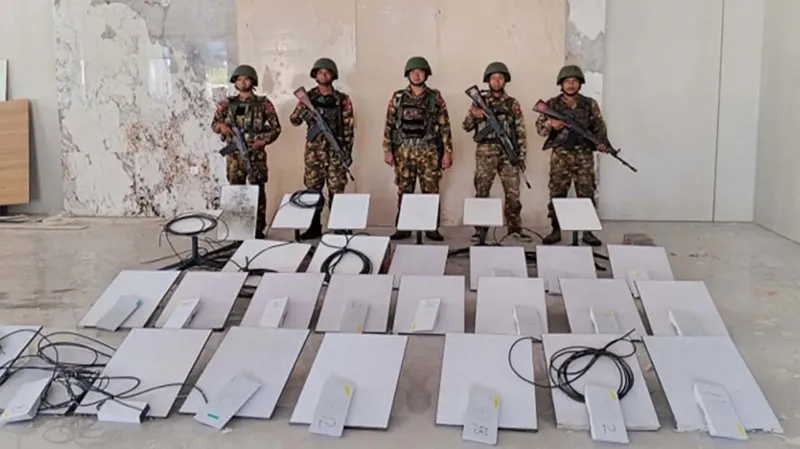
South-east Asia's cyber-scam industry has evolved into a significant security challenge, extending beyond isolated fraud cases. This transnational economy thrives on armed conflict, corruption, porous borders, and the gradual expansion of Chinese influence across the Mekong region. According to the International Institute for Strategic Studies (IISS), cyber-scamming costs East and South-east Asia a staggering US$37 billion annually, with Cambodia potentially losing US$12.5 billion to US$19 billion each year, potentially equivalent to half of its formal economy.
The alarming growth of this industry is directly linked to Myanmar's political instability. With the closure of China's border due to Covid-19, criminal networks that relied on physical smuggling and casinos shifted their operations online. Following Myanmar's 2021 coup, weakened security allowed armed groups, militias, and syndicates to expand their reach.
Scam compounds proliferated in Myanmar's border regions, infiltrating casinos, hotels, and business areas in neighboring Cambodia and Laos, exploiting trafficking, coercion, and confinement of workers. Victims from around the globe fell prey to romance scams, cryptocurrency schemes, and "pig butchering" operations, with profits channeled back into armed groups and criminal networks, perpetuating the very conflict that enabled the compounds' existence.
The central concern lies in the symbiotic relationship between Myanmar's war and South-east Asia's scam economy, which mutually reinforce each other. As Myanmar's conflict generates ungoverned spaces, scams generate substantial revenue, aiding the financing of armed actors. China, having a vested interest in curbing the fraud given the substantial number of Chinese victims, has attempted to address the issue.
Nevertheless, Beijing's approach has also become a tool for advancing its strategic influence. Beijing has encouraged Myanmar's armed groups and authorities to combat scam centers, facilitated dismantling parts of the industry, and fostered cross-border police cooperation through the Lancang–Mekong framework. Despite these joint operations resulting in tens of thousands of arrests, the cooperation also signifies a greater Chinese security footprint in South-east Asia.
Anti-scam enforcement is undoubtedly necessary, but it should not be employed as a means to establish lasting political leverage. Asean governments must collaborate on crime prevention without relinquishing control over their security decisions. Thailand, located at the heart of this issue, faces a formidable challenge. The country's border with Myanmar serves as a conduit for people, drugs, precursor chemicals, and scam-related finance, with its electricity, telecommunications, and banking systems being exploited by scam compounds located on the other side of the border.
While cutting power and internet access to scam hubs may initially appear effective, it is insufficient, as operators have adapted by utilizing satellite internet, generators, and solar power. Raids may temporarily disrupt networks, but they do not eradicate the entire ecosystem that enables their return.
To effectively tackle this complex issue, South-east Asian governments must adopt a comprehensive strategy that recognizes cyber-scamming as organized crime, human trafficking, and armed-conflict financing. This approach should encompass targeting financial infrastructure, including crypto exchanges, payment agents, shell companies, and banks facilitating the laundering of scam proceeds.
Protecting and repatriating trafficking victims, instead of criminalizing them, should be prioritized. Coordinated Asean enforcement, intelligence-sharing, and victim-support mechanisms must be established. Simultaneously, efforts should be made to pressurize Myanmar's authorities and armed actors to dismantle the scam compounds and break the protection networks surrounding them.
Developing lawful economic alternatives in border regions is crucial to provide alternative employment opportunities, thus diminishing the appeal of criminal syndicates as the sole source of livelihood.
Ultimately, the success of South-east Asia's response to this crisis will be determined by the degree of state capacity, regional solidarity, and independence displayed by its governments. Periodic raids and press releases will not suffice; instead, a concerted effort to address the underlying political economy sustaining the scam economy is essential.
The world is watching closely, and the outcome will reveal whether South-east Asia chooses to confront the crisis before it becomes permanently intertwined with its politics.
Rewritten by urgent.news; may contain errors — check the original.
Source: malaymail.com