Pipe dream? Why China is in no rush to seal major gas pipeline deal with Russia
Formerly known as Power of Siberia 2, the proposed Power of Baikal pipeline would carry Russian gas to China via Mongolia, but a deal remains elusive despite years of talks. CNA visits a Chinese border city where businesses hope for new opportunities amid uncertainty.
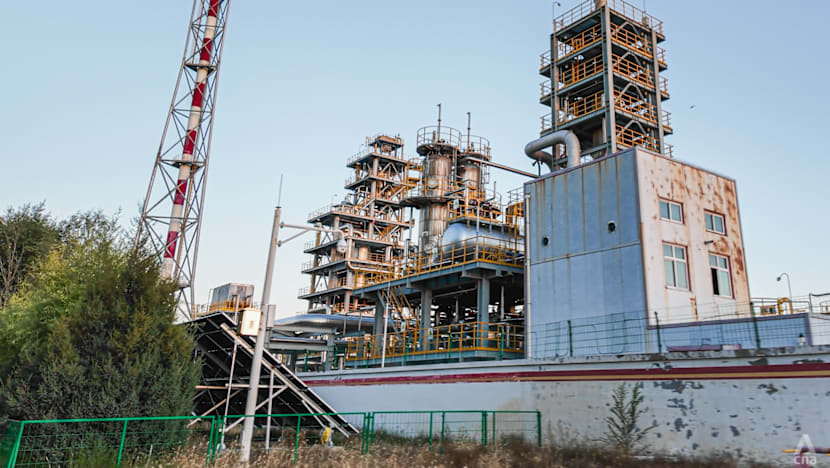
Inner Mongolia's Erenhot, once a thriving hub of construction activity, now faces a slowdown, according to Zhao Youjun, a 60-year-old businessman who ventured into selling heavy machinery. He attributes the downturn to limited construction work, particularly in Mongolia, where economic resources remain constrained. Meanwhile, renewed Russian efforts to finalize a major gas pipeline connecting Russia and China through Mongolia could present new opportunities for businesses in the region.
Despite the delay, Erenhot's strategic location as a major trading gateway to Mongolia positions local businesses well to benefit from related construction and logistics demand. The proposed pipeline, dubbed Power of Baikal until September, would transport up to 50 billion cubic meters of Russian gas annually to China over Mongolia.
This equates to roughly 11% of China's natural gas consumption in 2025, as per International Energy Agency estimates. The project, renamed in honor of Russia's Lake Baikal, would augment the existing Power of Siberia 1 pipeline, which began supplying Chinese gas in 2019 and reached full capacity in 2025 at 38 billion cubic meters.
However, despite years of negotiations, key commercial terms, particularly pricing, remain unresolved. For Russia, which has lost substantial European gas markets due to its Ukraine invasion, the project offers a vital alternative export route. Conversely, China, endowed with its own gas production and multiple import options, holds a more advantageous bargaining position.
Experts suggest Beijing is content to maintain the project on the negotiating table, showing no urgency to advance it. Planning for a western gas pipeline linking Russia and China dates back to 2006, with multiple iterations before the route through Mongolia gained traction in 2019. In September 2025, Russian state-owned energy company Gazprom announced a legally binding memorandum with China to build the pipeline, including a transit section via Mongolia known as Soyuz Vostok.
However, the agreement did not cover a final gas supply contract, leaving key issues of pricing and financing unresolved. Russia continues to push for a breakthrough, with Russian Deputy Prime Minister Alexander Novak expressing optimism that Gazprom and China National Petroleum Corporation could finalize commercial agreements by the end of 2026.
Rewritten by urgent.news; may contain errors — check the original.
Source: channelnewsasia.com