Interview: Achim Steiner: „Donald Trump hat der Energiewende einen kräftigen Schub gegeben“
Der Vorsitzende der Hamburger Nachhaltigkeitskonferenz fordert eine umfassendere Debatte über globale Sicherheit. Öl, Gas und Kohle sieht Steiner als Auslaufmodell.
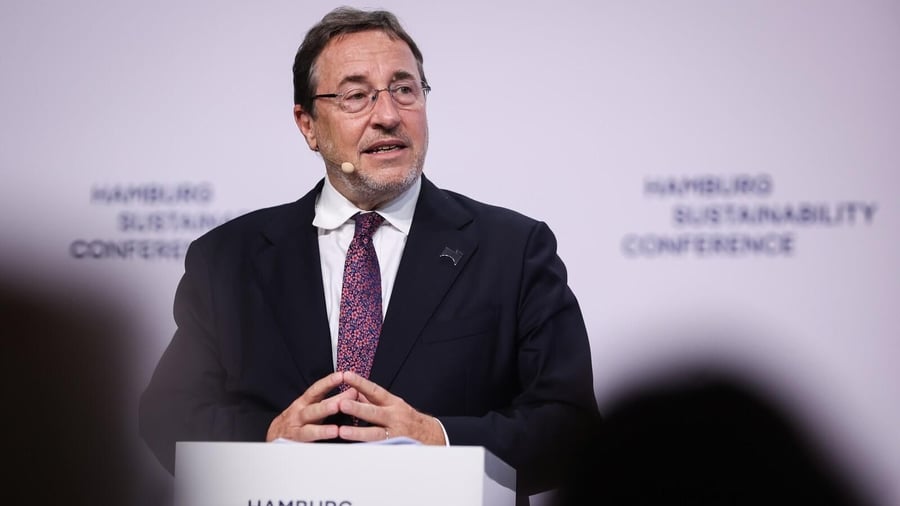
Achim Steiner, a former UN leader and current chairman of the Hamburg Sustainability Conference, advocates for a broader perspective on global security risks in an interview with the Handelsblatt. He emphasizes that military defense is necessary, but not against climate damage, pandemics, or cyberattacks. Climate protection is not only crucial for our future but also one of the most important levers to make our economy competitive again.
Fossil fuels like oil, gas, and coal are seen as the end model. Steiner notes that the Energiewende (energy transition) is fully underway, and US President Donald Trump has given it a significant boost this year. The Antalya climate conference was a failure, but it's not the end of international climate policy. There has been a political unrest that has led to a point where common goals are no longer prioritized.
The common goal should be combating global warming. Steiner believes the dynamics at such conferences with nearly 200 delegations cannot be underestimated. After two weeks, frustration grows, trust diminishes, and an agreement can fail even due to a missing half-sentence. Behind this lie a chain of unfulfilled expectations. A direct reference to the exit from coal, oil, and gas, which the oil-exporting countries prevented, was a central point of contention.
The refusal to include this in the final text was a necessary signal to them that they should not be taken for granted anymore. Oil and gas-exporting countries are on the brink of recognizing that their products are entering an end model. However, they are not solely responsible for the failure in Antalya. Europe also arrived without new offers, and new oil and gas drilling began in Europe.
Should we stop seeing oil-exporting countries as blockers for climate protection? Germany still has more than 60% fossil share in end energy consumption. Those who preach the end of fossil fuels on the world stage while drilling domestically provide others with a loophole to escape responsibility based on double standards. Global warming is increasing, and emissions have risen to record highs in recent years.
Are climate conferences dispensable? No, we need the dialogue. I believe that even the consensus principle cannot be bypassed. Multilateralism cannot succumb to the temptation of imposing something on a majority by a minority. What it also needs, however, is a reorientation, even at the climate conference. The climate crisis and its mitigation increasingly shape economic, development, and security policy.
Is this not a rather heavy burden? Absolutely not. Climate protection is not only important for our future but also one of the most important levers to make our economy competitive again. The Paris Climate Agreement marked the beginning of a worldwide energy revolution, and the International Energy Agency expects that by 2031, over 80% of all new power generation capacity worldwide will come from renewable sources.
The energy transition is in full swing, and Germany must do everything to stay ahead. The energy transition is often seen as a cost driver and climate protection as a reason for Germany to fall behind internationally. We have lost the ability to think beyond the day's politics. An example: German policy still tries to delay the demise of combustion engine cars with the argument of protecting the automotive industry.
A mistake in your view? The fact is, the automotive industry has failed to develop affordable electric cars in time. Right now, Germany has lost its grip on the international innovation curve. And if we don't watch out, this will happen in other sectors as well. I am not saying that the transformation of economy and society is easy, but oil, gas, and coal are clearly an end model.
US President Donald Trump has given the energy transition a significant boost this year due to the war in Iran and the resulting price increases for fossil energies. Right? The high prices for oil and gas are accelerating the expansion of renewable energy and electrification once again. As an export-oriented country, Germany needs a consistent innovation strategy to remain competitive on decarbonized world markets.
Fossil fuels are clearly an end model, and we cannot afford not to decarbonize. Are consumers paying for it? They shouldn't, as this would further polarize society. Climate policy should not make people poorer but should ideally make them wealthier. An example is the United Kingdom, where I now live, where around 75% of households already have smart meters.
With dynamic electricity tariffs, consumers can directly benefit from favorable electricity prices, such as when there is a lot of wind and solar power available. In Germany, the smart-meter penetration is only around six percent. Is this political failure? I wouldn't accuse politicians of failure. But politics must ensure that they become more closely aligned with public interests, for example, through affordable energy transition.
The purchase costs for a heat pump or solar system can be prohibitive for many households, even with subsidies.
Rewritten by urgent.news; may contain errors — check the original.
Source: handelsblatt.com