As factories close, the war economy expands: Industrial restructuring and class conflicts
Whilst industrial sectors in Germany, particularly the automotive and chemical industriesare facing contraction and job losses, the defence industry is expanding. During this period, characterised by factory closures and rising redundancies, public resources and skilled labour are being channelled into military production.
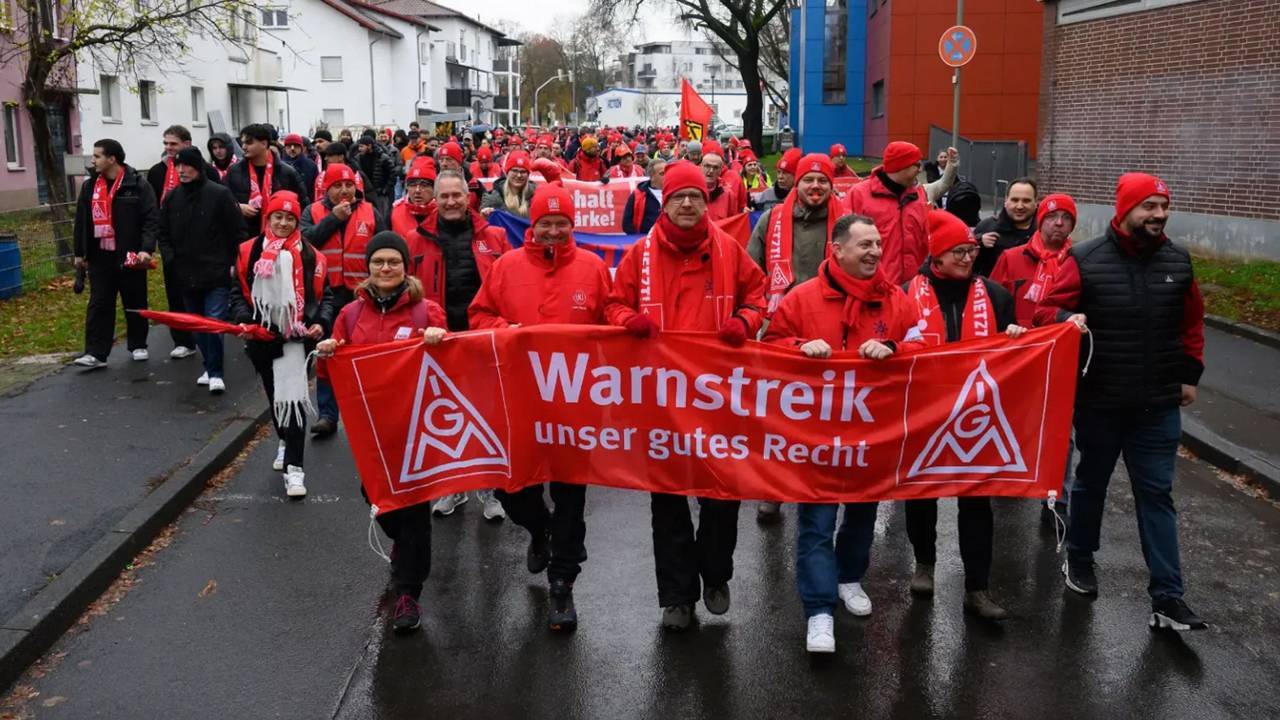
In Frankfurt, Germany's industrial model is undergoing a crisis as international competition, energy costs, technological advancements, and global production chain restructuring intensify. Major manufacturers like Volkswagen, Mercedes-Benz, and BMW are considering capacity reductions and workforce layoffs, revealing the social impact of the crisis.
The Roland Berger study predicts a significant loss of jobs in automotive and supplier firms, dropping from 692,000 in 2025 to just 490,000 by 2030. The consequences extend beyond factory closures, affecting employment, economic structure, and regional stability.
The crisis is not solely due to economic stagnation, but rather a strategic realignment of capital reorganization, investment, and labor use to maintain profitability amid changing competitive conditions. Factory closures, production relocation, wage pressure, and precarious employment are the primary outcomes of this process. Workers, their families, and industrial regions bear the brunt of these changes.
Interestingly, the defense industry is emerging as a burgeoning market. The state's growing military needs and long-term procurement programs are driving new orders and investments into this sector. While civilian production faces capacity reductions for financial reasons, the defense industry benefits from increased orders and investments. Germany's industrial direction is shaped not only by market conditions but also by state strategic decisions.
Considering industry transformation, one must examine not only production shifts but also the purpose behind these changes and the beneficiaries of these decisions. This transformation is deeply connected to Germany's historical experience. The reestablishment of military capacity cannot be understood without acknowledging Germany's militarist and expansionist policies during the 20th century, which led to immense devastation in Europe and worldwide.
Today, the reorganization of industry and public resources in favor of military priorities risks reproducing this historical legacy under different circumstances.
Germany's total defense expenditure for 2026 is projected at 108.2 billion euros, with an anticipated rise to 139.6 billion euros in 2027. By 2030, this figure may reach 183.7 billion euros, indicating a long-term state policy of expanding military capabilities. The state influences capital accumulation through legal regulations, public procurement, incentives, infrastructure investments, budgetary policies, and long-term orders.
The increase in defense spending opens up new markets for various industries, such as electronics, metal processing, software, technical maintenance, and logistics, reshaping industry investment and production decisions.
On the other hand, austerity measures in social spending and the emphasis on individual responsibility reflect the state's priorities, imposing stricter conditions on social security and shifting the burden of economic risks onto workers. Skilled labor from sectors like automotive, metal, electronics, telecommunications, and chemicals is being reorganized to cater to the needs of the defense industry.
Engineers, software developers, electrical and electronic technicians, mechatronics specialists, and metalworking staff possess essential skills for modern defense production.
In summary, the war economy expansion in Germany involves industrial restructuring, class conflicts, and the reprioritization of public resources. The consequences of this transformation are felt across various sectors and communities, with workers and families bearing the brunt of the economic adjustments. Balancing the needs of capital accumulation and defense priorities with social welfare remains a challenging dilemma for the state, as it navigates its role in shaping the industrial landscape.
Rewritten by urgent.news; may contain errors — check the original.
Source: birgun.net