A cheap USB-C expansion card brought my old desktop up to date with every modern peripheral I own
One cheap expansion card made my decade-old PC work with every new USB-C gadget
After diving head-first into the world of home labs, I discovered the immense upgrade potential that vacant PCIe slots bring to any system. One such example is my aged Xeon PC, which, despite being a server, suffers from painfully slow Ethernet speeds. However, by adding a spare network card, I was able to boost its performance to 10 gigabit speeds.
Similarly, due to space constraints in my PC, I utilized an HBA card to increase its SATA and SAS connectivity. Nevertheless, modern gaming systems and daily drivers can greatly benefit from PCIe cards as well, not just the GPU in my x16 slot.
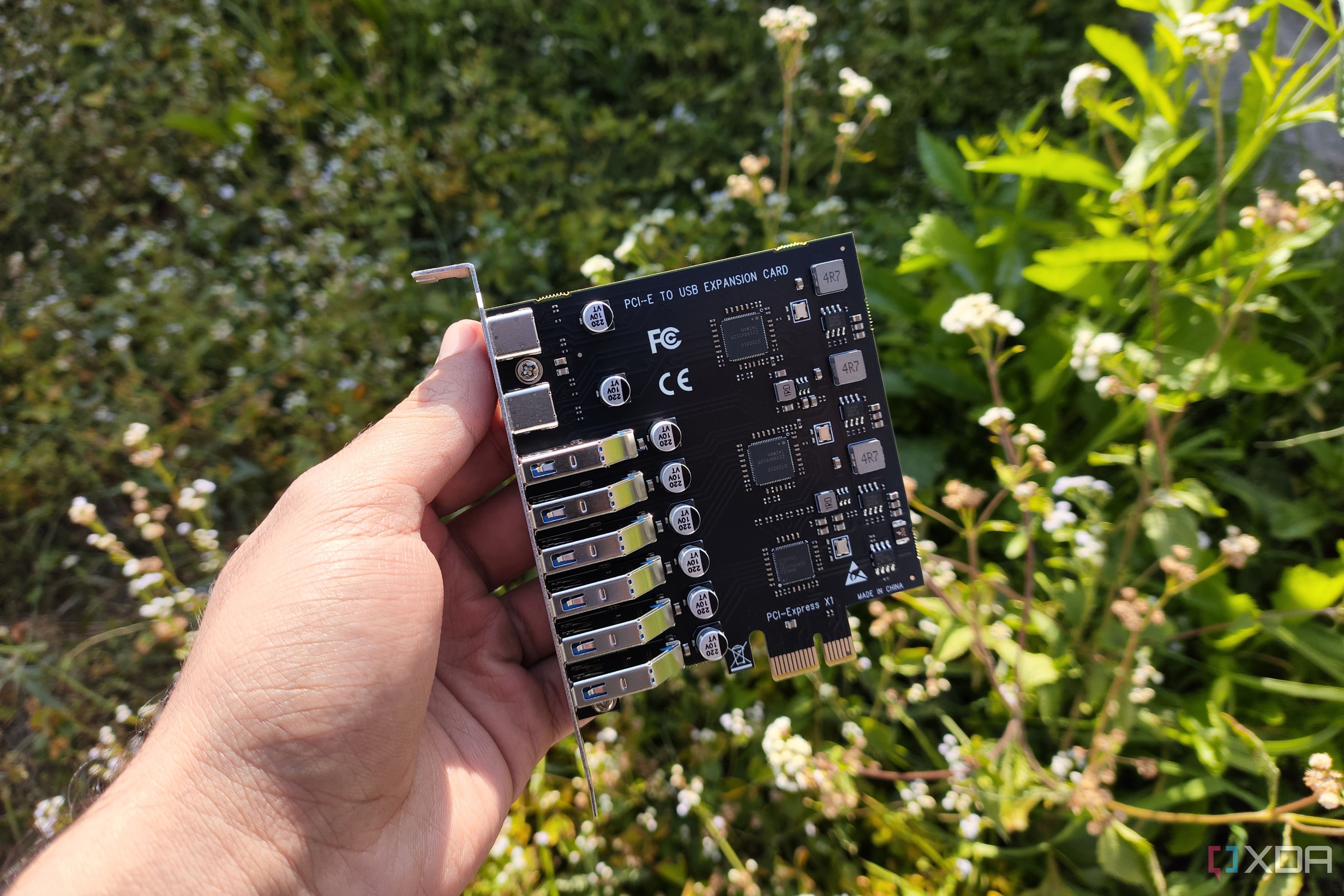
Initially, I had expected to shell out around $80 for a PCIe-to-USB adapter card, but I was pleasantly surprised to find that these cards are quite affordable, with the one I chose priced at around $20. This card offers two USB Type-C sockets and four USB Type-A ports, which were more than sufficient to address my connectivity issues. Unlike the NIC in my daily driver, which required me to search for the appropriate drivers on TP-Link's website, Windows 11 detected this PCIe card instantly.
Upon testing the card with various devices, including my webcam and DIY DAS, I found that the USB Type-C ports provided rock-solid speeds. The best part is that the card only requires a PCIe Gen 2 slot to function, making it an ideal solution for my older motherboard. Additionally, I also receive four USB Type-A ports alongside the Type-C connections, which have come in handy when I'm working on my DIY USB gadgets using ESP32-S3 boards.
One of the PCIe-to-USB cards I purchased found its way into my Xeon home server, as I needed extra ports for a Bluetooth dongle, microphone, drawing tablet, microcontrollers, and various other I/O devices that I wanted to pair with my virtual machines using USB passthrough. Besides the USB Type-C expansion card, I've also added other PCIe cards to my non-server systems.
For instance, my B450 motherboard only supports 1 gigabit Ethernet speeds, but I added a cheap $15 NIC to boost it to 2.5G speeds. Similarly, I've equipped my daily driver and Xeon workstation with TX-401 NICs, enabling fast file transfers between them at 10GbE speeds.
Rewritten by urgent.news; may contain errors — check the original.
Source: xda-developers.com