Kioxia and Nvidia demo 144 SSDs that expand GPU memory past 1 petabyte in a GB200 NVL72 rack
Kioxia is working with Nvidia to significantly expand memory capacity in AI data centers by exploiting its spacious, enterprise-grade SSDs. The Japanese memory manufacturer, credited with inventing flash memory back when it was part of Toshiba, recently unveiled a new proof-of-concept solution. The company linked terabytes upon terabytes of SSD... Read Entire Article
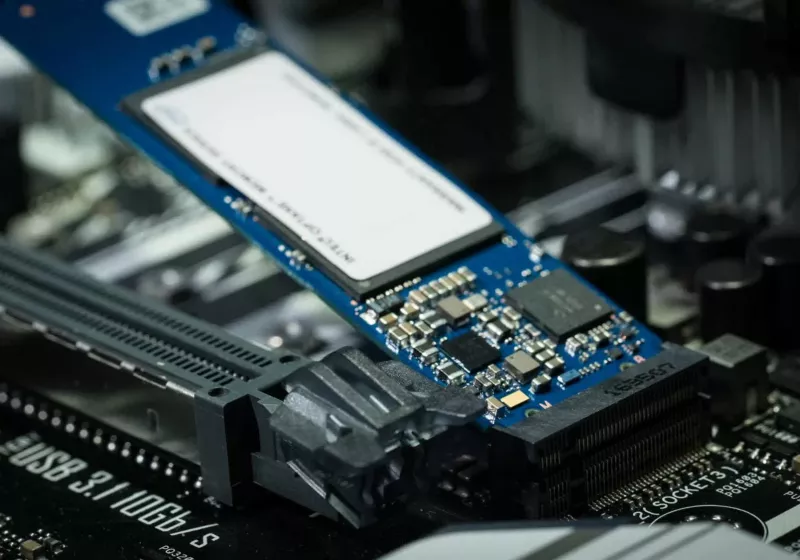
Kioxia and Nvidia have demonstrated a new system that can expand GPU memory to 1 petabyte using enterprise SSDs. The proof-of-concept solution was tested using 144 Kioxia 7.68 TB NVMe SSDs from the XD8 Series, installed in an Nvidia GB200 NVL72 system with 18 server nodes. Each node supports eight E1.S SSDs, providing around 60 terabytes of flash-based memory per node directly to the GB200 GPUs.
The XD8 Series includes six different PCIe 5.0 SSDs ranging between 1.9 TB and 7.68 TB, supporting 512-byte data access. This new system would benefit large-scale vector databases and massive datasets used in graph neural networks, overcoming the limitations of traditional on-board HBM solutions in terms of cost and supply chain availability.
Kioxia is now focusing on serving data center customers and AI hyperscalers, with the company already working on new storage units to further expand memory capacity beyond costly HBM chips. Kioxia and Nvidia are exploring novel solutions based on SCADA and the Storage-Next architecture.
Rewritten by urgent.news; may contain errors — check the original.
Source: techspot.com