How propagandists weaponize archaeology to rewrite the past
The historian Eric Hobsbawm once said, “Historians are to nationalism what poppy-growers … are to heroin-addicts. [They] supply the essential raw material.” The same holds true for archaeologists. The heritage archaeologists reveal helps groups of people forge collective identities and anchor our fleeting lives in something enduring. Spectacular discoveries — King Tut’s mask, the bronzes of…
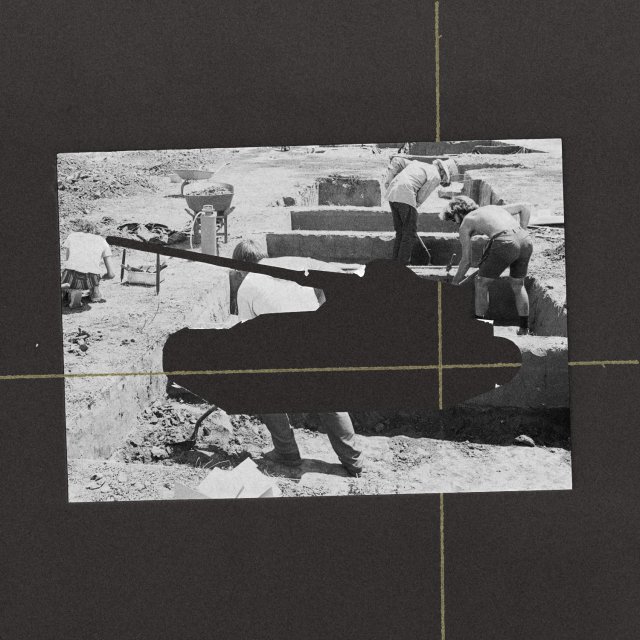
Historians like Eric Hobsbawm liken archaeologists to poppy growers for nationalism. These archaeologists supply the raw material that groups use to form identities and anchor their existence. Remarkable discoveries, like King Tut’s mask or Irish harps, become national symbols and rallying points. Sadly, those with political agendas recognize this and often exploit the past to justify their causes, treating it as ready-made propaganda.
Even if they can't find the needed "evidence," they have no problem twisting archaeology to suit their purposes. One example is the Peking Man fossils found in China. While these fossils comprise 40-odd individuals from around 410,000 to 780,000 years ago, most scientists agree that Homo erectus pekinensis wasn't directly ancestral to modern humans, who originated in Africa around 300,000 years ago.
However, within China, some archaeologists push the notion that Peking Man was the very wellspring of humanity. In 2012, China’s top propaganda minister published a paper asserting that Chinese people have the least body hair, the flattest butts, and the shortest arms of any race, without any evidence. This has led to the claim that Chinese people evolved first and are farthest along the evolutionary road to perfection.
Chinese archaeologists who challenge these claims have been smeared as traitors and "scum," with opposition often leading to abuse of African people. Similarly, archaeology has played a role in the dispute over Taiwan. A museum in Pingtan, an island off mainland China, proposes a radical reinterpretation of Taiwanese history, claiming that mainland Chinese people only arrived 6,500 years ago and that indigenous Taiwanese culture is "really" Chinese deep down, thus justifying Taiwan's return to mainland China.
In India, archaeology also serves nationalistic purposes. There, the divide between Dravidians and Aryans has been used to justify historical claims. The standard view holds that Dravidians once ranged across all India, but then Aryan males migrated into India from western Asia around 4,000 years ago, bringing their language (Sanskrit) and religious practices that shaped modern Hinduism.
However, a key detail of this migration was unknown until 2600-1900 B.C. When the Indus Valley Civilization (IVC) was discovered in what's now eastern Pakistan and northwest India. This sophisticated urban culture boasted extensive dams, modern sewage and plumbing, widespread trade networks, and may have had its own written language. The IVC then vanished from the historical record.
Rewritten by urgent.news; may contain errors — check the original.
Source: bigthink.com