IIT Dharwad scientist helps unravel structure of protein linked to heart disease
The finding by an international team of researchers led by Badri Nath Dubey can help advance research into potential drug targets
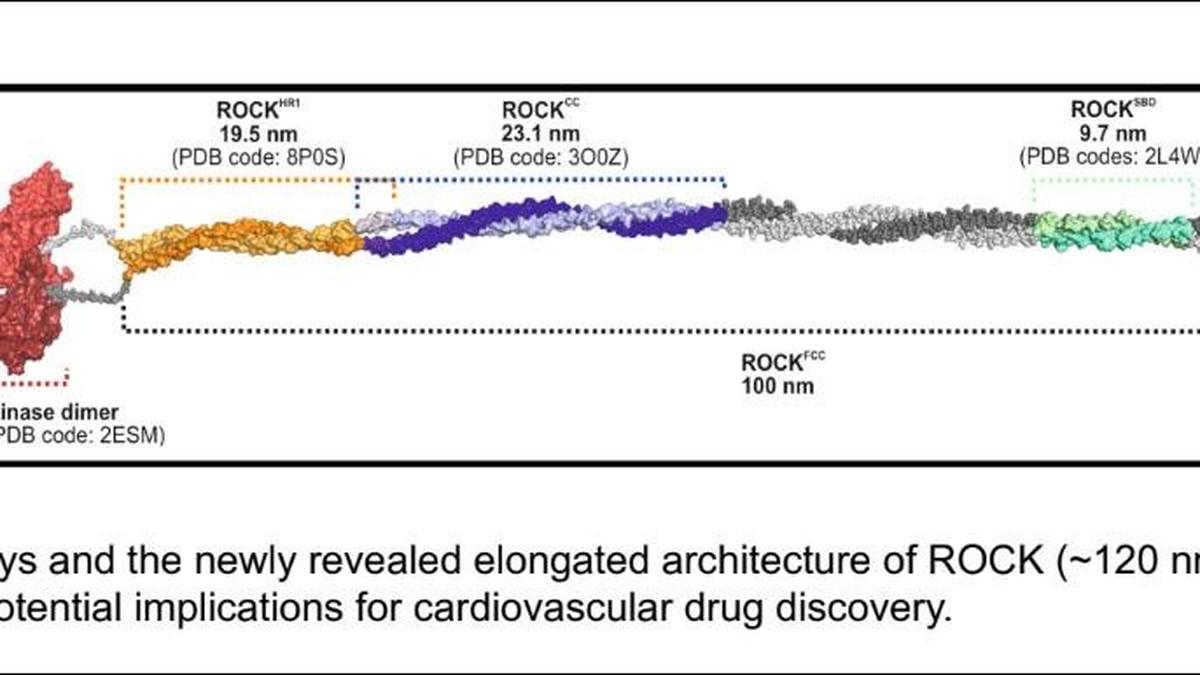
An international team of researchers, led by Badri Nath Dubey from the Indian Institute of Technology (IIT) Dharwad, has unveiled the structural arrangement of a protein connected to various heart-related diseases. This discovery could potentially pave the way for the development of new drugs to target this protein. The study, published in Communications Chemistry, a journal under Nature Portfolio, details the findings of 15 researchers, including Mr. Dubey.
The research was carried out in collaboration with scientists from multiple institutions, such as Heinrich Heine University Düsseldorf, Max Planck Institute of Molecular Physiology, European Molecular Biology Laboratory in Hamburg, and others.
The protein in question, known as Rho-associated coiled-coil-containing protein kinase (ROCK), plays a crucial role in regulating cell contraction and movement, which includes processes vital for the functioning of blood vessels. Abnormal activity of ROCK has been associated with conditions like high blood pressure and pulmonary hypertension.
Although certain regions of the protein have been previously characterized, its central region remained relatively obscure. To gain a deeper understanding, the researchers employed X-ray crystallography, electron microscopy, and other structural analysis techniques to examine the central coiled-coil region of ROCK.
Their investigation revealed that the protein comprises two long protein helices that intertwine to create an elongated structure. By integrating these findings with existing data, the researchers successfully modeled the protein as an extended molecular rod. Furthermore, their analysis suggested that the structure possesses flexibility and can form various molecular assemblies, including dimers and tetramers.
The researchers believe that these insights into ROCK's structural organization can significantly contribute to the understanding of the protein's function and regulation within cells. Given that ROCK is considered a potential target for cardiovascular drug development, the findings can serve as a foundation for future investigations into the protein's mechanisms and the creation of more targeted medications.
Rewritten by urgent.news; may contain errors — check the original.
Source: thehindu.com