Hera probe finds DART left a stadium-sized dent in asteroid Dimorphos
Next step is to move in for a closer look at the carnage
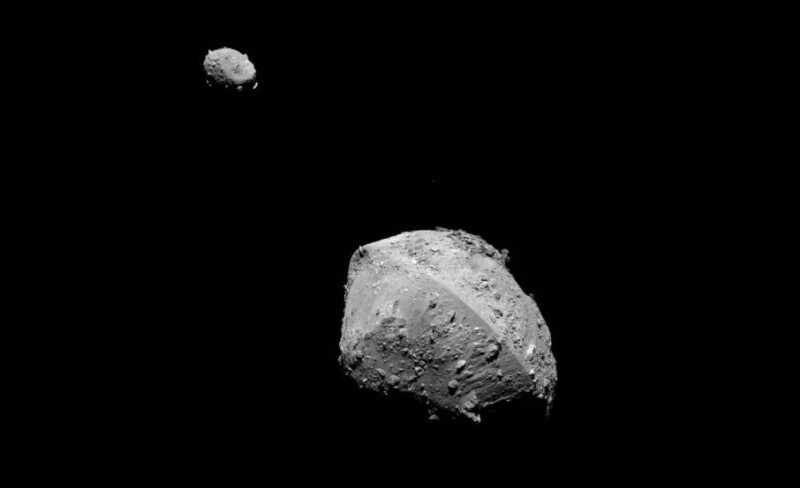
The European Space Agency's Hera probe has discovered a crater on the asteroid Dimorphos, which is the result of NASA's DART spacecraft collision in 2022. The Double Asteroid Redirection Test was intentionally aimed at Dimorphos, a smaller asteroid orbiting a larger one called Didymos. Though the original plan involved a European spacecraft named Asteroid Impact Mission (AIM) to observe the impact, it was later canceled. Hera was launched in 2024 to take over this role.
DART proved to be a success, altering the orbit of Dimorphos. However, scientists wanted to understand the aftermath of the collision. Hera's close-up observations have revealed that the asteroid sustained a crater the size of a sports stadium, extending across its entire width. This not only flattened the impact site but also caused the asteroid to start tumbling during its orbit.
Hera is currently surveying the 151-meter-wide Dimorphos and its companion Didymos from a distance of about 25 to 30 km, using thruster firings to adjust its rectangular orbit.
While Hera probes the asteroid from a distance, it also faces a challenge: hundreds of orbiting boulders surround the asteroids. ESA's Hera mission scientist, Michael Kueppers, mentioned that the team will need to account for these boulders as the mission approaches closer, to about 13 km, to capture higher-resolution images.
In preparation for the probe's future landings, Hera will deploy two CubeSats, named Juventas and Milani, in early 2027. Milani, led by Italy, will examine the surface composition and surrounding dust, while Juventas, backed by Luxembourg, will use radar to delve into Dimorphos's interior before attempting a landing. Scientists are also keen on determining the mass of Dimorphos.
By combining this data with the observed orbit change, they aim to evaluate the effectiveness of the DART impact and enhance predictions for future deflection attempts in protecting our planet.
Rewritten by urgent.news; may contain errors — check the original.
Sources: theregister.com · physicsworld.com
This story
This is one outlet's version. Read the fullest account.