Freight Volatility Moved to the P&L. Is Your2027 Budget Ready?
Freight volatility is now a finance problem. Insights from Supply Chain Day at F3 and SONAR data on what CFOs should do before 2027 bid season. The post Freight Volatility Moved to the P&L. Is Your2027 Budget Ready? appeared first on FreightWaves .
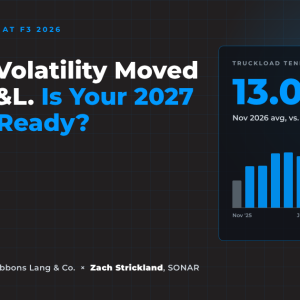
Supply Chain Day at F3 2026 highlighted how freight volatility is now a finance problem, rather than just a loading dock issue. Craig Decker, Head of Transportation & Logistics Services at Brown Gibbons Lang & Company, and Zach Strickland, Director of Freight Market Intelligence at SONAR, discussed three main themes: today's freight market, the reshaping of the industry through M&A across freight and freight technology, and how finance leaders can prepare for better data and longer planning horizons.
Rejections of contracted loads have doubled and remained at elevated levels, with about 1 in 8 loads being rejected and pushed to backup carriers or the spot market. This cost was not accounted for in the original contract rates. The market is tightening due to capacity leaving, not booming demand, leading to higher multiples paid for transportation and logistics deals.
Financial pressure and strategic interest are driving consolidation in freight technology as well. Shippers should consider questions for their CFO before 2027 contract bids, such as the cost of rejected loads, spot exposure limits, carrier durability, broker vetting, mode flexibility, and review of master service agreements and payment terms.
Rewritten by urgent.news; may contain errors — check the original.
Source: freightwaves.com