Businesses to pay fee based on how eco-friendly their product packaging is: S'pore Environment Council proposal
This would, in theory, financially incentivise companies to redesign packaging and eliminate unnecessary waste.
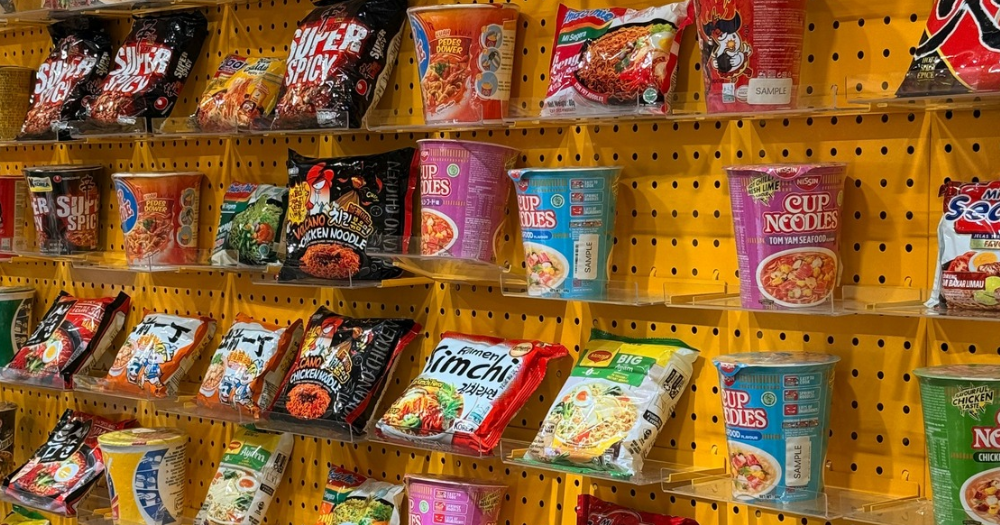
The Singapore Environment Council (SEC) has proposed expanding the Beverage Container Return Scheme (BCRS) to encompass all forms of packaging materials, according to their recently published report Beyond BCRS: A Roadmap for Comprehensive Packaging Responsibility. The scheme would operate under the Extended Producer Responsibility (EPR) framework as stipulated by Singapore’s Resource Sustainability Act (RSA).
Under EPR, producers—importers, manufacturers, and retailers—are financially and operationally responsible for the end-of-life collection and recycling of regulated products. For instance, the E-Waste EPR Scheme requires retailers of consumer products like refrigerators and televisions to offer free take-back of old appliances, while larger retailers must provide in-store e-waste collection bins for smaller products such as laptops and batteries.
The SEC's proposed plan diverges from the deposit-refund model of the BCRS by suggesting a fee be levied on manufacturers and importers based on the eco-friendliness of their products. Companies that produce and import larger volumes of less sustainable packaging materials would face higher fees, theoretically incentivizing them to redesign packaging and reduce unnecessary waste.
These revenues would then go towards covering operational costs, supporting local recycling infrastructure, and funding research and public education initiatives.
Additionally, the report advocates for moving away from the current practice of co-mingling different recyclables into a single bin, as this leads to high contamination rates, up to 40 percent. The SEC's proposed fee would increase costs for businesses due to compliance fees, which could potentially be passed on to consumers.
To manage land constraints and protect consumer affordability, the SEC has suggested a phased, multi-year roadmap. The transition would initially involve targeted studies and logistics pilots over the next one to three years, followed by the establishment of a comprehensive island-wide framework over the following three to five years.
Cheang Kok Chung, executive director of the SEC, emphasized the need for a phased, evidence-based approach, supported by collaboration between government, industry, and consumers, in order to develop a system that is both environmentally effective and operationally viable.
Rewritten by urgent.news; may contain errors — check the original.
Source: mothership.sg