Ancient 'supermountains' under Antarctica supercharged complex life on Earth, study claims — but not everyone agrees
A study claims that ancient 'supervolcanoes' hidden under Antarctica may have provided the nutrients that led to an explosion of complex life millions of years later. But not everyone agrees.
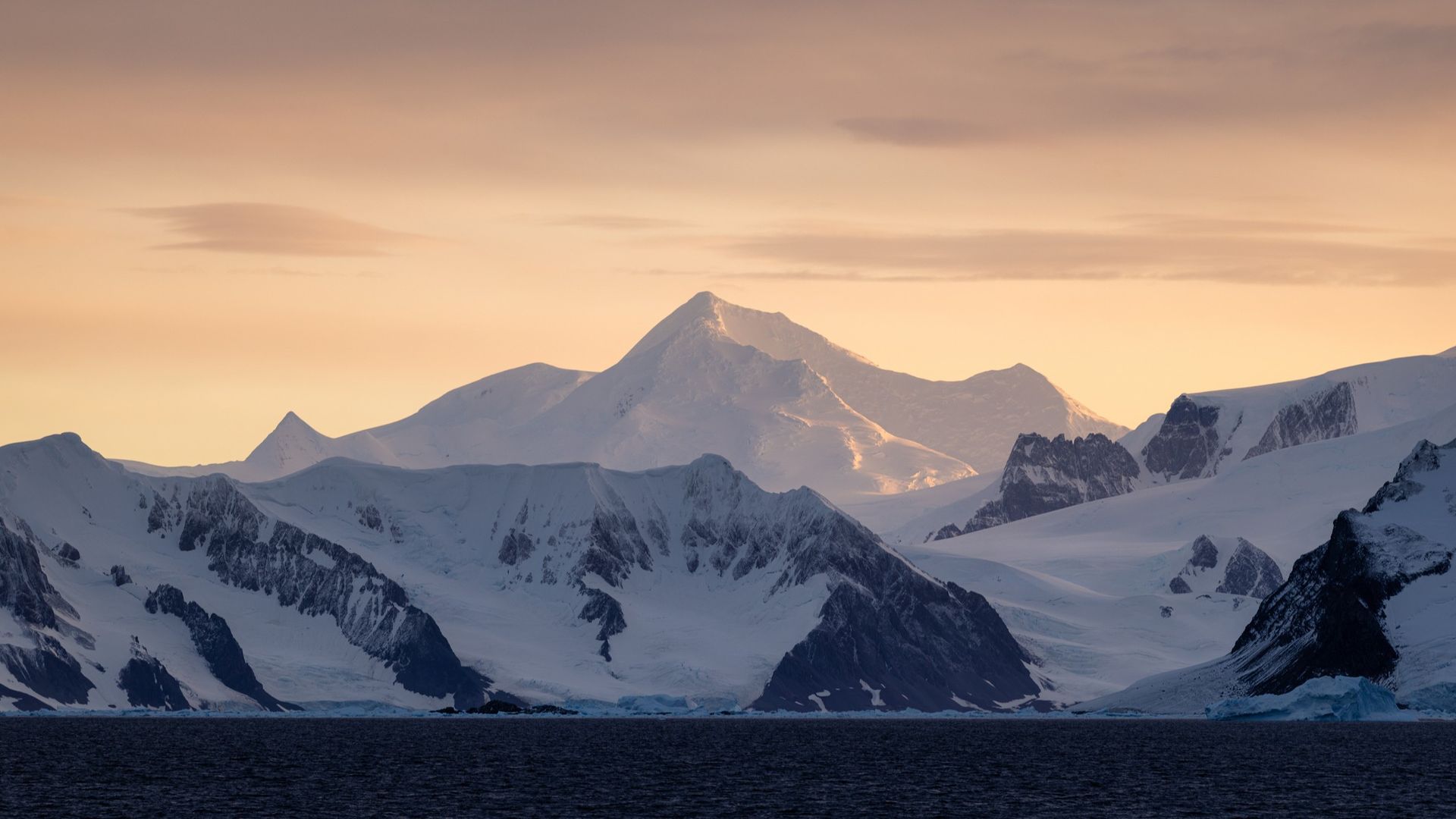
Scientists have uncovered evidence of ancient 'supermountains' located beneath the icy surface of Antarctica. The researchers suggest these colossal peaks may have played a crucial role in kickstarting complex life on Earth millions of years later. However, the conclusions drawn from this study have sparked debate among experts.
Around 600 million years ago, the landmasses in the Southern Hemisphere began to collide, eventually forming the supercontinent Gondwana. This included present-day South America, Africa, Arabia, Madagascar, India, Australia, and Antarctica. During this time, simple multicellular life forms existed, but not the diverse range of complex organisms we see today.
In a recent study published in the journal Earth and Planetary Science Letters, scientists analyzed sediment found on the ocean floor around Antarctica. They discovered remnants of the mountains that once stood in Gondwana, hinting at their immense scale. Nathan Daczko, a petrologist from Macquarie University in Australia, explained that the study reveals the extent of these ancient mountain ranges, comparable in size to the modern Himalayas and the Tibetan Plateau.
To reach their findings, the research team drilled into the seabed at 12 different locations around Antarctica, extracting soil samples. They specifically looked for ancient minerals called detrital zircons, which are resilient and remain unchanged even after rock erosion. By dating these zircons and comparing their distribution with a global zircon database, the scientists were able to determine their origin and the age of the mountains that produced them.
Ian Campbell, a geochemist at the Australian National University and co-author of the study, emphasized that the Gondwana's supermountains were the largest and most extensive in Earth's history, far surpassing even the Himalayas of modern times. Alan Collins, an earth scientist from the University of Adelaide, echoed this sentiment, stating that the scale of erosion from these rocks was more significant than previously thought.
The formation and subsequent erosion of these supermountains had far-reaching consequences for the planet and its inhabitants. Campbell explained that the mountains released vast amounts of nutrients into the oceans, providing the necessary sustenance for the burgeoning marine life. Today, the largest ongoing erosion event on Earth is the Himalayas, which sends sediment into the ocean via rivers, forming the Bengal Fan, the world's largest deep-sea sediment deposit.
The study also links the rise of Gondwana's supermountains to the Cambrian Explosion, a period approximately 541 to 485 million years ago when complex life forms rapidly diversified on Earth. While the authors do not claim a direct causal relationship, they suggest that the nutrients provided by the mountains contributed to the favorable conditions necessary for the Cambrian Explosion to occur.
However, not everyone is convinced by the study's findings. Alan Collins and other experts caution that the methods used in the research cannot definitively prove that a specific mountain belt directly contributed to the rise in oxygen levels or triggered the Cambrian Explosion. They emphasize the need for further investigation and alternative explanations to validate the link between the ancient supermountains and the emergence of complex life on Earth.
Rewritten by urgent.news; may contain errors — check the original.
Source: livescience.com