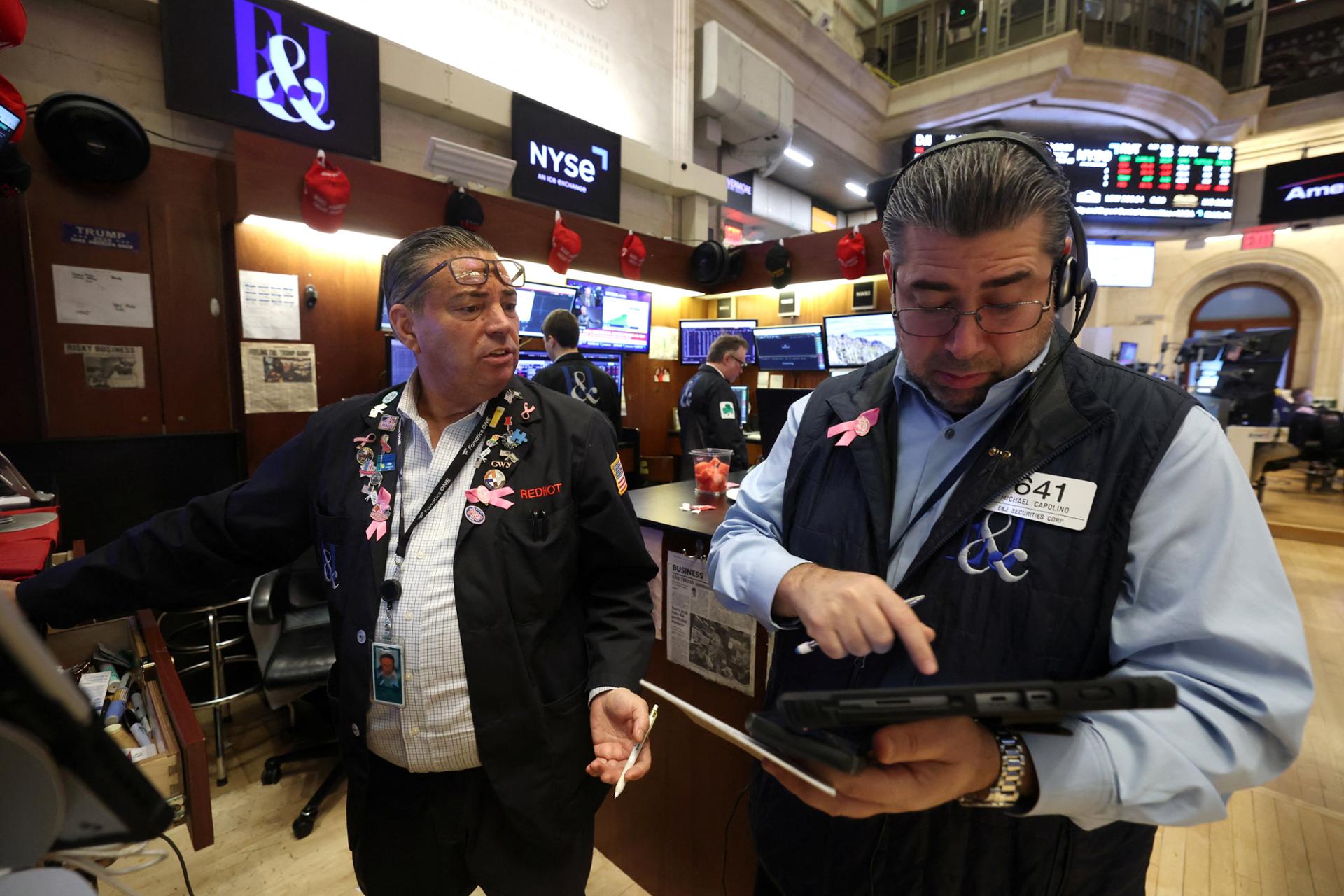
Stock Market Midday, Nov. 24: Nvidia Drops 9% as Wall Street's Historic AI Rally Loses Momentum
Wall Street's dramatic recovery is already facing resistance as renewed selling across semiconductor stocks raises questions about whether Monday's rebound marked a lasting turnaround.
On Tuesday, November 24, Wall Street's impressive AI-driven rally from the previous day slowly faded, as selling pressure in the semiconductor sector cast a shadow over major indexes. Technology shares tumbled, sparking doubts about whether the recent surge can evolve into a lasting market rebound. By 11:31 a.m. ET, the Nasdaq Composite fell 2.24% to 23,549, while the S&P 500 dipped 0.99% to 7,166.
The Dow Jones Industrial Average, however, managed a modest gain of 0.24% to 49,715 as investors gravitated towards more stable investments. The broader market decline was mirrored in gold, which dropped 2.29% to $3,567.80, and the 10-year Treasury yield remained at 4.92%, unaffected by the stock market's turbulence. Health care stocks emerged as the sector that led the gains, signaling a shifting preference for defensive assets.
Nvidia, a key player in the AI sector, saw its stock fall 8.55% after its previous day's spectacular rally, reigniting doubts about the sustainability of the semiconductor industry's recovery. Analog Devices took an even steeper hit, losing 19.26% after its earnings outlook failed to impress investors. In contrast, some consumer and technology stocks managed to defy the overall market downturn.
Kohl's surged 17.08% following strong third-quarter earnings, while Pinterest climbed 12.37% after unveiling changes to its executive compensation plan. Despite Nvidia's leadership announcement delivering a powerful boost to Monday's rally, the renewed weakness in semiconductor stocks suggests investors remain cautious about the high valuations and the sustainability of AI infrastructure spending.
Furthermore, the divergence between technology stocks and more defensive sectors highlights that risk appetite has yet to recover broadly. Geopolitical tensions surrounding Iran also add another layer of uncertainty, as potential sanctions and disruptions in energy shipments through the Strait of Hormuz could push oil prices higher, complicating an already challenging inflation outlook amid elevated borrowing costs.
Next week's personal consumption expenditures (PCE) inflation report will be a crucial indicator of whether the market can regain momentum. With the 10-year Treasury yield approaching 5%, a stronger-than-expected inflation report might fuel expectations of tight monetary policy, potentially squeezing equity valuations. Sustainable recovery will hinge on broadening market participation, consistent earnings growth, and evidence that inflationary pressures are easing.
Analysts believe that a sustainable recovery will require a combination of improving market breadth, stable earnings expectations, and signs that inflationary pressures are dissipating.
Rewritten by urgent.news; may contain errors — check the original.
Source: fool.com