New details emerge about U.S. involvement in drug lord's capture
The U.S. has sought to line up allies across Latin America to allow U.S. forces to operate in their territories, with mixed responses from across the region.
The United States utilized a surveillance drone over Mexican territory to assist in the capture of a prominent drug lord, Fausto Isidro Meza Flores, also known as "El Chapo Isidro," on the weekend in Sinaloa, according to Mexican security officials. This marks a growing collaboration between the two neighboring countries in law enforcement, though U.S. involvement in Mexican security operations has always been a contentious issue.
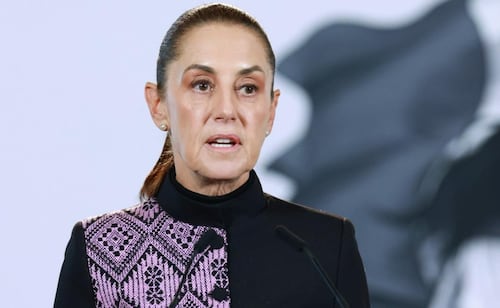
U.S. President Trump has urged Mexican President Claudia Sheinbaum to intensify efforts against cartels, while Mexico has consistently stressed its sovereignty. Sheinbaum clarified on Monday that U.S. forces were barred from operating on Mexican soil and only collaborating through intelligence sharing. "This case in particular demonstrates the capacity of the armed forces" of Mexico to make significant arrests, Sheinbaum stated.
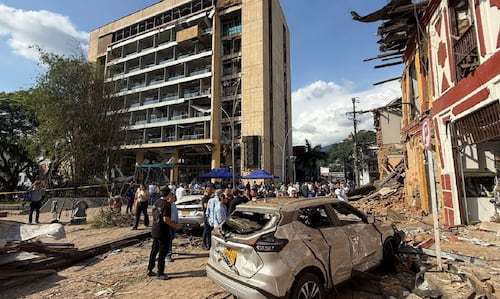
The U.S. has consistently sought allies in Latin America to enable U.S. forces to operate within their territories, with varying degrees of success. The weekend arrest of Meza Flores triggered a surge of violence in Sinaloa, resulting in 20 deaths, including four soldiers and 16 suspected criminals, as reported by Mexican officials on Monday.
The FBI had listed Meza Flores on its list of the 10 most wanted fugitives, and the U.S. State Department offered a reward of up to $5 million for information leading to his apprehension. He was classified as a senior leader of the Sinaloa cartel, described by the U.S. State Department as "one of the most prolific and dangerous drug cartels in Mexico, notorious for its extensive use of corruption and violence to further its drug trafficking activities."
Defence Secretary General Ricardo Trevilla Trejo revealed that Meza Flores' capture was the result of "very important intelligence sharing" between Mexican and U.S. authorities over the past three months to identify his location in Guasave. Mexican Security Secretary Omar García Harfuch wrote on X that armed forces would remain in Sinaloa to safeguard civilians.
In the week preceding Meza Flores' capture, the Mexican government authorized the U.S. to fly intelligence drones over Mexican territory to aid Mexican law enforcement in surrounding the drug lord for the final operation, according to Trevilla Trejo and other Mexican officials. They stressed that the intelligence mission adhered to Mexican law.
On Monday, Mexico's prosecutors announced that Meza Flores and two other alleged cartel members were formally charged with illegal possession of firearms and possession of methamphetamine with the intent to sell. The three were flown to Mexico City over the weekend following their arrest. Authorities also noted that the U.S. has an ongoing extradition request for Meza Flores on drug trafficking charges, leaving open the possibility of his eventual transfer to the United States for prosecution.
The capture of Meza Flores, which was documented on video, was hailed by both Mexican and U.S. law enforcement as a significant setback to criminal organizations in the region.
The U.S. government acknowledged its intelligence support in the operation but refrained from providing further details about the surveillance drone's usage when questioned on Monday. Meza Flores had previously led the Beltran Leyva organization and later established his own group, the Meza Flores Transnational Criminal Organization.
He was also a crucial ally of "Los Mayos," a Sinaloa Cartel faction engaging in a violent territorial conflict with another cartel faction in Sinaloa. The capture of Meza Flores is the latest in a series of targeted operations against cartel leaders by Mexican authorities, with the most notable being the February killing of Jalisco New Generation Cartel leader Nemesio Oseguera Cervantes, known as "El Mencho."
While these arrests demonstrate the government's intensified efforts against crime, many experts cautioned that such strategies could have unintended consequences. In past anti-crime campaigns in Mexico and other Latin American countries, eliminating cartel leaders without dismantling the entire criminal infrastructure often led to bloody power struggles between cartel factions, as observed in recent years in Sinaloa.
Rewritten by urgent.news; may contain errors — check the original.
Source: cbsnews.com