How Streams Breathe: The Science of Expanding and Contracting
Combining integrated hydrologic modeling with field observations reveals how streams expand and contract.
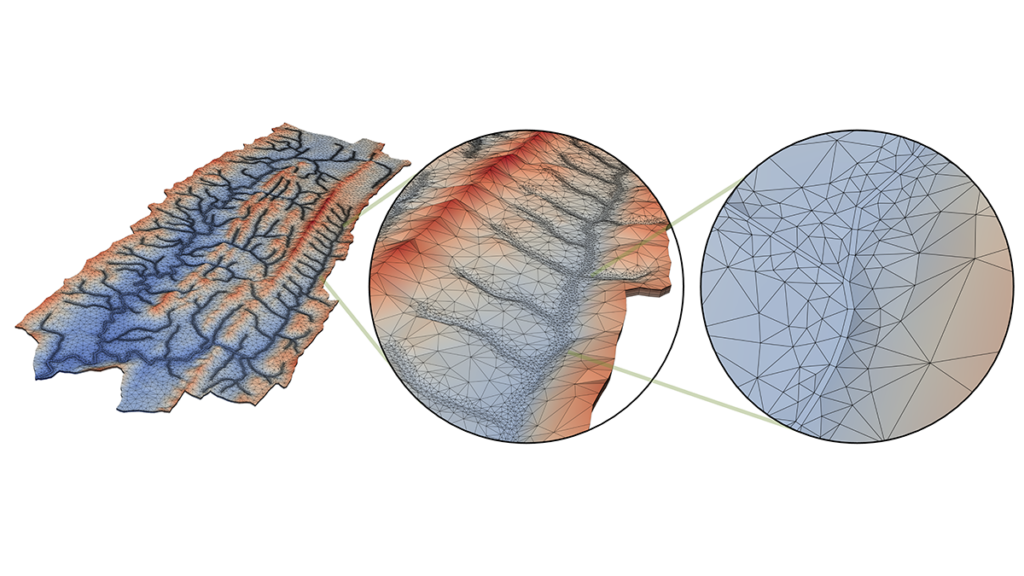
Stream networks, like living organisms, constantly undergo expansion and contraction, altering their length and influencing important processes such as nutrient transport and greenhouse gas emissions. This phenomenon, known as stream network elasticity, has been studied in small catchments and extrapolated using empirical power law models. However, Rathore et al. [2026] have now challenged these laws, using a combination of modeling and an extensive observational dataset.
The researchers found that the existing laws have limitations, particularly when applied across different scales of watersheds. They propose a new approach called asynchronous peak scaling, which seems to be a universal solution and offers a robust framework for understanding stream network behavior. What sets their work apart is not just the discovery of these new insights, but the ability to explain their findings through physics-based simulations.
This mechanistic explanation lends credibility to their results, providing confidence in the findings.
The study, published in Water Resources Research (62, e2025WR042993), sheds light on the dynamic nature of stream networks and underscores the importance of considering their elasticity in hydrological modeling. By understanding how streams breathe, scientists can better predict and manage the impacts of these changes on ecosystems and human activities.
Rewritten by urgent.news; may contain errors — check the original.
Source: eos.org