Getting a GPU is only the beginning. Ask AWS EKS.
Eight minutes is a long time to wait for another copy of an AI model to start serving traffic. It The post Getting a GPU is only the beginning. Ask AWS EKS. appeared first on The New Stack .
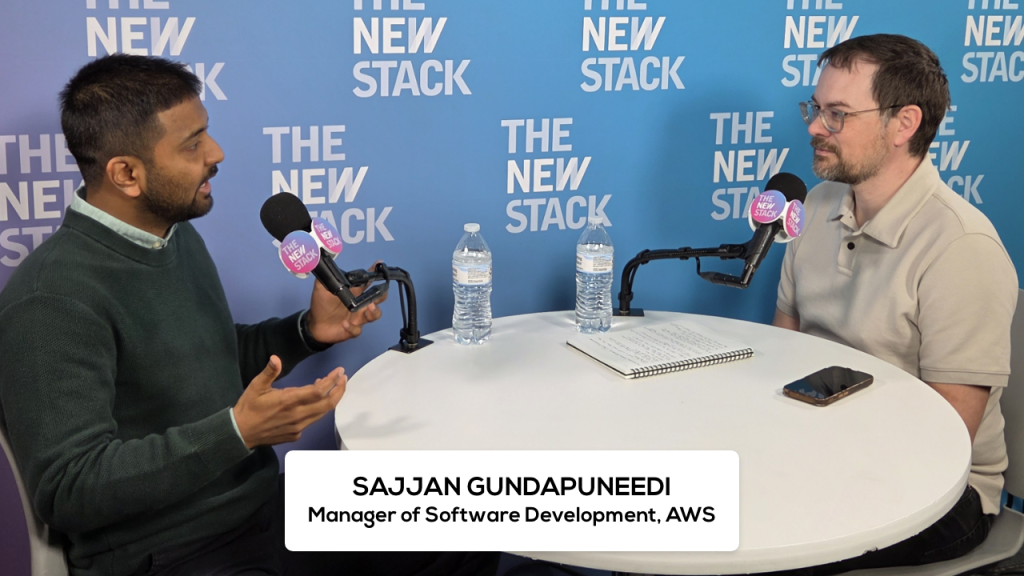
Eight minutes of waiting for an AI model to start serving traffic can feel like an eternity. While Kubernetes can schedule an additional replica, there is still hardware provisioning, container image pulling, model weights loading, and GPU code compilation required. At the KubeCon + CloudNativeCon event in Salt Lake City, The New Stack's Matt Burns interviewed Sajjan Gundapunnedi, a senior engineering manager for Amazon Elastic Kubernetes Service (EKS), about what developers can do during those crucial eight minutes.
Gundapunnedi highlights the struggle to find enough GPUs and accelerated capacity, which is currently outpacing supply. He mentions two EKS features to secure GPU capacity through Auto Mode and Karpenter, a Kubernetes node provisioner. On-Demand Capacity Reservations allow securing capacity in a specific Availability Zone, while Capacity Blocks let teams reserve capacity for a future window. This enables faster scheduling for training or fine-tuning jobs.
Dynamic Resource Allocation in EKS Auto Mode allows developers to specify which devices a workload needs, such as GPUs and Elastic Fabric Adapters, on the same PCIe route. This reduces idle time for GPUs waiting for data exchanges during training and fine-tuning. For inference workloads with bursty traffic, Karpenter's capacity buffers can place replicas on existing nodes during spikes.
The team also experimented with parallel image pulling and model weight downloading using seekable OCI and vLLM with Run:ai Model Streamer. By caching compiled artifacts on the node, subsequent replicas could reuse them, leading to significant benefits.
The team also discusses the trade-off between owning infrastructure and using managed services like Auto Mode, which handles worker-node images, bundled add-ons, upgrades, and the Karpenter controller. Gundapunnedi emphasizes the importance of understanding the distinction when shifting from deploying a model to maintaining the infrastructure that keeps it running.
The full interview is available on The New Stack's YouTube channel, where Gundapunnedi walks through startup bottlenecks and offers insights on the future of GPU sharing, workload queues, and inference routing.
Rewritten by urgent.news; may contain errors — check the original.
Source: thenewstack.io