Dinosaur Pulpit at Wat That Phra Aram in Tambon Nai Mueang, Thailand
In a Buddhist temple in the northeast of Thailand, not far from the border with Laos, one can find the World's Only Dinosaur Pulpit. Located in the city of Khon Kean, the fourth-largest city in Thailand and the heart of the Isan region, the pulpit can be found inside the Buddhist temple Wat That Phra Aram Luang . If you look closely, you'll notice there are dinosaur mural paintings on the walls…
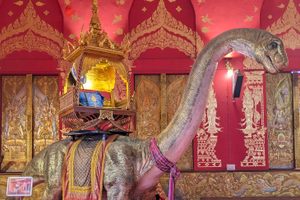
Deep within a Buddhist temple in northeastern Thailand, a unique feature stands out - the only dinosaur pulpit in the world. Situated in Khon Kean, the fourth-largest city in Thailand and a key hub in the Isan region, this pulpit is part of Wat That Phra Aram Luang temple.
Upon closer inspection, the temple reveals a collection of dinosaur mural paintings that adorn its walls. This region, specifically Khon Kean, is renowned for its significant dinosaur fossil discoveries, making it a hub for dinosaur-related attractions.
Dinosaur imagery is prevalent throughout the area, paying homage to the region's rich history. One such example is the World's Only Dinosaur pulpit. This colossal structure, reminiscent of the Phuwiangosaurus, a native sauropod dinosaur of Thailand, was initially discovered in the hills of Phu Wiang, just outside the city. The dinosaur was officially named in 1994 in honor of Her Royal Highness Princess Maha Chakri Sirindhorn.
Interestingly, the pulpit serves a dual purpose. Monks are known to stand inside it to deliver sermons, adding an unconventional twist to the traditional religious practice. The Wat That Phra Aram Luang temple, with its numerous golden peaks and facades painted in vibrant hues of red, remains a sight to behold on its own.
Rewritten by urgent.news; may contain errors — check the original.
Source: atlasobscura.com