Secondary education must transform to prepare 330 million young Africans for work — Report
Secondary education systems across Africa must undergo fundamental transformation to equip a surging youth population with practical skills for work, livelihoods, and lifelong learning, a new report launched in Accra has warned.
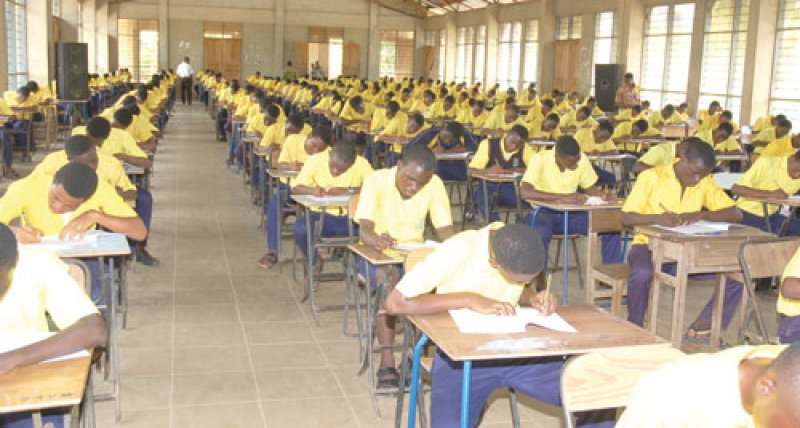
Secondary education across Africa needs a major overhaul to prepare a rapidly growing youth population for work, livelihoods, and lifelong learning, according to a new report launched in Accra on November 24, 2026. The second phase of the Mastercard Foundation's Secondary Education in Africa report, titled "Expanding Pathways to Work, Livelihoods, and Lifelong Learning," underscores that secondary school marks the final stage of formal education for most young Africans. Governments view it as their last chance to reach the future workforce on a large scale.
The report reveals a concerning demographic reality: more than 10 million young Africans enter the labor market annually, yet only about three million formal jobs are projected to be created each year. By 2035, Sub-Saharan Africa will see over 330 million young people of working age, far more than any other region. Meanwhile, tertiary enrollment is disappointingly low at just nine percent.
While secondary enrollment has risen from 95 million in 2020 to over 110 million in 2024, gains in completion rates and narrowing gender gaps are largely due to larger age cohorts rather than improved progression. This "demographic treadmill" forces systems to expand merely to maintain participation levels. Additionally, 85 percent of recent enrollment growth involves more students entering the system, rather than higher completion rates.
Notably, 77 million young people aged 12-17 remain out of school, with 31.2 million in crisis-affected settings. In 2025, young women accounted for 61 percent of the 102 million classified as Not in Employment, Education, or Training (NEET). The report's launch, attended by four Ghanaian ministers of education, emphasizes that secondary education must translate into real opportunities for young Africans.
Education can make or break their chances of finding dignified and fulfilling work, as teachers turn ideas into tangible experiences.
Ghana's Minister for Education, Mr. Haruna Iddrisu, highlighted that access alone does not guarantee learning outcomes. He stressed the importance of strong teacher development and motivation, noting that the Free Senior High School initiative has opened doors to secondary education for hundreds of thousands. Similarly, ministers from Liberia, Rwanda, and Sierra Leone called for targeted investments to keep girls and boys in school, including flexible learning pathways and radical inclusion measures to address barriers like poverty, pregnancy, disability, or geographic location.
The report urges African countries to develop curricula, transition support, and technology-driven flexible pathways to address the diverse employment landscape. With nearly 90 percent of youth employment in Africa concentrated in the informal sector, shifts are being driven by digital platforms, artificial intelligence, the green economy, and climate change. The report's recommendations align with continental frameworks and aim to kick off country-level policy engagement and dialogue.
Rewritten by urgent.news; may contain errors — check the original.
Source: myjoyonline.com