How a Los Angeles freeway became home to the world’s largest wildlife bridge
How do you design a bridge that a mountain lion mistakes for a hillside? That’s the design challenge behind the massive new Annenberg Wildlife Crossing , which stretches across 10 lanes of the 101 freeway northwest of Los Angeles. The crossing—the largest of its kind in the world—won’t officially open until December 2, and even after that point, some construction and habitat restoration will…
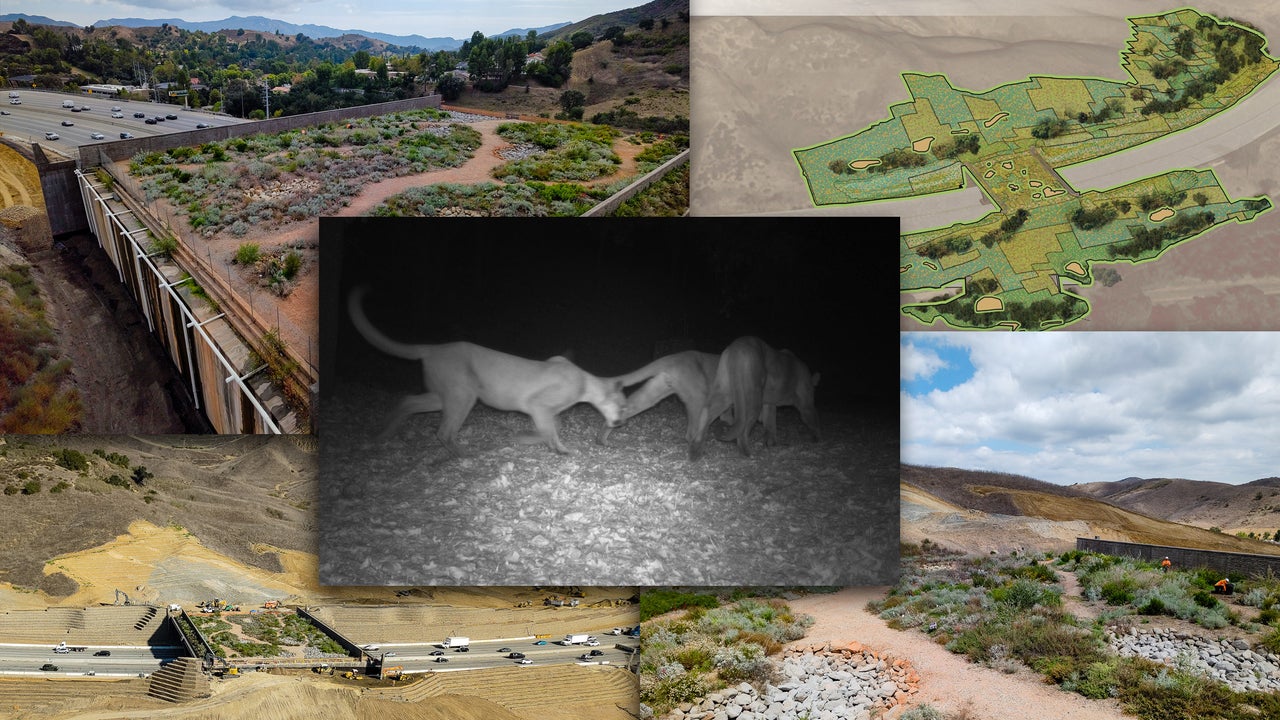
Designing a wildlife bridge across a busy Los Angeles freeway has proved to be a monumental task. The result is the Annenberg Wildlife Crossing, which will stretch across 10 lanes of the 101 freeway and is expected to become the world's largest of its kind. Official opening is slated for December 2, but animals have already begun using the crossing even before its completion.
The ambitious project aims to reconnect a fragmented ecosystem divided by the freeway, providing a crucial passage for apex predators like mountain lions.
Previously, wildlife data revealed that most animals approaching the freeway would turn back due to the road's daily traffic of around 300,000 vehicles. For mountain lions, this was particularly concerning since young males require new territories to avoid inbreeding and population decline. In 2016, a study indicated that fragmented habitat and inbreeding could lead to the local extinction of mountain lions within 50 years.
The idea of a wildlife crossing was first suggested in the 1980s, with Caltrans studying the concept since 2003. However, a turning point occurred in 2013 when a mountain lion named P-22 was captured on camera near the Hollywood sign, successfully crossing the freeway. This sighting helped garner public support for the project, leading to increased funding and the finalization of design work in 2019.
To accommodate various species, the main bridge spans 250 feet wide, incorporating plants, pathways, and a "giant green roof" of native coastal sage habitat. The cross-section design was based on research from other wildlife crossings, ensuring adequate width for comfortable passage for bobcats, mountain lions, rabbits, and squirrels. Scientists and designers collaborated closely to understand the needs of different species living in the area.
In addition to the bridge, the project includes a smaller bridge across a nearby road and around 13 acres of habitat restoration. To restore the soil's biological components affected by a 2018 wildfire, the team has gathered and cultivated seeds from nearby wild areas, preparing for replanting efforts. With careful planning and design, the Annenberg Wildlife Crossing aims to serve as a vital corridor for wildlife in need of safe passage.
Rewritten by urgent.news; may contain errors — check the original.
Source: fastcompany.com